
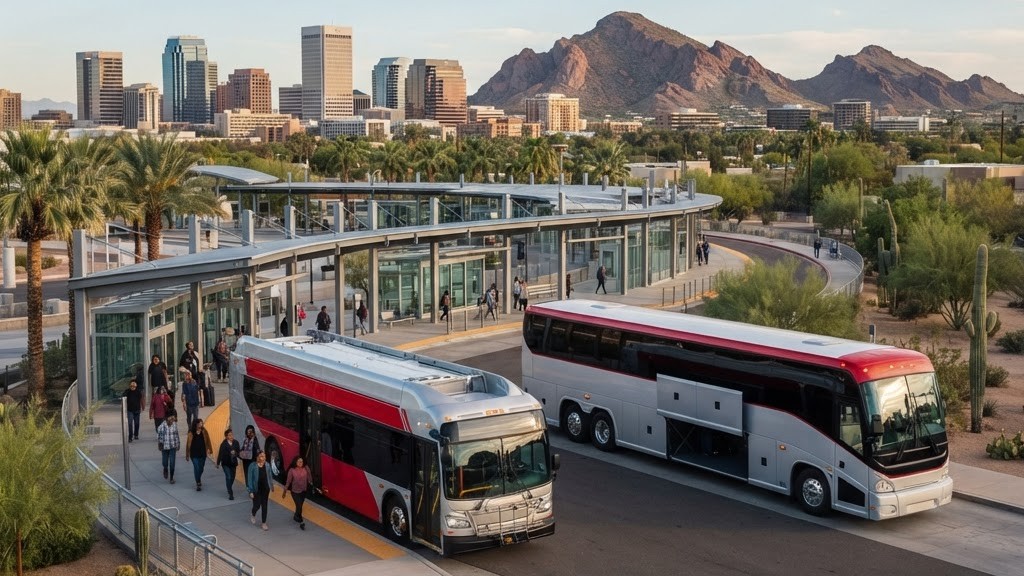
Phoenix Bus Travel Explained
Bus transportation in Phoenix includes several distinct services: public routes for daily mobility, intercity coaches for regional travel, and charter fleets for private groups. The best option depends on whether a rider values low cost, a fixed schedule, direct transportation, luggage capacity, or a customized itinerary. Phoenix’s heat and geographic scale make planning important. Verify stops, boarding rules, accessibility, baggage limits, and current schedules shortly before departure, and avoid assuming that every suburban destination has frequent service.
1. Valley Metro
Valley Metro coordinates the region’s public bus network and light rail connections. It is the foundation of car-free travel for many commuters and visitors, serving Phoenix and surrounding municipalities through local and express-style routes. Low fares and transit connections are major benefits. Travelers should use current trip information, allow for transfers, and plan shade or indoor waiting options in hot weather.
2. City of Phoenix Public Transit
The City of Phoenix funds and oversees substantial local bus service within the regional system, including frequent corridors and neighborhood connections. For visitors, routes linking downtown, employment areas, shopping districts, and transit centers can be practical. Service frequency varies by corridor and time, so a trip that looks short on a map may require a lengthy wait or transfer.
3. Groome Transportation
Groome specializes in scheduled shuttle transportation connecting Phoenix Sky Harbor with communities beyond the core metropolitan area. It is useful for travelers heading toward destinations where a private car would be costly. Reservations, fixed meeting points, and baggage rules create a different experience from urban transit. Passengers should build in a buffer for shared routing and airline check-in.
4. FlixBus
FlixBus provides app-oriented intercity coach service linking Phoenix with selected regional destinations. Competitive advance fares, digital booking, and direct routes can make it attractive to students and budget travelers. Stops may be curbside rather than full terminals, so confirm the exact boarding location and arrive early. Amenities and luggage allowances should be checked for the specific trip.
5. Greyhound
Greyhound remains a major intercity network for passengers traveling between Phoenix and cities across Arizona and the United States. Its broad connections are the principal advantage, especially for trips requiring transfers beyond a single regional corridor. Customers should examine total journey time, transfer duration, station conditions, baggage policy, and ticket flexibility before choosing it over rail or air.
6. Tufesa
Tufesa is important for coach travel linking Phoenix with destinations in the Southwest and Mexico. Its route network serves cross-border travelers and communities that may not be as directly covered by other operators. International passengers must carry proper travel documentation and understand customs procedures. Baggage allowances, terminal location, and arrival timing deserve careful review.
7. Arrow Stage Lines
Arrow Stage Lines operates motorcoaches for charters, tours, corporate movement, athletics, schools, and events. A charter company is most effective when a group needs coordinated door-to-door transportation rather than individual tickets. Fleet size and operational systems can support complex movements. Organizers should provide accurate passenger counts, luggage requirements, accessibility needs, and a realistic driver-compliant itinerary.
8. Divine Charter
Divine Charter serves the Phoenix area with private group transportation, including motorcoaches and smaller vehicles depending on the assignment. Local knowledge is useful for conventions, weddings, school activities, and regional tours. Compare quotes based on equivalent vehicle size and operating hours, since mileage, waiting, parking, driver lodging, and overtime can create differences beyond the headline price.
9. Champion Charter Bus Phoenix
Champion Charter Bus arranges private bus transportation for corporate events, sports groups, celebrations, and educational travel. Its reservation model helps match vehicle capacity and amenities to the group. Because charter brokers and direct operators can have different roles, ask which carrier will physically operate the trip and request evidence of current insurance and safety authority.
10. GOGO Charters Phoenix
GOGO Charters coordinates bus rentals for local and long-distance group trips. The service can simplify multi-vehicle planning by offering a single booking point for itinerary design. Event planners should ask about vehicle age, restroom and luggage capacity, accessibility, cancellation terms, and contingency support. A detailed written itinerary reduces misunderstanding around stops and waiting periods.
Choosing the Best Bus Option
Public transit is best for economical travel along established corridors, while intercity coaches serve passengers with flexible schedules and moderate luggage. Private charters become cost-effective when a group values coordination, direct routing, and shared arrival. During Phoenix summers, prioritize reliable departure information and climate-controlled waiting where possible. For charters, check federal operating authority and safety records, insist on seat-belt use where provided, and avoid itineraries that pressure drivers beyond legal service limits. The right operator is the one whose service model actually matches the trip.
