
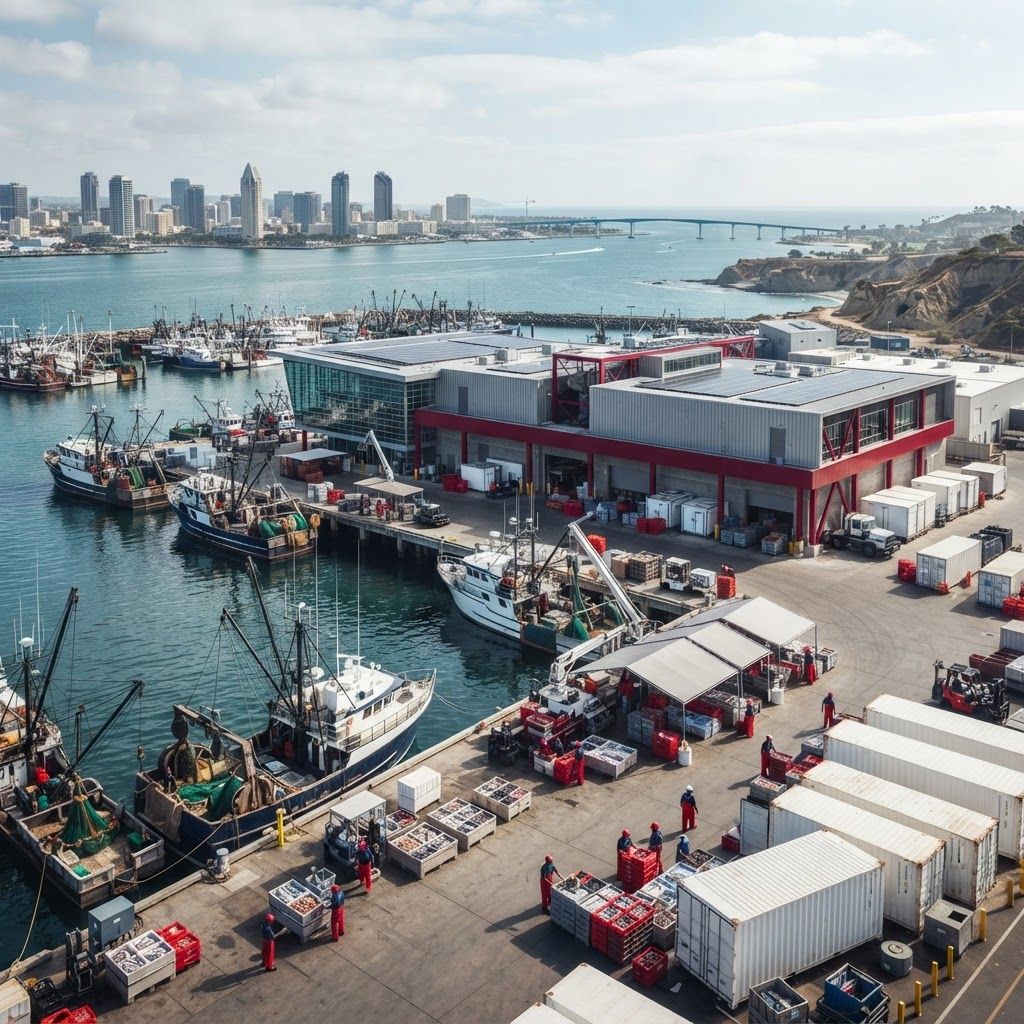
San Diego’s Seafood Economy
San Diego’s identity is closely tied to the Pacific, yet its seafood sector is more complex than boats landing fish. Harvesters, aquaculture businesses, processors, distributors, markets, and restaurants all help move perishable products safely to customers. The companies below represent different parts of that chain. Buyers should verify current species, harvest areas, certifications, and commercial service because supply changes with seasons and ocean conditions.
1. Catalina Offshore Products
Catalina Offshore Products is one of San Diego’s best-known seafood wholesalers. It supplies restaurants, retailers, and consumers with local and imported seafood, with particular recognition for sushi-grade products. Strong receiving, cutting, temperature control, and product knowledge support professional kitchens.
2. Tuna Harbor Dockside Market
Tuna Harbor Dockside Market brings fishermen and aquaculture producers directly to the public. While structured as a market rather than one fishing company, it is central to understanding San Diego’s local catch. Shoppers can learn about seasonal species and keep more value within the regional fleet.
3. Pacific Shellfish
Pacific Shellfish distributes seafood with expertise in shellfish and other fresh products. Restaurants value suppliers that can communicate harvest dates, origin, handling, and availability. Shellstock tags and strict refrigeration are essential food-safety controls throughout the chain.
4. Chesapeake Fish Company
Chesapeake Fish Company has longstanding roots on San Diego’s waterfront and serves wholesale seafood customers. The company’s role in receiving, processing, and distributing fresh fish demonstrates the importance of local infrastructure. Buyers can seek portioning and product formats suited to kitchen labor needs.
5. Santa Monica Seafood
Santa Monica Seafood is a major Southern California distributor serving foodservice and retail accounts. Its scale provides access to a broad domestic and international assortment. Procurement programs, traceability, quality assurance, and logistics are useful for customers requiring consistent specifications.
6. Pescador Fishing
San Diego’s commercial fishing operators, including small family businesses such as Pescador Fishing, connect local species with dockside and wholesale customers. Direct relationships can provide exceptional freshness and origin transparency. Supply is inherently seasonal, requiring flexible menus and purchasing.
7. Pacifico Aquaculture
Pacifico Aquaculture raises striped bass in ocean waters off Baja California and supplies the Southern California market. Its proximity to San Diego supports a regional aquaculture story with controlled harvest and distribution. Buyers should evaluate farming methods, feed, certifications, and handling alongside flavor and yield.
8. Blue Ocean Mariculture
Blue Ocean Mariculture produces open-ocean farmed kanpachi in Hawaii and participates in the broader West Coast premium seafood market. For San Diego chefs, responsibly managed aquaculture can complement variable wild supply. Consistent size and year-round planning are significant foodservice advantages.
9. Sysco San Diego
Sysco’s San Diego operation distributes seafood alongside a full foodservice catalog. It is relevant to hotels, institutions, and restaurants needing consolidated deliveries and standardized items. Customers should still request species, origin, catch method, and sustainability information for each product.
10. US Foods
US Foods serves San Diego foodservice operators with fresh and frozen seafood in multiple pack formats. Broad distribution can support predictable ordering and menu costing. Buyers should compare glaze, net weight, portion tolerance, thaw performance, and case yield rather than case price alone.
How to Select a Seafood Supplier
Evaluate temperature records, sanitation, hazard-control plans, traceability, recall procedures, and delivery reliability. Fresh fish should have clean aroma, firm flesh, appropriate color, and intact cold-chain handling. Shellfish require harvest tags, while frozen products need stable temperatures and honest net weights.
Responsible purchasing is species-specific. Ask about harvest method, stock status, bycatch, farm practices, and seasonality instead of relying on broad claims. San Diego businesses can strengthen the local blue economy by featuring underused regional species, communicating provenance, and planning flexible menus around what responsible harvesters can supply at its best.
