
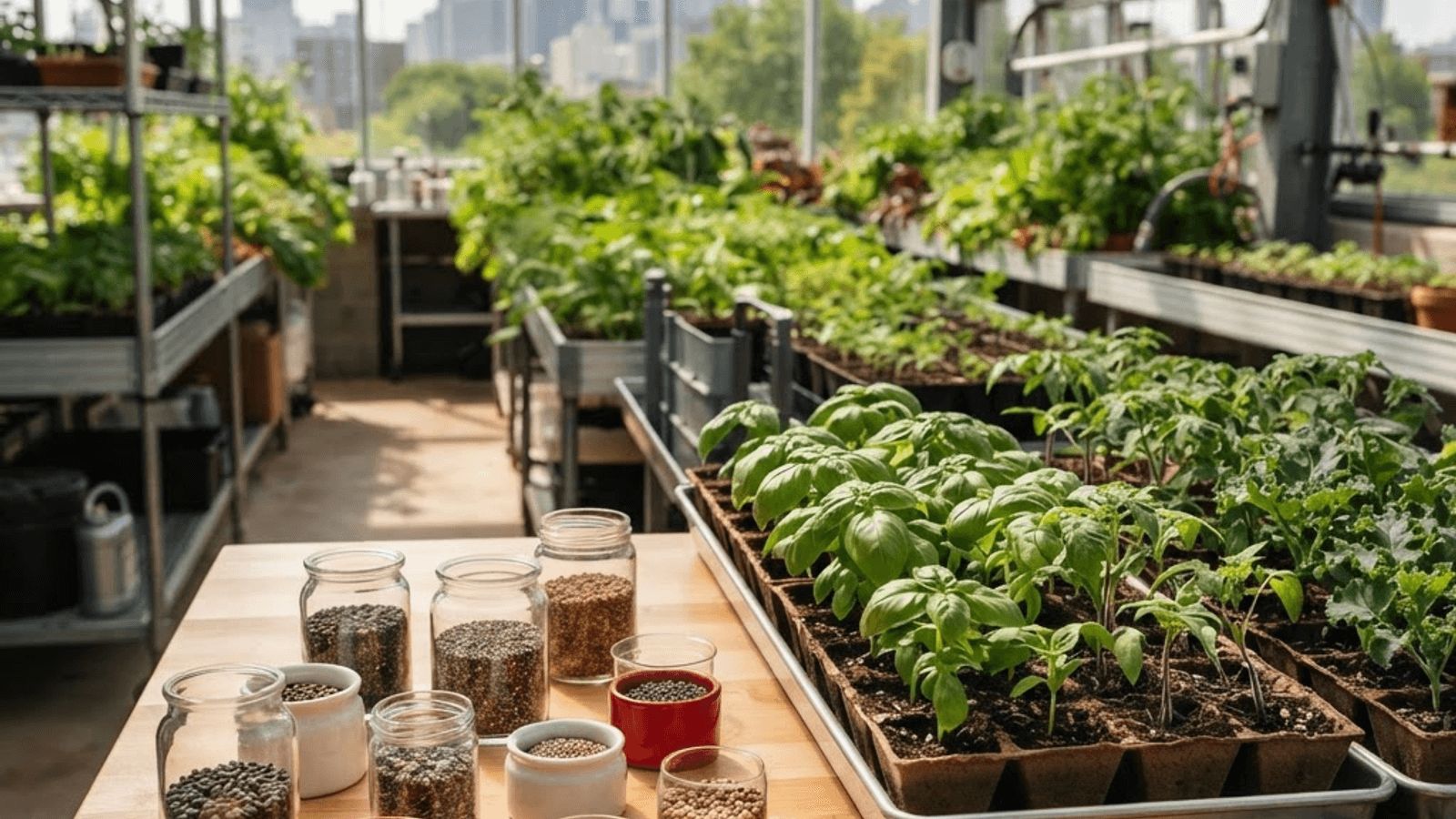
Selecting Seed for Philadelphia Conditions
Philadelphia growers manage humid summers, variable spring weather, compact urban plots, and a growing season long enough for multiple successions. Good seed selection begins with crop purpose, days to maturity, disease resistance, and space. These ten companies offer useful choices for farms, market gardens, community plots, and home growers in the region.
1. Burpee
Burpee is one of Pennsylvania's most recognizable seed names and has deep roots in the Philadelphia region. Its extensive vegetable, herb, and flower catalog serves gardeners with varied experience levels. Clear growing guidance and widely familiar varieties make it an accessible starting point for local planting plans.
2. True Leaf Market
True Leaf Market supplies garden seed, microgreens, sprouts, cover crops, and growing accessories. Urban farmers and indoor growers may value its breadth beyond conventional packet seed. Buyers should match package size and germination expectations to production volume to preserve freshness.
3. Johnny's Selected Seeds
Johnny's Selected Seeds is highly regarded among market growers for researched varieties, production tools, and detailed technical information. Philadelphia farms can compare traits such as disease resistance, harvest window, and high-tunnel performance. The company's trial-focused approach supports more deliberate crop planning.
4. High Mowing Organic Seeds
High Mowing Organic Seeds offers certified organic vegetable, herb, flower, and cover-crop seed. Organic farms and community growers appreciate the focus on varieties suited to ecological production. Certification, untreated status, and disease-resistance notes help customers align purchases with production requirements.
5. Fedco Seeds
Fedco operates through a cooperative-oriented model and offers vegetables, flowers, herbs, trees, and farm supplies. Its catalog is known for candid descriptions and attention to seed provenance. Group ordering can suit community gardens or networks of small growers seeking economical quantities.
6. Seedway
Seedway serves commercial agriculture with vegetable, farm, turf, and forage seed. Professional growers benefit from larger package sizes, crop expertise, and varieties designed for consistent production. Commercial buyers should discuss treatment, lot testing, and regional performance with a knowledgeable representative.
7. Harris Seeds
Harris Seeds supplies both professional growers and home gardeners with vegetable and flower seed. Its broad offering helps diversified farms consolidate crops while still accessing production-oriented varieties. Germination standards, pelleting options, and transplant suitability may influence selection.
8. Territorial Seed Company
Territorial Seed Company offers vegetables, herbs, flowers, and gardening supplies with extensive cultural information. Although based outside Pennsylvania, many varieties can perform well when maturity and heat tolerance fit local conditions. Philadelphia growers should prioritize trialing before committing substantial acreage.
9. Baker Creek Heirloom Seed Company
Baker Creek is known for visually distinctive heirloom and open-pollinated varieties from many cultures. Community gardens, educators, and specialty-market growers may value the diversity and storytelling potential. Heirlooms can offer exceptional flavor, though disease resistance and uniformity vary.
10. Southern Exposure Seed Exchange
Southern Exposure Seed Exchange focuses on open-pollinated varieties adapted to the Mid-Atlantic and Southeast. Regional adaptation makes the catalog especially relevant to Philadelphia's summer heat and humidity. Seed-saving information also supports growers interested in preserving locally successful lines.
How to Compare Seed Quality
Review the packed-for year, germination information, treatment status, and lot details. Store seed in cool, dry conditions and keep records of emergence, disease, yield, and flavor. Commercial growers should conduct small side-by-side trials because a nationally popular variety may not fit a specific soil, tunnel, or market.
Seed Trends and Community Value
Interest in culturally meaningful crops, pollinator habitat, organic production, and locally adapted seed continues to grow. At the same time, precision pelleting and disease-resistant hybrids can improve efficiency. Philadelphia growers do not need to choose one philosophy exclusively; a resilient seed plan can combine dependable hybrids, flavorful open-pollinated crops, and careful on-farm trials.
