
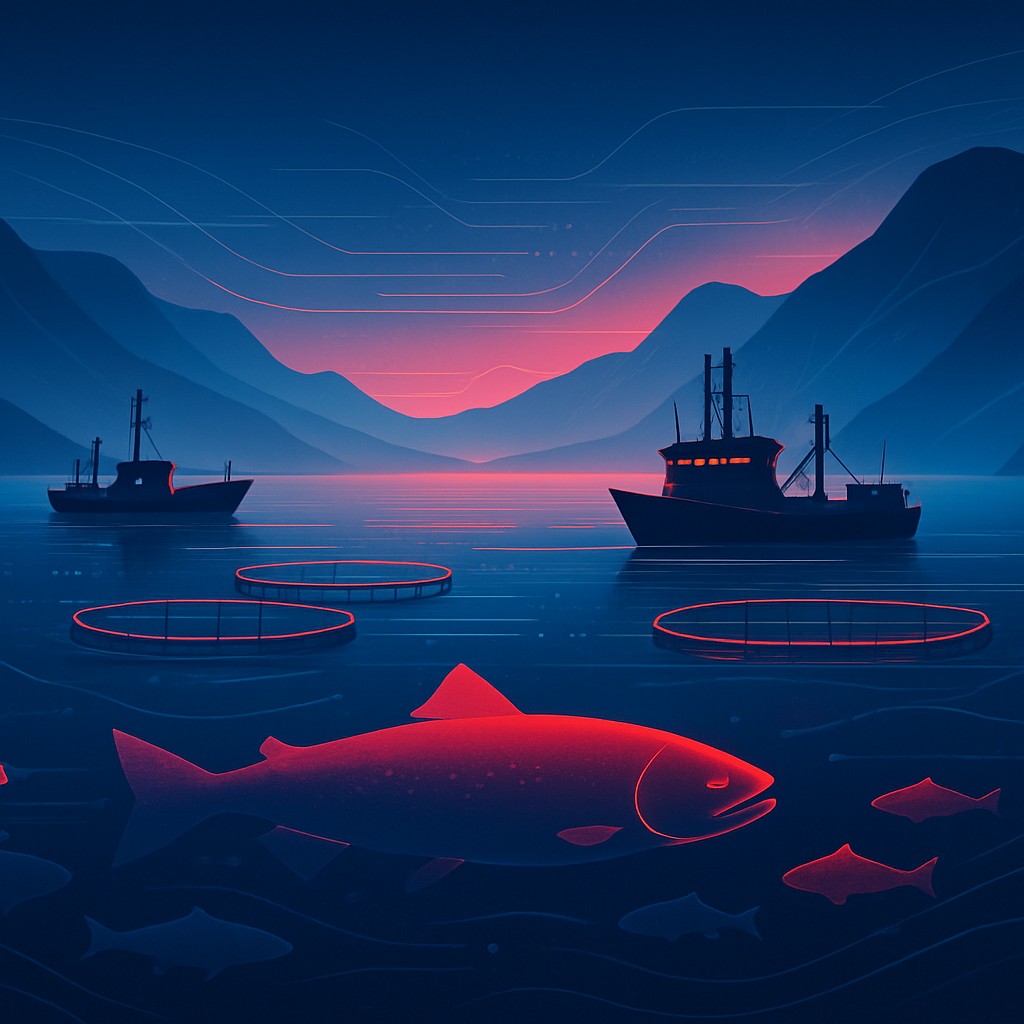
Norway: A Global Seafood Superpower
Few countries are as synonymous with seafood as Norway. Blessed with an immense coastline, cold clean waters, and deep maritime traditions, Norway has become one of the world's largest exporters of fish and seafood. Its fishery companies supply markets across Europe, Asia, and the Americas with salmon, cod, herring, mackerel, and a wide range of other species prized for their quality, freshness, and consistency.
The industry is a pillar of the national economy, ranking among the country's most valuable export sectors. It sustains coastal communities, drives technological innovation, and positions Norway as a global leader in both wild-capture fisheries and aquaculture. Behind this remarkable success is a group of companies that skillfully combine scale, science, and an unwavering commitment to sustainability.
The Rise of Norwegian Aquaculture
Salmon farming transformed Norway's seafood industry, turning it into a year-round, high-volume export machine. Companies such as Mowi, one of the largest seafood producers in the world, pioneered modern aquaculture techniques and continue to set benchmarks for efficiency and animal health. Lerøy Seafood Group and SalMar are similarly influential, operating extensive farming, processing, and distribution networks that reach global markets.
These companies have invested heavily in fish welfare, disease prevention, and feed innovation. Sustainable feed derived from marine and plant sources, along with closed-containment and offshore farming systems, is helping the industry reduce its environmental footprint while meeting soaring global demand for healthy protein. This continuous investment in research keeps Norwegian aquaculture at the cutting edge.
Leading Fishery Companies Driving the Sector
Norway's fishery landscape features a diverse mix of aquaculture giants and traditional wild-catch operators. Mowi remains a household name, fully integrated across the entire value chain from egg to plate. SalMar has earned recognition for its offshore fish farming ventures that push the boundaries of ocean aquaculture into more exposed waters. Lerøy Seafood Group balances farmed salmon with a strong presence in whitefish and wild catch.
Grieg Seafood is respected for its regional farming operations and its transparent sustainability reporting. Nordlaks operates innovative large-scale offshore farming installations. Cermaq, focused on salmon and trout, is known for its advanced traceability technology. On the wild-catch side, Nergård and Brødrene Karlsen maintain proud traditions of harvesting cod and other whitefish from the rich northern waters that have supported communities for centuries.
Other notable companies include Insula and Norway Seafoods, which play important roles in processing and exporting, ensuring that Norwegian seafood reaches international markets at peak quality. Together these businesses form a resilient and dynamic sector that balances heritage with modern industrial capability.
Sustainability at the Core
Sustainability is not a marketing slogan in Norway; it is a regulatory and cultural imperative. Strict licensing, biomass limits, and rigorous environmental monitoring govern the aquaculture industry, while wild fisheries are managed through science-based quotas designed to protect fish stocks for future generations. This careful stewardship has helped Norway maintain healthy populations of cod and other species even as many global fisheries face decline or collapse.
Companies invest continuously in reducing sea lice, minimizing escapes, and improving water quality around their sites. Many participate in international certification schemes that verify responsible practices, giving global buyers confidence in the provenance and integrity of Norwegian seafood. This reputation for responsibility is a key competitive advantage in an increasingly conscientious market.
Innovation and Technology
Technology permeates every stage of the Norwegian seafood value chain. Underwater cameras, artificial intelligence, and sensor networks monitor fish health and feeding in real time. Automated processing plants improve efficiency and food safety. Sophisticated cold-chain logistics ensure that fresh salmon can reach distant markets within days of harvest, preserving quality across enormous distances.
Offshore and land-based farming represent the next frontier, promising to expand production while reducing pressure on sensitive coastal ecosystems. Norwegian companies are at the forefront of these developments, exporting not just seafood but also expertise, equipment, and technology to the global industry. This knowledge leadership reinforces the country's position at the heart of world aquaculture.
Economic and Community Impact
The fishery sector is a lifeline for many coastal towns, providing stable employment and supporting local economies that might otherwise struggle. It also drives a broad supplier network encompassing shipbuilding, feed production, packaging, and research. This ecosystem reinforces Norway's position as a seafood innovator and ensures the benefits of the industry are widely shared across regions and generations.
Conclusion
Norway's fishery companies exemplify how a nation can build a world-leading industry on the foundations of natural advantage, rigorous science, and an unwavering commitment to sustainability. From salmon aquaculture pioneers to time-honored wild-catch fleets, these businesses deliver premium seafood to the world while protecting the oceans that make it possible. Their continued innovation ensures Norway will remain a seafood superpower for many years to come.
