
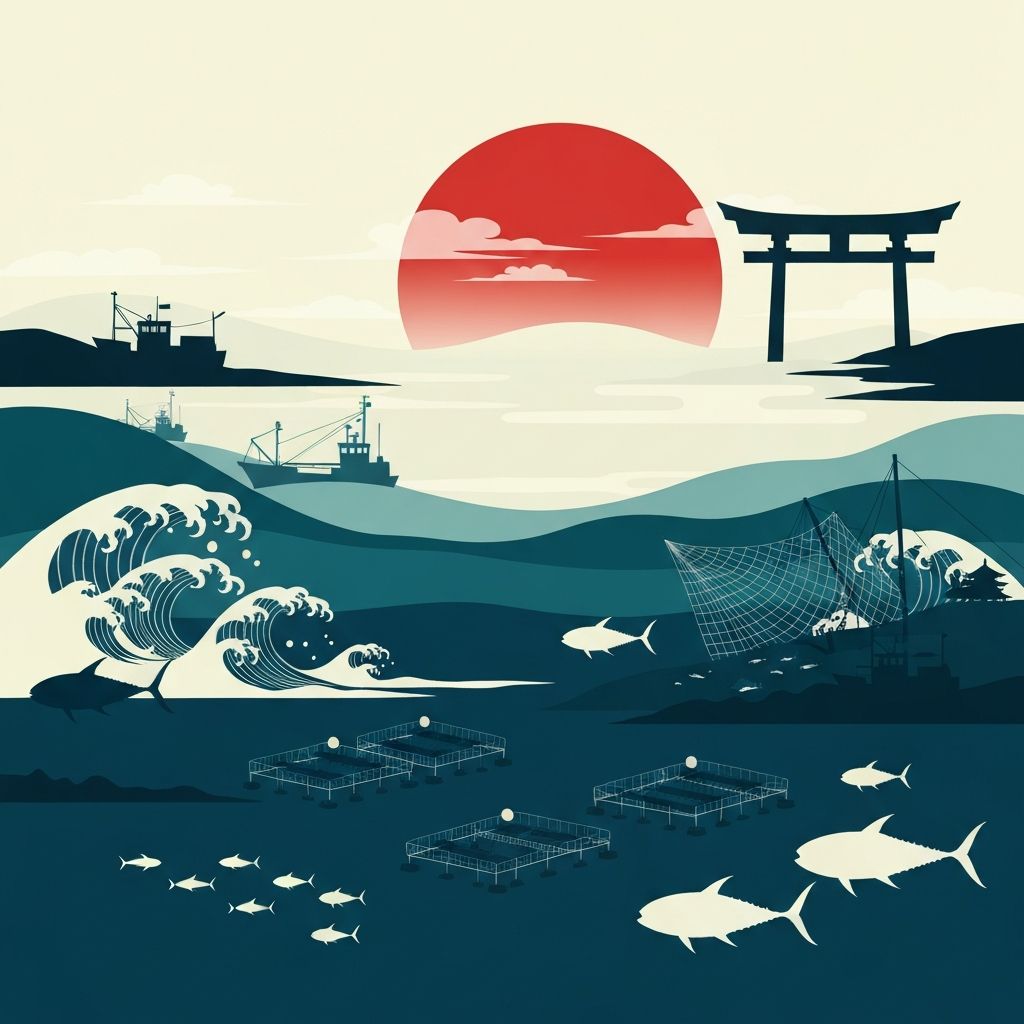
Japan's Fishery Industry: A Pillar of Global Seafood
Japan is one of the world's largest consumers and producers of seafood, with a rich fishing heritage that spans centuries. The country's fishery companies are not only essential to its domestic food culture but also major players in the global seafood market. From traditional fishing fleets to high-tech aquaculture operations, Japanese fishery businesses are known for quality, innovation, and sustainability.
Japanese fishery companies handle everything from tuna and salmon to shellfish, seaweed, and processed seafood products. Their commitment to freshness, traceability, and ethical practices has established Japan as a global benchmark in the seafood industry.
1. Maruha Nichiro Corporation
Maruha Nichiro is Japan's largest fishery company and one of the world's leading seafood suppliers. It operates across the entire value chain, from fishing and aquaculture to processing and distribution. Its global presence ensures a steady supply of high-quality seafood products.
2. Nippon Suisan Kaisha (Nissui)
Nissui is another major player with a long history in the fishery industry. The company is involved in fishing, aquaculture, food processing, and pharmaceuticals derived from marine resources. Its commitment to sustainability and innovation makes it a respected name worldwide.
3. Kyokuyo Co., Ltd.
Kyokuyo specializes in tuna, salmon, and shrimp products. Known for its strong cold-chain logistics and aquaculture operations, the company supplies retailers, restaurants, and food manufacturers around the globe.
4. Hoko Co., Ltd.
Hoko is a leading processor of canned and frozen seafood. With expertise in product development and global sourcing, Hoko provides consumers with high-quality, convenient seafood options through retailers across multiple regions.
5. Toyo Suisan Kaisha
While Toyo Suisan is famous for instant noodles, it also has a significant fishery division. The company supplies frozen and processed seafood products, leveraging its expertise in food technology and global distribution networks.
6. Marudai Food Co.
Marudai Food focuses on processed seafood and meat products. Its fishery operations emphasize quality control and innovative product development, making it a trusted supplier for both retail and food service sectors.
7. Nichirei Corporation
Nichirei is a major frozen food company with strong fishery operations. It offers a wide range of seafood products, including premium tuna, shrimp, and crab. Its advanced freezing technology preserves freshness and flavor, meeting global standards.
8. Hokoku Kintetsu Fisheries
Hokoku Kintetsu specializes in deep-sea fishing and aquaculture. The company is known for its high-quality tuna and yellowtail, supplying both domestic markets and international clients through robust logistics networks.
9. Yokohama Reito Co.
Yokohama Reito provides cold storage and frozen food logistics, supporting Japan's fishery industry with state-of-the-art preservation technology. Its services ensure that seafood maintains optimal freshness during distribution.
10. Aomori Prefecture Fisheries Cooperative
Aomori is famous for its scallops, squid, and tuna. The prefecture's fisheries cooperative supports thousands of fishermen, ensuring sustainable practices and high-quality seafood distribution to markets across Japan and abroad.
Trends and Innovations in Japan's Fishery Industry
Japan's fishery industry is evolving rapidly to address challenges such as overfishing, climate change, and shifting consumer preferences. Aquaculture is one of the most significant growth areas, with companies investing in sustainable fish farming for species like bluefin tuna, salmon, and yellowtail. These efforts help reduce pressure on wild fish populations while ensuring stable supply.
Technology is also transforming the industry. Smart fishing techniques, satellite tracking, and AI-driven analytics are improving efficiency and sustainability. Blockchain technology is being adopted to enhance traceability, allowing consumers to verify the origin and journey of their seafood.
Sustainability certifications, eco-labeling, and partnerships with global organizations such as the Marine Stewardship Council are becoming increasingly common. These efforts align with growing global consumer demand for responsibly sourced seafood and help Japanese companies maintain their competitive edge in international markets.
Why Japanese Fishery Companies Excel Globally
Japanese fishery companies are admired for their commitment to quality, innovation, and sustainability. Their advanced processing facilities, rigorous quality control, and deep industry expertise enable them to deliver some of the world's finest seafood. Whether it's sashimi-grade tuna, premium scallops, or specialty processed products, Japan's seafood industry sets standards that others strive to match.
For retailers, restaurants, and importers, partnering with Japanese fishery companies provides access to a wide variety of high-quality products supported by reliable logistics and ethical practices. As global demand for seafood continues to rise, Japan's fishery leaders are well-positioned to meet future challenges while preserving the rich culinary traditions that define the country's relationship with the sea.
