
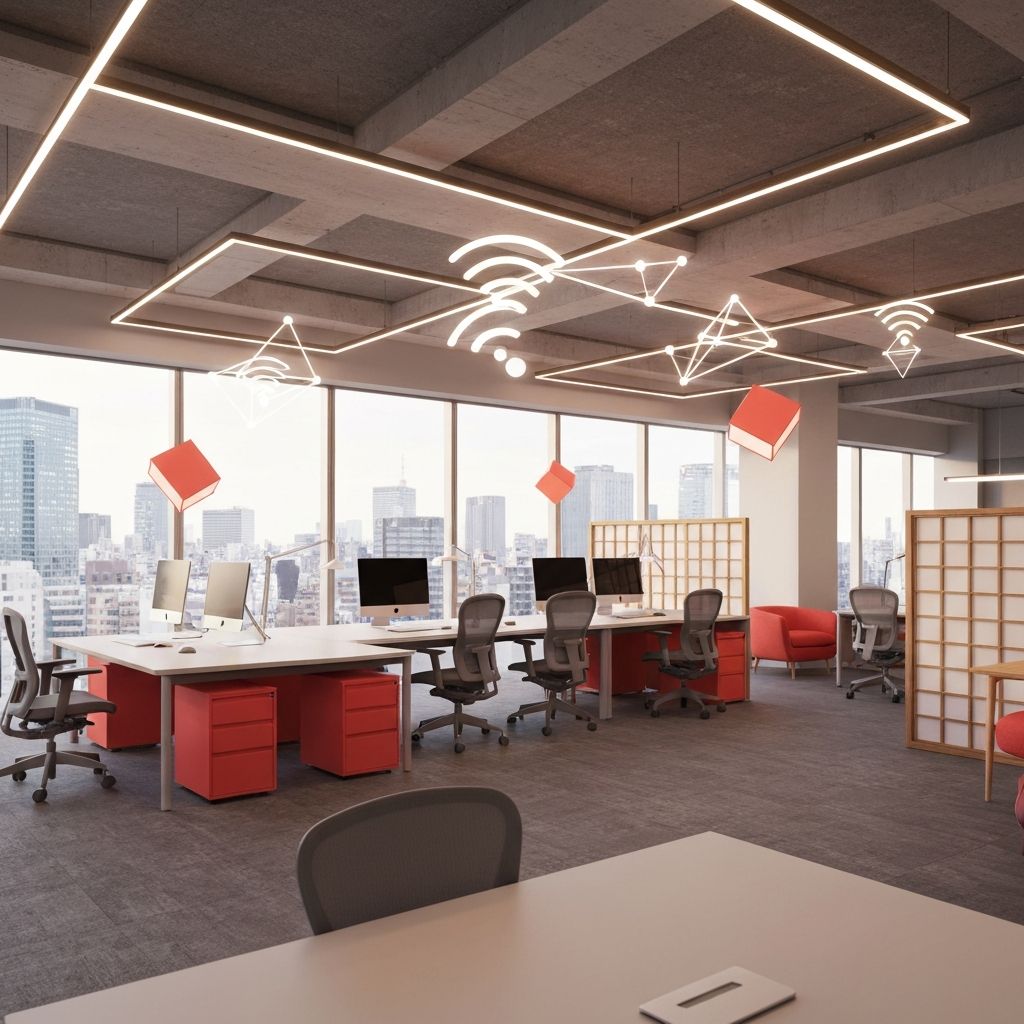
The Rise of Co-working in Japan
Co-working has become a cornerstone of Japan's evolving work culture. With more professionals embracing remote work, freelancing, and startup ventures, demand for flexible workspaces has surged. Japanese co-working spaces stand out for their thoughtful design, premium service, and tech-forward amenities, often blending traditional aesthetics with modern functionality.
1. WeWork Japan
WeWork operates dozens of locations across Tokyo, Osaka, Yokohama, Fukuoka, and other major cities. It offers private offices, dedicated desks, and meeting rooms with a strong global community.
2. The Hive Japan
The Hive is an Asia-Pacific co-working brand with stylish locations in Tokyo. It is known for design-focused interiors, networking events, and a vibrant entrepreneurial community.
3. Regus Japan
Regus, part of IWG, operates more than 100 business centers across Japan. It is a top choice for companies needing professional offices, meeting rooms, and virtual office services.
4. Spaces by IWG
Spaces offers a more creative, design-led alternative to traditional Regus offices. Its Tokyo and Osaka locations attract creative agencies, startups, and tech teams.
5. Servcorp Japan
Servcorp specializes in premium serviced offices in landmark towers like Shinjuku Mitsui Building and Marunouchi Building. It is ideal for executives seeking prestige addresses.
6. Mitsubishi Estate xLINK
xLINK is Mitsubishi Estate's co-working brand, focused on creating innovation hubs in central Tokyo. It targets corporate professionals, intrapreneurs, and growth-stage startups.
7. Impact HUB Tokyo
Impact HUB Tokyo is a globally connected co-working community focused on social entrepreneurship and impact-driven startups. Members include nonprofits, ventures, and creators.
8. CIC Tokyo
Located in Toranomon, CIC Tokyo is one of the largest innovation campuses in Asia, supporting startups with workspace, programs, and investor connections.
9. Open Office
Operated by Hulic, Open Office offers boutique co-working in prime Tokyo locations such as Ginza, Akasaka, and Shibuya. Its quiet, design-driven spaces suit professionals and small firms.
10. fabbit
fabbit is a Japanese co-working chain with multiple Tokyo locations and partner spaces across Asia. It focuses on supporting global expansion for Japanese and international startups.
What to Look for in a Co-working Space
Key factors include location near major train stations, internet reliability, meeting-room availability, community events, and flexible plans that scale with team size. Many spaces in Japan also offer mailing services, business registration support, and on-site cafes.
The Future of Work in Japan
As hybrid and remote work continue to grow, Japan's co-working sector is expanding into suburban hubs and resort destinations to support workation lifestyles. The spaces above represent the best of Japan's flexible-work ecosystem and are well positioned to support the next generation of professionals and entrepreneurs.
