
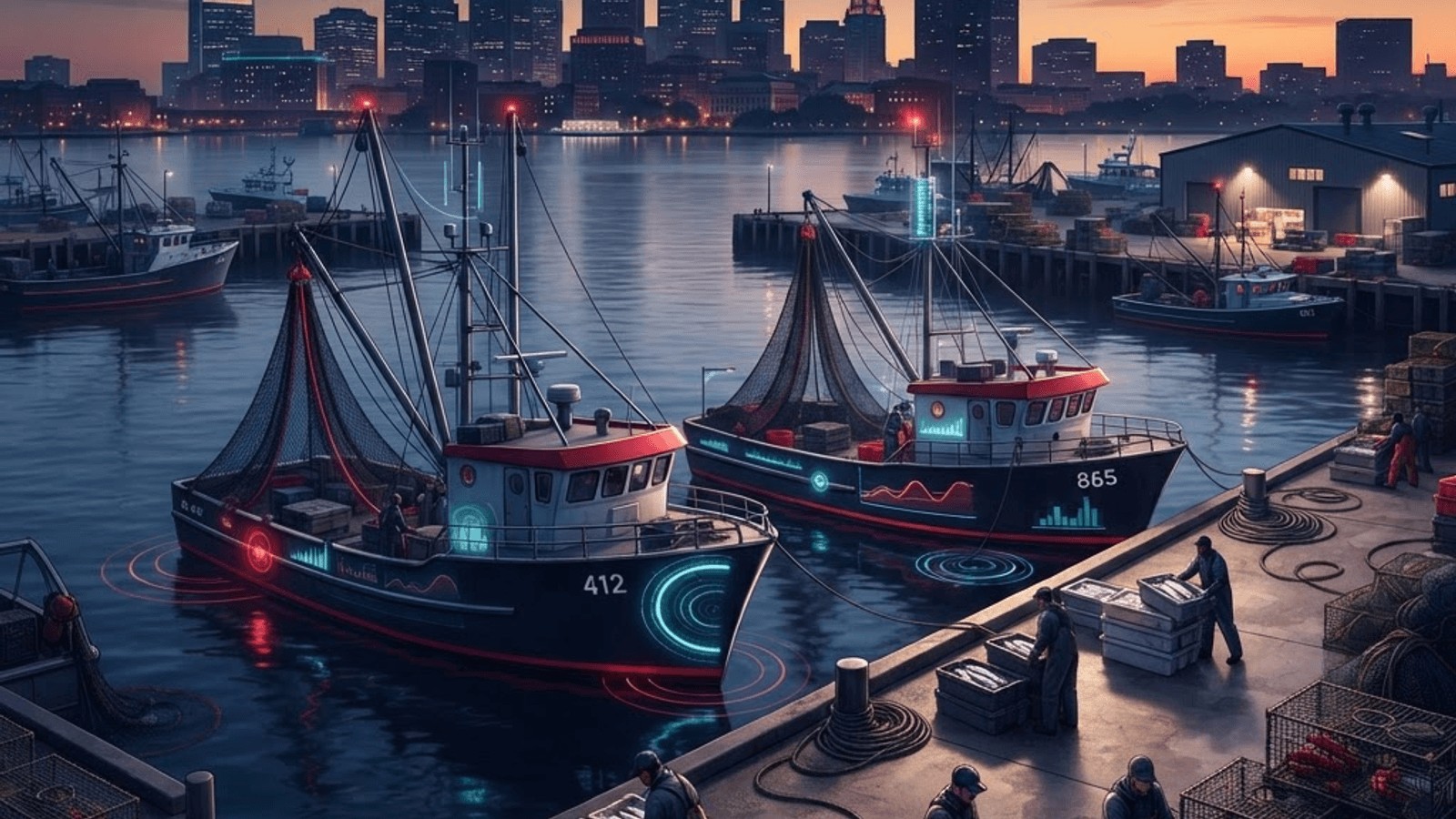
A City Built on Fish
Few industries are as deeply woven into Boston's identity as fishing. The Boston Fish Pier, opened in 1914 and still operating in the Seaport district, remains one of the oldest continuously working fish piers in the world. Around it sits a cluster of processors, wholesalers, brokers, cold storage operators and exporters that together handle an enormous volume of groundfish, shellfish, lobster and imported seafood every year.
The modern Boston fishery sector is a blend of tradition and technology. Family businesses that have operated for four generations now run automated processing lines, blast freezing, vacuum packing and traceability systems that follow a fillet from vessel to plate. Boston's role as an international air freight gateway also makes it a major point of both seafood import and export, connecting New England harvest with global markets and supplying local restaurants with species from around the world.
How the Boston Seafood Trade Works
Understanding the chain helps buyers choose partners. Harvesters operate vessels landing groundfish such as haddock, cod, pollock and flounder, plus scallops, lobster and squid. Primary processors cut, portion, freeze and pack. Wholesalers and distributors aggregate species and grades and deliver to restaurants, retailers and institutions. Brokers arrange import and export trades. Cold storage operators provide the freezer capacity the industry depends on. Value-added producers create prepared items such as breaded portions, smoked fish, chowder bases and retail-ready packs.
Many Boston companies span several of these functions, which is often an advantage for buyers because it shortens the chain and improves traceability.
Top 10 Best Fishery Companies in Boston
1. Stavis Seafoods. A Boston company with a history stretching back over a century, Stavis is known for broad species sourcing, strong sustainability commitments and sophisticated supply chain management serving retail and foodservice customers nationally.
2. John Nagle Company. One of the oldest operations on the Boston Fish Pier, Nagle is respected for fresh fish expertise, daily market knowledge and long-standing relationships with vessels and buyers throughout New England.
3. North Coast Seafoods. A significant Boston-based processor and distributor supplying supermarkets and foodservice with fresh and frozen products, notable for investment in processing capability, product development and responsible sourcing programmes.
4. Legal Sea Foods procurement operations. The restaurant group's quality control and purchasing arm became famous for its in-house testing laboratory and rigorous standards, and it remains an influential buyer shaping quality expectations across the Boston market.
5. Atlantic Capes Fisheries. With operations across the northeast serving the Boston market, this company is prominent in scallops, clams and shellfish, combining vessel ownership with processing for tight control over quality and traceability.
6. Ipswich Shellfish Group. A regional shellfish specialist supplying oysters, clams, mussels and lobster to Boston restaurants and distributors, valued for live product handling expertise and knowledge of local harvest areas.
7. Boston Sword and Tuna. A Seaport processor specialising in premium pelagic species and fresh fillet programmes, known for handling standards that support high-end restaurant and retail requirements.
8. Slade Gorton and Company. A long-established Boston seafood supplier serving foodservice and retail with a wide portfolio of frozen and value-added products and a reputation for consistent specification compliance.
9. Red's Best. A Boston company built around aggregating catch from small day boats and using technology to trace fish back to individual vessels, giving chefs and retailers unusually specific provenance information while supporting the small-boat fleet.
10. Lobster distributors and live holding facilities around Boston Harbor. Specialist lobster companies operating tanks and live shipping infrastructure serve both local restaurants and international air freight markets, an essential part of the regional seafood economy.
Sustainability and Regulation
New England fisheries are among the most heavily managed in the world. Quotas, permits, gear restrictions, closed areas, observer coverage and stock rebuilding plans all shape what Boston companies can offer. Buyers should expect suppliers to speak fluently about stock status and management measures for the species they sell.
Third-party certification and ratings programmes now influence purchasing decisions across Boston's institutional and retail buyers. Companies that maintain chain-of-custody certification, document sourcing at the vessel or farm level, and participate in fishery improvement projects have a clear commercial advantage. Interest in responsibly farmed shellfish, particularly oysters from Massachusetts waters, has grown strongly and represents one of the healthiest segments of the market.
Cold Chain and Quality
Seafood quality is largely determined in the first hours after harvest and preserved or destroyed by temperature control thereafter. Serious Boston suppliers invest in slush ice handling, rapid chilling, blast freezing where appropriate, insulated transport, temperature logging and short delivery windows. Buyers should ask specific questions about time from landing to processing, storage temperatures and delivery frequency rather than accepting general assurances.
Choosing a Seafood Supplier
Restaurants and retailers should evaluate species availability and seasonality knowledge, cutting and portioning capability, documented food safety programmes, traceability depth, delivery reliability and how the supplier communicates when weather disrupts landings. A supplier who calls proactively to suggest an alternative species when the boats stay in port is far more valuable than one who simply reports a shortage.
Boston's density of experienced seafood companies is a genuine competitive asset for the region's food businesses. Few cities offer comparable access to fresh New England harvest, global imports, deep technical expertise and processing capability within a single working waterfront district.
