
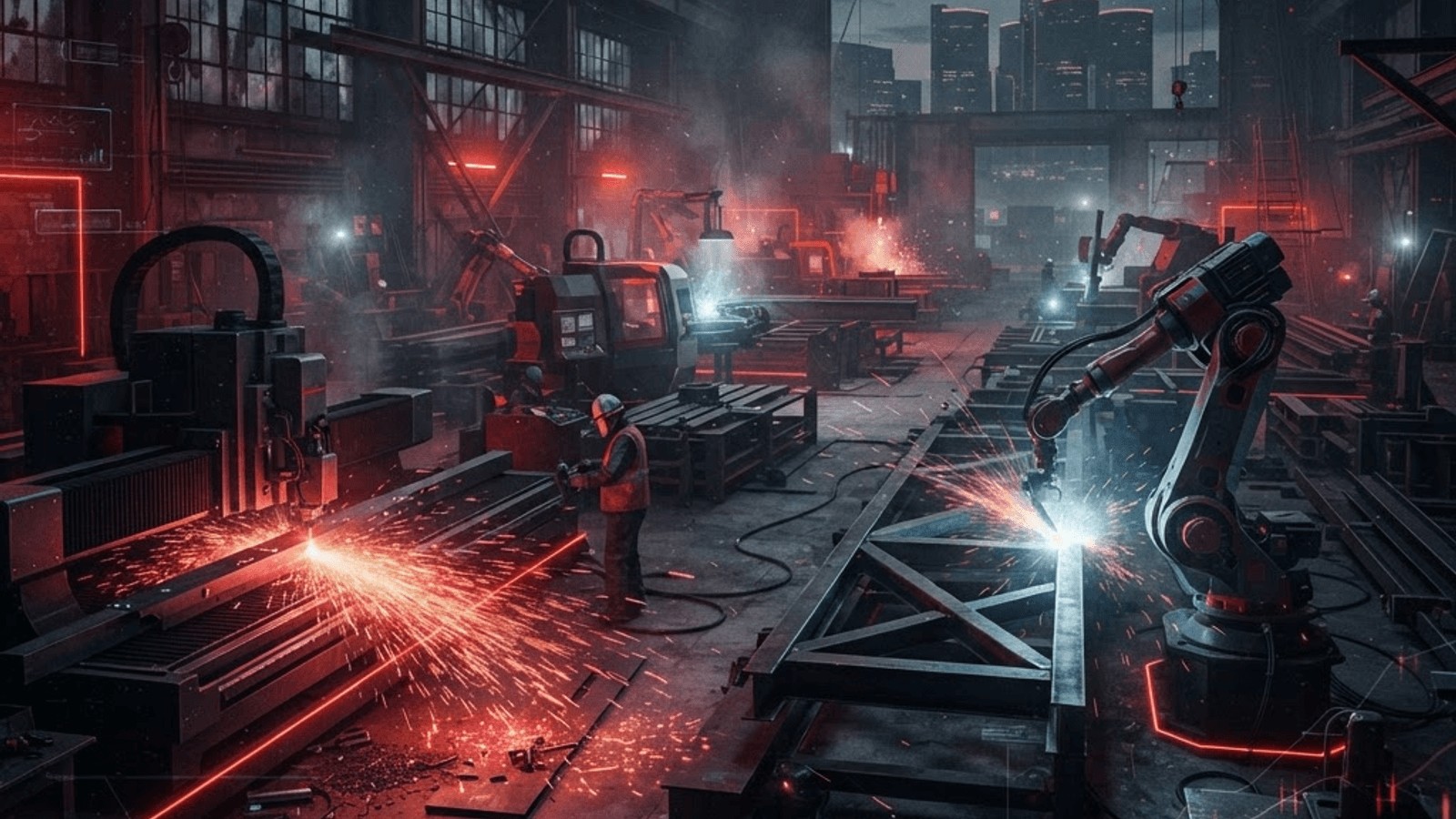
Metal Is Detroit's Native Language
Detroit's identity was forged in metal. The tool-and-die shops, stamping plants, forges, and machine shops that supplied the automotive industry created one of the densest concentrations of metalworking expertise anywhere in the world. That capability never disappeared. It diversified into aerospace, defense, medical devices, energy, robotics, architectural metal, and custom fabrication.
For buyers, this concentration means options. A single metropolitan area offers laser cutting, waterjet, press brake forming, CNC turning and milling, five-axis machining, welding across multiple processes, heat treating, plating, powder coating, and precision inspection. Rarely does a project require sourcing outside the region, and short distances between operations keep multi-step parts moving quickly.
Understanding the Metalworks Landscape
Metalworks is not a single trade. Precision machining removes material to achieve tight tolerances on individual components. Sheet metal fabrication cuts, forms, and welds flat stock into enclosures and brackets. Structural fabrication builds heavy assemblies from beams and plate. Stamping produces high volumes from dies. Architectural metalwork blends fabrication with design and finish craftsmanship.
Choosing the wrong category is a common and expensive error. Asking a precision machine shop to build a structural staircase, or asking a structural fabricator to hold thousandth-inch tolerances, produces frustration on both sides. Understanding which discipline your part belongs to is the first step in successful sourcing.
The Top 10 Best Metalworks Companies in Detroit
1. Smith Shop
Smith Shop is a Detroit metalworking studio known for architectural metal, custom furniture, railings, gates, and fabricated fixtures produced with a blend of blacksmithing and modern fabrication. The shop is a natural fit for designers and developers who need distinctive metal elements rather than catalog products. Its work on hospitality and retail interiors demonstrates how craft finishes elevate commercial spaces.
2. Detroit Tool & Die Works
Detroit Tool & Die Works represents the city's foundational tooling sector, designing and building stamping dies, fixtures, gauges, and progressive tooling. These shops combine simulation, precision machining, and hand finishing to produce tools that hold form and dimension across millions of cycles. Product engineers benefit from involving a die builder during part design, because minor geometry changes can dramatically reduce tooling complexity.
3. Motor City Precision Machining
Motor City Precision Machining reflects the region's CNC machining tier, offering multi-axis milling and turning for aerospace, medical, defense, and industrial components. Differentiators include tolerance capability, in-process inspection with coordinate measuring machines, material versatility across aluminum, stainless, titanium, and exotic alloys, and documented quality systems. Shops in this category typically hold recognized aerospace or medical certifications.
4. Great Lakes Steel Fabrication
Great Lakes Steel Fabrication stands for structural fabricators supplying beams, columns, stairs, platforms, mezzanines, and equipment frames to Detroit construction and industrial projects. Value comes from detailing capability, certified welding procedures, shop capacity for large assemblies, and coordination with erection crews. Industrial expansion and adaptive reuse projects across the metro area keep this segment busy year round.
5. Riverfront Sheet Metal
Riverfront Sheet Metal represents the sheet metal fabrication segment: laser cutting, punching, forming, welding, and assembly of enclosures, panels, brackets, chassis, and guards. Modern shops in this space run automated nesting and offer rapid prototyping followed by scaled production from the same digital files. Equipment manufacturers and automation integrators are the most common customers.
6. Michigan Waterjet & Laser
Michigan Waterjet & Laser illustrates the specialized cutting service providers that support the broader industry. Waterjet cuts without heat-affected zones and handles thick plate, stone, composites, and hardened materials, while fiber laser delivers speed and edge quality on sheet. Many fabricators outsource cutting to these specialists rather than investing in every technology themselves.
7. Wolverine Welding & Fabrication
Wolverine Welding & Fabrication represents the region's job-shop welding operations serving repair, maintenance, and custom build work. Capabilities generally span MIG, TIG, stick, and flux-core welding across carbon steel, stainless, and aluminum, with mobile field service crews. Manufacturing plants rely on these firms for emergency repairs that keep production lines running.
8. Detroit Metal Finishing
Detroit Metal Finishing stands for the plating, anodizing, powder coating, and passivation providers essential to completing metal parts. Finishing determines corrosion resistance, appearance, wear performance, and electrical properties, and it is frequently the schedule bottleneck. Buyers should confirm finishing lead times separately from machining, since underestimating this step delays many programs.
9. Great Lakes Forge Industries
Great Lakes Forge Industries represents forging and heavy metal forming operations producing high-strength components for energy, mining, defense, and heavy equipment markets. Forged parts offer superior grain structure and fatigue performance compared to machined billet in demanding applications. Engineering support around material selection and heat treatment is central to this segment's value.
10. Woodward Architectural Metals
Woodward Architectural Metals rounds out the list, focusing on ornamental and architectural metal such as storefronts, canopies, decorative screens, cladding panels, and handrail systems. This work sits at the intersection of construction and craft, requiring shop drawings coordinated with architects, precise field measurement, and finish consistency across visible surfaces. Detroit's mixed-use development activity has expanded demand considerably.
How to Evaluate a Metalworks Partner
Begin with capability documentation. Request equipment lists with capacities, tolerance ranges typically held, materials routinely processed, and inspection tools available. A shop that can cite its measurement equipment and calibration schedule is generally more reliable than one that speaks only in generalities.
Confirm certifications relevant to your industry. Structural work should involve certified welding procedures and qualified welders. Aerospace and medical work carry their own registration requirements. General manufacturing typically expects quality management certification with documented corrective action processes.
Clarify the full process chain. Determine which operations happen in-house versus at outside vendors, since every handoff adds schedule risk. Ask about first-article inspection, documentation packages, and how nonconformances are handled. Finally, request a plant visit, because walking a shop floor reveals organization, maintenance discipline, and workload faster than any capability statement.
Trends Shaping Detroit Metalworking
Automation continues to spread, with robotic welding cells, automated material handling, and lights-out machining offsetting skilled labor shortages. Additive manufacturing is being adopted for tooling inserts, fixtures, and low-volume complex parts. Electrification is shifting demand toward battery enclosures, busbars, and lightweight structures. And digital quoting and file-to-part workflows have compressed lead times across the industry.
Final Thoughts
Detroit's metalworks sector delivers extraordinary breadth, from thousandth-inch precision machining to heavy structural steel and hand-finished architectural craft. The key to a successful project is matching your part to the right discipline, verifying capability with documentation, and confirming finishing timelines early. With the right partner, the region's metalworking depth becomes a genuine competitive advantage.
