
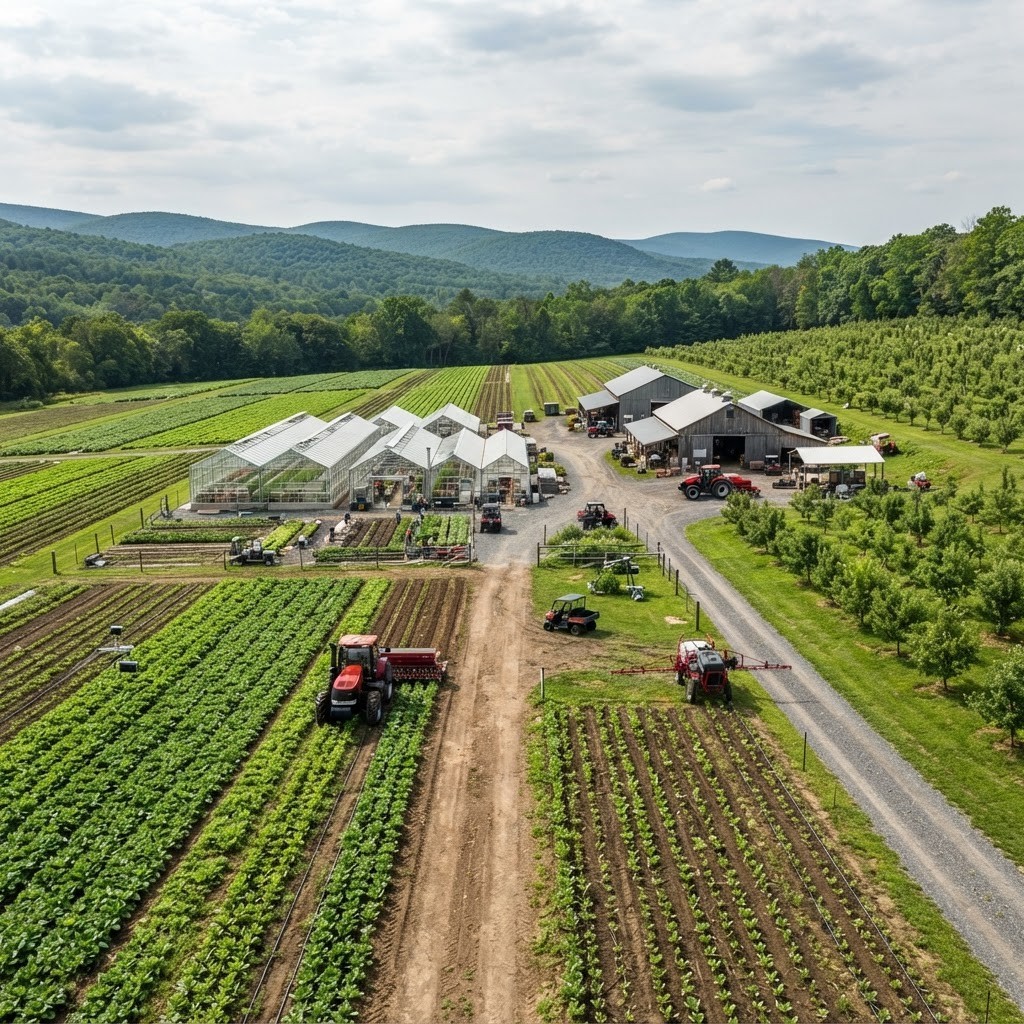
Agriculture Across New York State
Beyond New York City’s skyline lies one of America’s most diverse agricultural regions. The state is known for dairy, apples, vegetables, grapes, maple products, grains, and expanding greenhouse production. Its farms serve local markets while supplying national food systems. The businesses below stand out for scale, longevity, innovation, stewardship, or direct connection with consumers. They represent different models, so this guide is best viewed as a portrait of notable operators rather than a single ranking by size.
1. Turek Farms
Turek Farms is a prominent vegetable producer in the Finger Lakes region, with sweet corn and other fresh crops forming an important part of its operation. The company illustrates the planning required to grow, harvest, cool, pack, and distribute perishable produce at scale. Retail and foodservice customers value consistency and timing, while regional production can reduce the distance between field and market.
2. Torrey Farms
Torrey Farms is a multigenerational western New York vegetable operation associated with crops such as onions, cabbage, cucumbers, squash, and corn. Its scale and crop diversity help serve major wholesale channels. The business demonstrates how sophisticated storage, packing, labor planning, and food-safety systems have become integral to modern farming, particularly in a climate with a defined growing season.
3. Intergrow Greenhouses
Intergrow Greenhouses produces greenhouse-grown tomatoes in New York. Controlled-environment agriculture enables predictable quality, protected cultivation, and extended local availability. Greenhouse systems can optimize water and nutrients while reducing exposure to weather extremes. The model is increasingly significant as retailers seek regional produce with dependable supply, although energy use and infrastructure efficiency remain important performance considerations.
4. Fowler Farms
Fowler Farms is a longstanding apple grower and packer in western New York. Apples are central to the state’s agricultural identity, and successful orchard businesses combine horticulture with storage, sorting, packing, and marketing. Controlled-atmosphere storage helps extend the selling season, while varietal planning responds to changing consumer preferences. Fowler Farms reflects the vertical coordination needed to bring consistent fruit to large markets.
5. Red Jacket Orchards
Red Jacket Orchards grows fruit in the Finger Lakes and is known for apples, stone fruit, berries, and juices. The company’s farm-to-product approach shows how growers can add value through pressing, packaging, and brand development. Its regional identity resonates with consumers interested in provenance. Orchard biodiversity and a varied product mix can also help a business spread seasonal risk.
6. Hudson River Fruit Distributors
Hudson River Fruit Distributors is deeply connected to New York apple growing, packing, storage, and distribution. The company links orchards with retail channels that demand reliable grading and year-round programs. Its role underscores that agricultural success depends on post-harvest expertise as much as cultivation. Cold storage, quality control, packaging formats, and logistics all influence fruit value.
7. Ideal Dairy Farms
Ideal Dairy Farms is a family dairy operation in eastern New York. Modern dairies coordinate animal care, nutrition, crop production, milk quality, and environmental management every day of the year. Progressive operations also use data to monitor herd health and productivity. The company represents the dairy sector’s importance to New York and the operational discipline required in a market shaped by volatile input and milk prices.
8. Noblehurst Farms
Noblehurst Farms is a multigenerational dairy and crop business in western New York recognized for resource-conscious practices. Its activities include milk production, feed crops, and organic-waste management. Farm-based anaerobic digestion and nutrient recycling demonstrate how agricultural enterprises can turn byproducts into energy and soil resources. This circular approach is increasingly relevant to resilient food systems.
9. Hudson Valley Farm Hub
Hudson Valley Farm Hub combines production with farmer training, research, and ecological stewardship. It grows vegetables, grains, and other crops while supporting knowledge development in the regional farming community. The organization’s work highlights soil health, biodiversity, and practical education. Its broader mission makes it influential beyond the volume of crops it produces.
10. North Country Farms
North Country farms collectively demonstrate the strength of New York’s dairy, maple, livestock, and field-crop economy. Among notable operators, agribusinesses in this region often manage substantial acreage under challenging winters and short growing windows. Their differentiators include forage quality, herd management, resilient equipment, and close community networks. Buyers seeking specific partnerships should evaluate individual farm certifications and capabilities.
What Makes a Farming Company Stand Out
Strong farms combine agronomy with operational execution. Buyers should consider food-safety certification, traceability, harvest and storage capability, labor practices, environmental plans, and continuity during difficult weather. For direct purchasing, clarify pack sizes, delivery schedules, crop forecasts, and what happens when nature changes expected volume. Transparent communication is often a better indicator of partnership quality than ambitious promises.
The Future of New York Farming
New York agriculture is adopting precision tools, controlled environments, renewable energy, robotics, and soil-health practices while confronting land costs and climate volatility. Consumer demand for local sourcing creates opportunity, especially near metropolitan markets, but profitability still depends on efficient distribution and thoughtful crop planning. These companies and enterprises show that there is no single successful model. The common thread is the ability to pair agricultural knowledge with disciplined business management and a clear understanding of the market served.
