
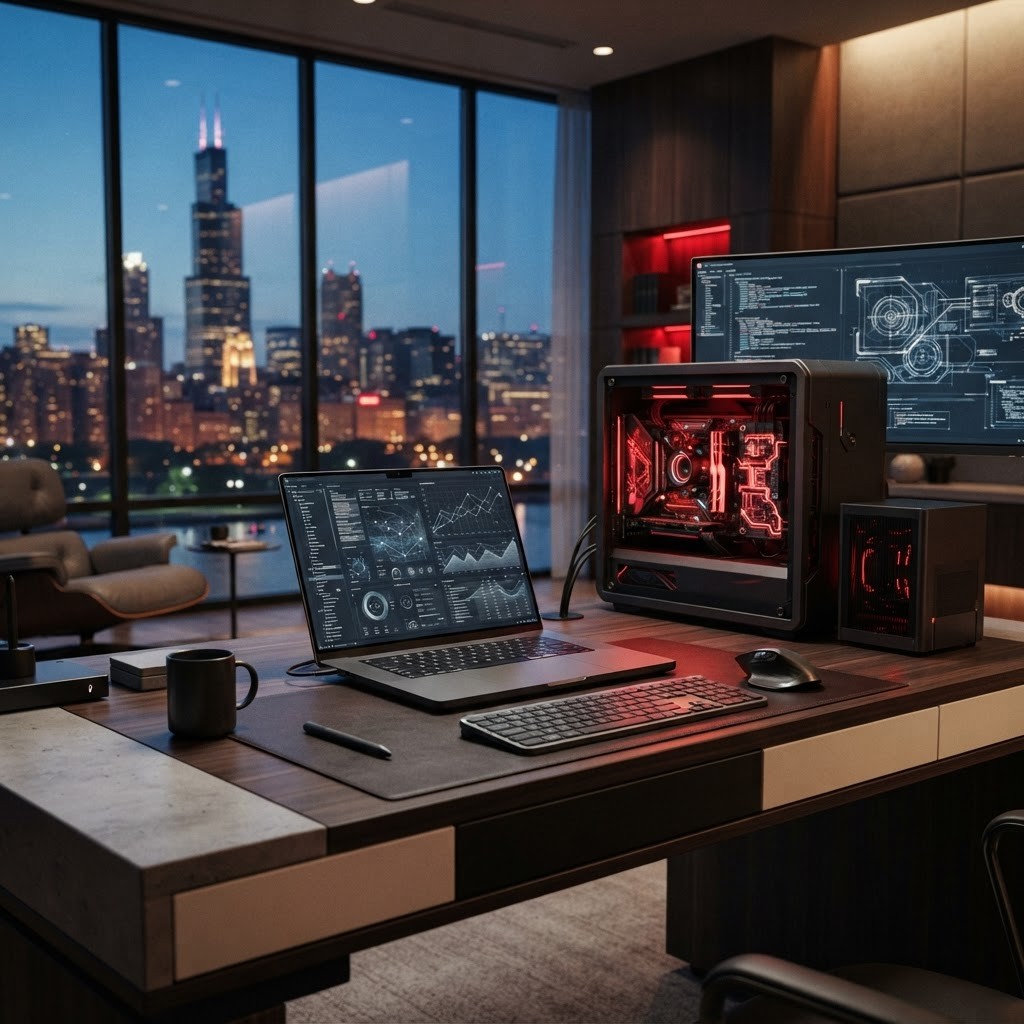
Finding the Right Computer in Chicago
Chicago’s mix of corporate headquarters, universities, design studios, healthcare systems, startups, and home offices creates demand for every class of computer. Buyers can access major brands through manufacturer channels, local specialists, and large retailers. Yet the best-known logo is not automatically the best fit; support, repairability, performance, battery life, security, and total cost matter.
These brands are widely available to Chicago-area buyers and offer distinct strengths. Product quality varies within every lineup, so compare the exact model, warranty, ports, display, processor, memory, and storage rather than judging on brand reputation alone.
1. Apple
Apple’s MacBook, iMac, Mac mini, and Mac Studio lines are popular with creative professionals, developers, students, and executives. Tight integration between hardware and macOS produces strong battery life and consistent performance. Chicago users also benefit from retail support. Buyers should confirm that specialized business software and peripherals are compatible before switching platforms.
2. Dell
Dell covers consumer, gaming, workstation, and enterprise needs through Inspiron, XPS, Alienware, Latitude, Precision, and OptiPlex families. Businesses value configuration choices, deployment services, and support plans, while professionals can select powerful mobile workstations. The broad portfolio makes Dell particularly practical for Chicago organizations standardizing equipment across varied job roles.
3. Lenovo
Lenovo is respected for ThinkPad business laptops, durable keyboards, security features, and practical port selection. Yoga devices provide flexible consumer designs, while Legion serves gaming customers. ThinkCentre desktops and ThinkStation workstations support office and technical workloads. The brand is a strong option for hybrid workers who prioritize reliability and serviceability.
4. HP
HP offers an expansive range, including Pavilion, Envy, Spectre, OmniBook, EliteBook, ProBook, Z workstations, and Omen gaming systems. Its commercial devices emphasize manageability and security, while premium consumer models focus on displays and portability. Chicago businesses can find configurations suited to frontline teams, office staff, engineers, and executives.
5. Microsoft
Microsoft Surface devices showcase a streamlined Windows experience with premium touch displays and adaptable form factors. Surface Laptop supports conventional productivity, while Surface Pro combines tablet portability with keyboard-based work. The lineup appeals to consultants, students, and mobile professionals, though buyers should include accessories and limited repair options in their cost calculations.
6. ASUS
ASUS is known for innovation across Zenbook ultraportables, Vivobook mainstream laptops, ProArt creator systems, and ROG gaming hardware. Its models frequently offer competitive displays and performance. Creators and gamers should compare thermal design and power limits carefully, because similarly named configurations can deliver different sustained performance under demanding workloads.
7. Acer
Acer provides value-oriented Aspire computers, portable Swift models, education-ready Chromebooks, and Predator gaming systems. The brand suits budget-conscious households, schools, and small businesses that need capable everyday devices. As with any value range, checking screen quality, construction, upgrade options, and warranty coverage helps distinguish a lasting purchase from a short-term bargain.
8. Samsung
Samsung’s Galaxy Book laptops appeal to users already invested in Galaxy phones, tablets, and displays. Premium models emphasize thin designs, vivid screens, and device integration. They are attractive for mobile productivity and media use, although professionals should verify port needs and application performance before choosing the lightest configuration.
9. MSI
MSI has deep roots in gaming laptops and components but also offers creator, business, and workstation models. Performance-focused cooling and graphics options suit 3D work, video production, engineering, and competitive gaming. Chicago buyers should consider fan noise, battery life, weight, and service arrangements alongside benchmark performance.
10. Framework
Framework differentiates itself with repairable, upgradeable laptops and replaceable expansion ports. The modular design appeals to technically confident users and organizations interested in extending device life. It requires a more hands-on mindset than conventional laptops, but its approach can reduce electronic waste and allow selected components to evolve over time.
Buying Advice for Chicago Users
Start with workload. General office use benefits from adequate memory, a solid-state drive, a comfortable keyboard, and good battery life. Creative, engineering, and gaming tasks may require dedicated graphics, higher-resolution displays, stronger cooling, and more storage. Organizations should also evaluate encryption, identity management, docking, accidental-damage coverage, and turnaround for repairs.
Chicago shoppers can improve decisions by testing keyboards and screens in person, checking independent reviews for the exact model, and comparing the complete ownership cost. A balanced computer that fits daily work and receives dependable support will usually provide more value than an overpowered system chosen around specifications alone.
A Practical Final Check
Before making a commitment, compare at least three suitable options using the same criteria. Write down the result you need, the features that genuinely support it, the complete cost, and the service expected after the purchase or engagement. Ask direct questions about limitations, policies, availability, and who will be responsible if circumstances change. Recent independent feedback can reveal patterns, but individual reviews should be weighed against verified experience, professional credentials, and clear documentation.
Local fit also deserves attention. Chicago and Houston are large, diverse markets where neighborhood access, seasonal demand, transportation, climate, and regional expertise can materially affect convenience and performance. A thoughtful choice should remain useful after the initial excitement has passed. Taking time to evaluate quality, communication, long-term upkeep, and total value produces a more dependable decision than selecting the most visible name or the lowest advertised price.
