
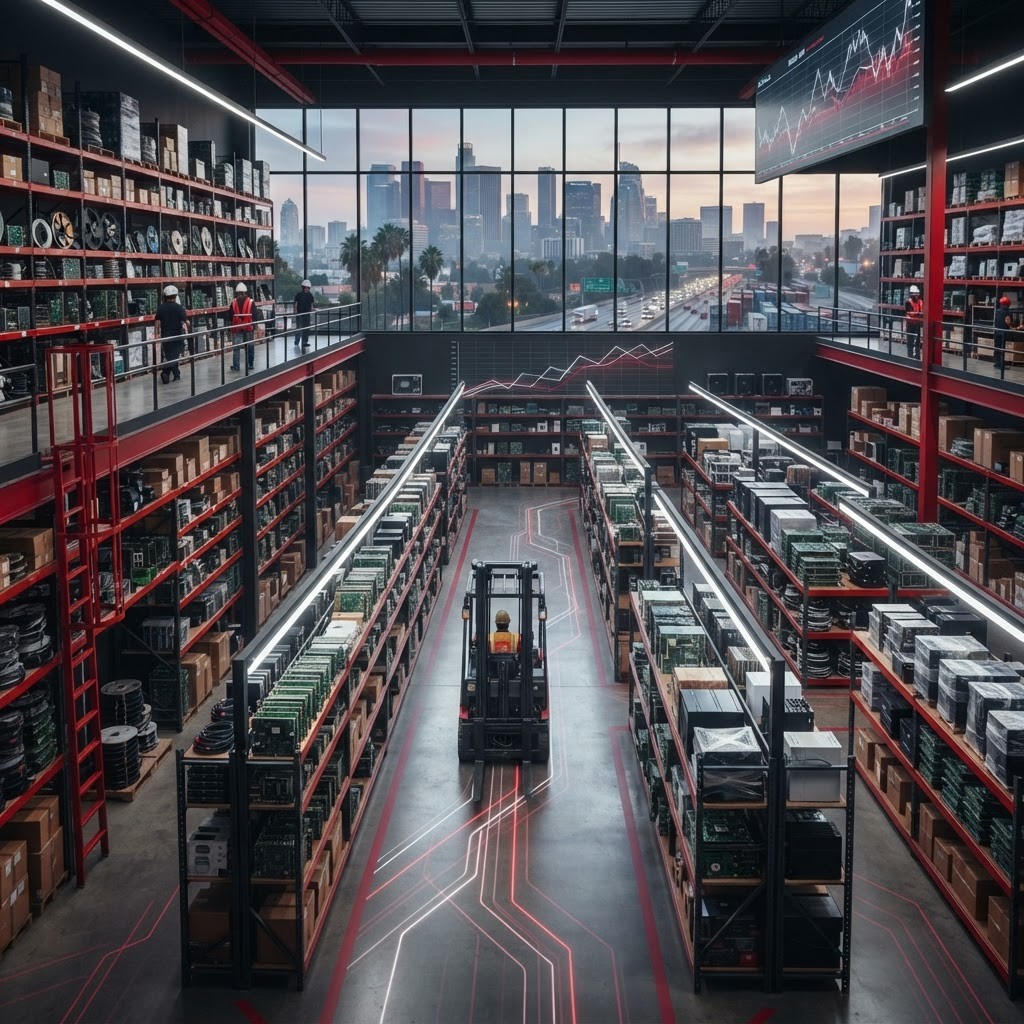
Understanding the Los Angeles Electronics Trade
Los Angeles is a major import, distribution, entertainment, aerospace, and technology market. Electronics buyers range from repair shops and system integrators to schools, production companies, online retailers, and manufacturers. A good wholesaler adds value through authentic inventory, technical knowledge, warranty processes, credit terms, and predictable fulfillment—not merely a low advertised price.
The suppliers below serve different customer groups, and some operate nationally while maintaining strong Southern California access. Product lines and account requirements change frequently, so buyers should confirm authorization and stock before purchasing.
1. Ingram Micro
Ingram Micro is one of the world’s largest technology distributors and has deep Southern California roots. It supplies computers, cloud products, networking, mobility, and enterprise technology through reseller channels. Its scale, logistics, and vendor relationships make it relevant to established solution providers managing broad catalogs.
2. TD SYNNEX
TD SYNNEX distributes hardware, software, cloud services, and data-center technology. Los Angeles-area resellers can benefit from its extensive vendor portfolio and programs for configuration, financing, and lifecycle services. Account qualification and vendor-specific rules should be understood before quoting end customers.
3. D&H Distributing
D&H Distributing serves technology resellers with computers, components, gaming, networking, and consumer electronics. The company is known for working with small and midsize resellers as well as larger accounts. Training and market guidance can be useful when product cycles change quickly.
4. WPG Americas
WPG Americas focuses on semiconductor and electronic-component distribution. It supports engineers and manufacturers sourcing components for product development and production. Design support, lifecycle visibility, and allocation management are major considerations in this part of the market.
5. Future Electronics
Future Electronics distributes semiconductors, interconnect products, passives, and electromechanical components. Its engineering orientation helps customers evaluate parts during design rather than after specifications are fixed. This can reduce redesign risk when availability or lifecycle status changes.
6. Arrow Electronics
Arrow Electronics serves manufacturers and technology businesses with components, enterprise computing, and engineering services. Its broad supplier network is helpful for complex bills of materials. Buyers should use authorized channels and documented traceability, particularly for aerospace, medical, and industrial applications.
7. Avnet
Avnet combines component distribution with design and supply-chain services. It is relevant to Southern California hardware companies moving from prototype to production. Support around embedded computing, development boards, and lifecycle planning can help bridge the gap between an engineering sample and a manufacturable product.
8. Ma Labs
Ma Labs is a computer-product distributor offering components, systems, storage, and peripherals to resellers. Its catalog is useful to businesses assembling systems or supplying mainstream IT hardware. Buyers should compare availability, return terms, freight, and manufacturer warranty coverage.
9. Petra Industries
Petra Industries distributes consumer electronics, smart-home products, appliances, and accessories through reseller channels. Its assortment can suit online merchants and specialty retailers seeking multiple categories from one source. Merchants should still evaluate minimums, marketplace restrictions, and product data quality.
10. Pacific Radio Electronics
Pacific Radio Electronics is a long-established Los Angeles source for professional audio, video, broadcast, and connectivity products. Its local expertise is especially relevant to the city’s production and post-production community. Specialized staff can help buyers identify connectors, cable, interfaces, and infrastructure components that general distributors may not understand.
How to Buy Electronics Wholesale Safely
Counterfeit and gray-market products create serious reliability and warranty risks. Verify whether a distributor is authorized for the brand and request traceability where needed. Inspect date codes, seals, packaging, and documentation. For components, discuss moisture sensitivity, electrostatic-discharge handling, storage, and end-of-life status. For consumer devices, clarify region, firmware, warranty eligibility, and return authorization procedures.
Total cost includes freight, payment fees, defective-unit handling, lead time, and support. Los Angeles businesses should also plan around port disruptions, holiday demand, studio production cycles, and rapid launches. A strong electronics wholesaler communicates allocation honestly, protects product integrity, provides accurate data, and helps customers avoid inventory that will become obsolete before it sells.
Planning a Successful Supplier Relationship
Before opening an account, create a written purchasing brief that defines required products, expected order frequency, acceptable lead times, quality standards, budget limits, and delivery constraints. Share realistic forecasts without presenting them as guaranteed orders. Ask each supplier how quotations are updated, how backorders are communicated, who handles quality concerns, and what documentation accompanies a shipment. A trial order can reveal far more about picking accuracy, packaging, communication, and product consistency than a polished sales presentation.
It is also wise to avoid dependence on a single source for every critical item. Maintain approved alternatives while giving strong primary suppliers enough predictable business to invest in the relationship. Review performance quarterly using measurable factors such as on-time delivery, defect rate, response speed, invoice accuracy, and resolution of claims. In Los Angeles, delivery plans should account for traffic, loading zones, limited warehouse space, seasonal demand, and the distance between coastal, central, and inland locations. Clear receiving procedures help teams photograph damage, check quantities, preserve lot information, and report discrepancies promptly.
Finally, treat the list above as a starting point rather than a substitute for due diligence. Visit showrooms or facilities when practical, request samples, verify business credentials and insurance where relevant, and speak with comparable customers. The best long-term partner is transparent about both strengths and limitations. Consistent communication, documented expectations, and fair payment practices create a more resilient supply chain for buyer and supplier alike.
