
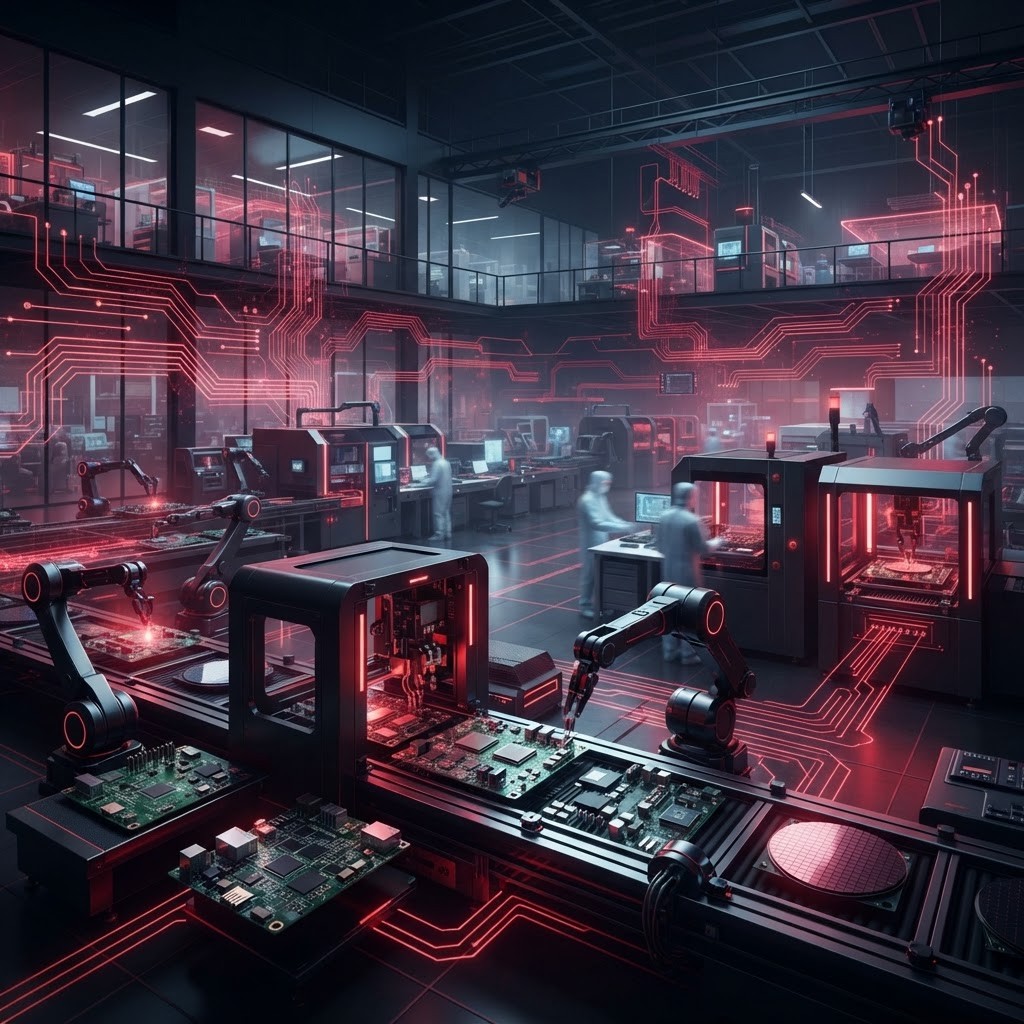
A Small Country with Big Engineering Ambitions
Norway may be better known for its natural resources than its electronics, but the country has quietly built a sophisticated technology sector. Norwegian electronics manufacturers tend to focus on specialized, high-value products rather than mass consumer goods. Their expertise spans maritime systems, semiconductors, sensors, communications, and energy technology, areas where precision and reliability are essential.
This focus on advanced niches has made Norwegian electronics companies respected partners for industries around the world. Below are ten of the best electronics manufacturers contributing to Norway's growing reputation in high-tech engineering.
1. Nordic Semiconductor
Nordic Semiconductor is Norway's most globally recognized electronics company. A world leader in low-power wireless chips, its solutions power countless Bluetooth and IoT devices worldwide. The company's energy-efficient technology has become a foundation of the connected-device revolution, and its engineering reputation is world-class.
2. Kongsberg Gruppen
Kongsberg is a major technology group with deep expertise in maritime, defense, and digital systems. Its electronics and control systems are used in ships, offshore platforms, and advanced industrial applications. Kongsberg is renowned for combining rugged reliability with cutting-edge automation and sensor technology.
3. Simrad / Kongsberg Maritime
Building on decades of marine electronics expertise, this segment produces advanced sonar, navigation, and fish-finding systems used across the global maritime industry. Norwegian marine electronics are trusted by commercial fleets and researchers for their accuracy and durability in harsh sea conditions.
4. Data Respons
Data Respons is a specialist in embedded systems and industrial digitalization. The company designs and delivers smart electronic solutions for sectors including transport, energy, and medical technology. Its strength lies in tailoring complex electronics to demanding industrial requirements.
5. Norbit
Norbit develops advanced technology and sensor systems for maritime, oceanographic, and industrial applications. Known for its innovation in sonar and connectivity solutions, Norbit serves a global customer base and exemplifies Norway's focus on specialized high-tech electronics.
6. Elop
Elop develops innovative sensor and scanning technology, including concrete-scanning solutions used to assess the health of critical infrastructure. By combining ultrasound and electronics, the company addresses real-world engineering challenges with precision instruments.
7. Poly Products / Sensor Specialists
Norway hosts a cluster of sensor and instrumentation manufacturers serving the oil, gas, and renewable energy sectors. These companies produce ruggedized electronic sensors capable of operating in extreme environments, supporting Norway's energy industry with reliable monitoring systems.
8. Techni
Techni develops advanced technology and electronic systems for subsea and industrial applications. With expertise in mechatronics and control systems, the company delivers engineered solutions for challenging offshore environments, reflecting Norway's leadership in subsea technology.
9. Disruptive Technologies
Disruptive Technologies is known for producing some of the world's smallest wireless sensors. Its miniaturized electronics enable smart-building and IoT applications, giving the company a strong reputation for innovation in the rapidly growing sensor market.
10. Nammo Electronics Divisions
Within Norway's advanced industrial base, specialized electronics divisions support aerospace, defense, and precision-engineering applications. These units develop control and guidance electronics that meet rigorous performance and safety standards, underscoring the country's high-tech capabilities.
Strengths of the Norwegian Electronics Industry
The defining strength of Norway's electronics sector is specialization. Rather than competing in crowded consumer markets, Norwegian manufacturers focus on high-value applications where engineering excellence matters most. Maritime and offshore technology, wireless semiconductors, and industrial sensors are areas where the country holds genuine global leadership.
Close collaboration between industry and Norway's strong research institutions fuels ongoing innovation. Access to skilled engineers and a culture of precision manufacturing allow companies to develop products that meet the exacting demands of energy, defense, and communications markets.
Innovation Trends
The rise of the Internet of Things has been a major growth driver for Norwegian electronics. Low-power wireless chips, miniature sensors, and connected industrial systems are at the heart of the sector's expansion. As industries worldwide digitalize, demand for reliable embedded electronics and monitoring solutions continues to increase.
Sustainability and energy efficiency also shape product development. Norwegian companies design electronics that consume minimal power, aligning with global efforts to reduce energy use in connected devices and industrial systems.
Conclusion
Norway's electronics manufacturers demonstrate that a country does not need to produce consumer gadgets to be a technology powerhouse. Through specialization, engineering rigor, and innovation, these companies have earned global respect. For industries requiring precision electronics in demanding environments, Norwegian manufacturers stand among the most capable partners in the world.
