
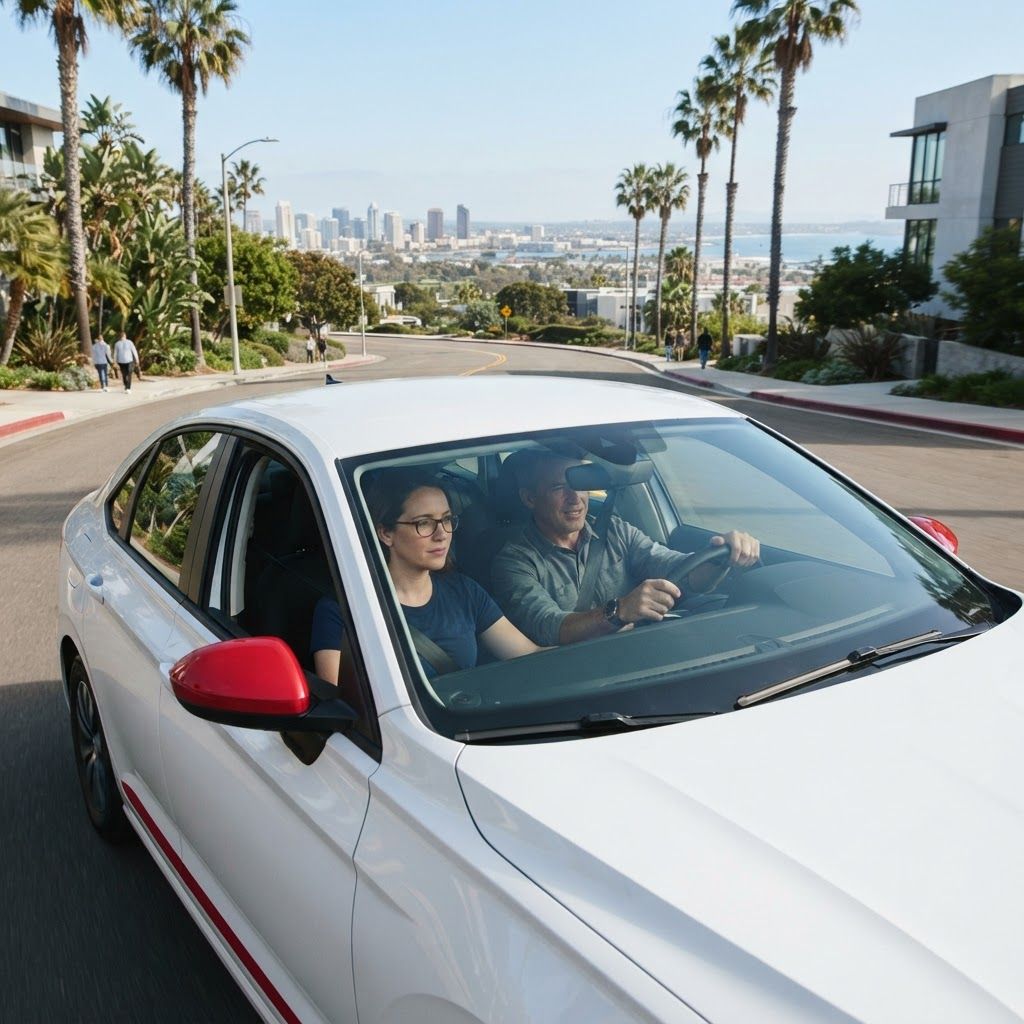
Learning to Drive Confidently in San Diego
San Diego presents new drivers with a demanding mix of wide freeways, short merge lanes, coastal congestion, steep streets, bicycles, pedestrians, and busy border-region traffic. Professional instruction can turn basic vehicle control into practical risk management. A good instructor teaches students to scan far ahead, maintain space, communicate intentions, and make calm decisions rather than merely pass a test.
The schools below serve different parts of the county and offer combinations of teen education, behind-the-wheel lessons, adult instruction, test preparation, and refresher training. Families should verify current licensing, instructor status, insurance, vehicle safety features, pickup areas, and cancellation policies.
1. AAA Driving School
AAA Driving School brings a widely recognized traffic-safety perspective to driver education. Its programs may appeal to families seeking standardized instruction and a familiar organization. Students should ask how classroom or online content connects with behind-the-wheel lessons and whether instructors provide written progress feedback.
2. Allstate Driving School
Allstate Driving School has served San Diego learners with teen and adult driving instruction. Local experience is valuable because instructors can gradually introduce students to nearby test routes, freeway interchanges, residential hazards, and commercial traffic without teaching rote memorization.
3. Golden State Driving School
Golden State Driving School offers education and practical lessons for permit holders and licensed drivers seeking improvement. Flexible scheduling can help students balance school and work. Consistency matters, so lessons should be spaced closely enough that skills are retained and practiced between sessions.
4. San Diego Bay Driving School
San Diego Bay Driving School provides local instruction with attention to the urban and coastal driving environment. Learners benefit from practicing lane selection, one-way streets, pedestrian scanning, and parking in increasingly complex settings as confidence develops.
5. Teen Driving School
Teen Driving School focuses on younger learners and the needs of families navigating California licensing requirements. Teen instruction should address distraction, peer passengers, nighttime driving, speed selection, and parental practice. Guardians should reinforce the same habits taught by the professional instructor.
6. Budget Driving School
Budget Driving School aims to make lessons accessible while covering essential behind-the-wheel skills. Price is important, but families should compare lesson duration, private versus shared instruction, vehicle condition, pickup time, and instructor continuity to understand true value.
7. Express Driving School
Express Driving School serves students who need flexible, focused preparation. Test-oriented sessions can identify weaknesses in observation, lane changes, turns, speed control, and parking. However, the goal should remain safe independent driving, not simply rehearsing likely examination maneuvers.
8. North County School of Driving
North County School of Driving is positioned for learners around communities such as Oceanside, Carlsbad, Vista, and neighboring areas. North County routes include suburban arterials, coastal roads, and major freeway connections. Training where a student will regularly drive improves relevance and confidence.
9. Poway Driving School
Poway Driving School serves inland North County communities where students encounter winding roads, higher speeds, school zones, and wildlife or low-light conditions. Instruction adapted to local roads can complement the fundamental skills required throughout California.
10. West Coast Driving School
West Coast Driving School offers another local option for structured driver training and licensing preparation. Prospective students should use an introductory call to discuss anxiety, prior experience, language needs, accessibility, and specific goals. The school’s response often reveals how personalized the instruction will be.
What Quality Instruction Looks Like
A professional instructor should be patient, observant, and specific. Instead of saying only that a turn was poor, the instructor should explain mirror use, speed, positioning, visual target, steering, and recovery. Lessons should progress from quiet streets to complex roads only when foundational control is stable. Dual-control vehicles provide an additional safety layer.
Ask whether the same instructor can teach consecutive sessions. Continuity helps track improvement, though experiencing a second qualified instructor can reveal new perspectives. Written evaluations make private practice more effective. Students should never be pressured to attempt conditions clearly beyond their readiness.
Teen, Adult, and Refresher Needs
Teen drivers need extensive supervised practice beyond formal lessons. Families should use varied routes and conditions, including darkness and rain when safely available, rather than repeating an easy neighborhood loop. Adults learning later may bring greater caution but also anxiety; calm, incremental instruction is more productive than embarrassment or urgency.
Licensed drivers can benefit from refresher lessons after a collision, long break, move from another country, or change in physical ability. Some schools may also address freeway confidence, parking, or defensive-driving skills. Drivers with medical or adaptive needs should seek appropriately qualified assessment and equipment resources.
Preparing for the California Road Test
Students should understand vehicle controls, complete required practice, and bring the correct documents and roadworthy vehicle. Common problems include incomplete observation, rolling stops, poor speed control, unsafe lane changes, and weak right-of-way judgment. Examiners seek consistent safety, not perfection.
Avoid scheduling a test before the student can drive independently across unfamiliar local routes. Failing is inconvenient, but passing before true readiness creates greater risk. The best San Diego driving school develops awareness and decision-making that last well beyond the examination. Credentials, communication, patient teaching, and local relevance should guide the choice.
