
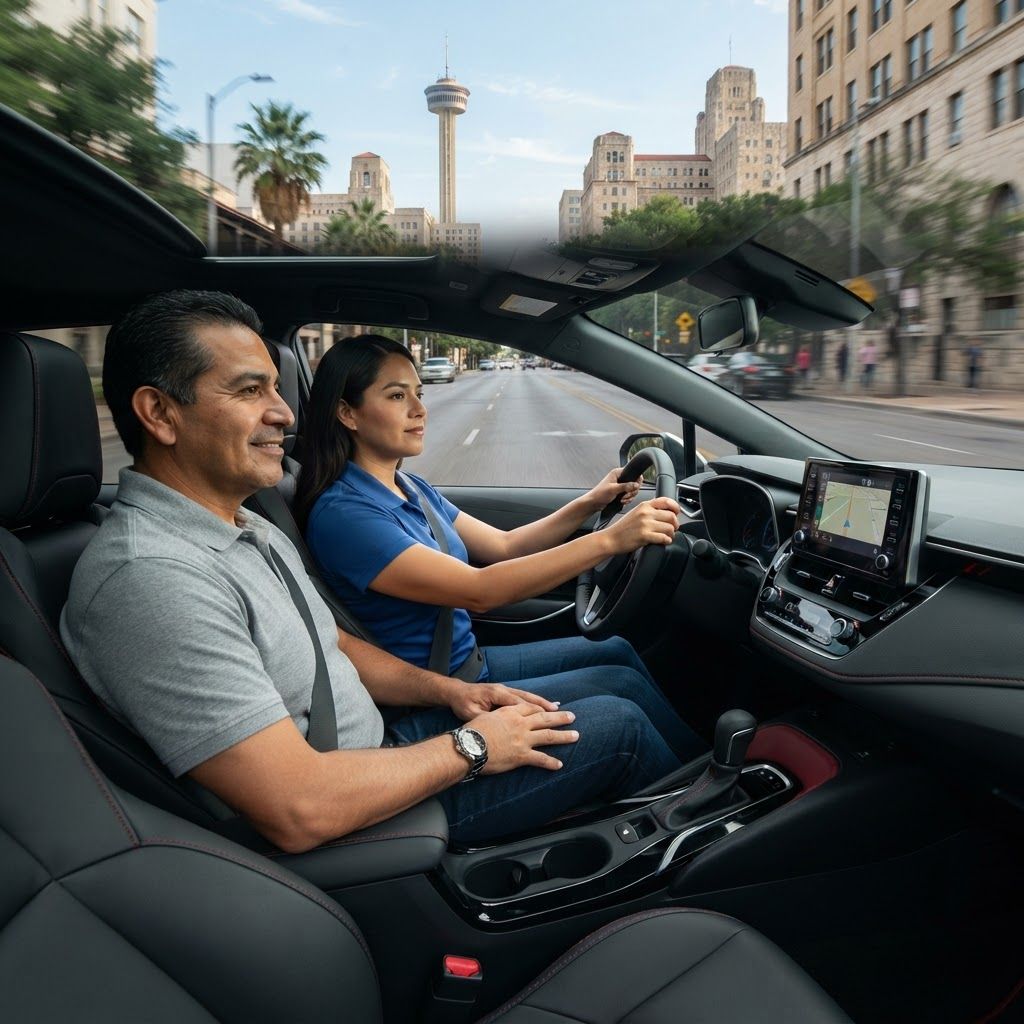
Learning to Drive in San Antonio
New drivers in San Antonio must learn more than basic vehicle control. They face multilane interchanges, frontage roads, construction zones, heavy commuter traffic, sudden weather changes, and busy corridors shared with large trucks. A strong driving school combines state-compliant coursework with patient, structured practice and clear feedback. Program availability and licensing details can change, so families should verify current offerings directly.
1. Texas Driving School
Texas Driving School is a recognizable provider offering teen and adult education formats. Its structured curriculum can help students progress from traffic law and risk awareness to behind-the-wheel skills. Families should compare classroom, online, and in-car scheduling as well as pickup policies and instructor availability at the specific San Antonio location.
2. Roadworthy Driving Academy
Roadworthy Driving Academy focuses on preparing students for responsible independent driving. Smaller academies may offer a more personal experience and consistent instructor communication. Ask how lessons cover lane positioning, observation, highway merging, parking, and defensive decision-making rather than concentrating only on the license test route.
3. Ayala and Associates Driving School
Ayala and Associates Driving School is an established local option for driver education and related services. Local schools bring familiarity with San Antonio traffic patterns and common testing concerns. Prospective students should confirm package details, lesson duration, cancellation rules, vehicle use for testing, and any required documentation.
4. Rhodes Driving School
Rhodes Driving School serves teen and adult learners through driver-education programs and practical instruction. A well-sequenced course should move from low-risk environments to busier roads only when the student demonstrates readiness. Parents can reinforce lessons by using the same terminology and practice expectations as the instructor.
5. Austin Driving School
Despite its name, Austin Driving School has served multiple Texas communities, including the San Antonio market. Its broader operating experience supports standardized course options and administrative processes. Students should evaluate the convenience of the chosen branch because consistent attendance and practice matter more than brand recognition alone.
6. Central Park Driving School
Central Park Driving School offers local instruction for drivers developing foundational skills or preparing for testing. Adult beginners often benefit from instructors who understand anxiety and explain tasks in manageable steps. A respectful learning environment makes it easier to correct habits without overwhelming the student.
7. Alamo City Driving School
Alamo City Driving School reflects a locally focused approach to education in the region. Familiarity with neighborhood roads, major corridors, and local testing expectations can help lessons feel relevant. Students should still seek broad preparation so they can drive safely anywhere, not simply memorize a limited route.
8. Motor Vehicle Academy
Motor Vehicle Academy provides another choice for structured instruction. The best programs track skill development across observation, speed control, signaling, turning, lane changes, parking, and hazard response. Written progress notes are especially helpful when several family members supervise practice.
9. Defensive Driving School of San Antonio
Defensive-driving providers serve licensed motorists who need court-approved education, insurance-related courses, or a safety refresher. Course approval status and eligibility requirements are essential, because not every program satisfies every court or insurer. Confirm acceptance before enrolling and complete all deadlines carefully.
10. Reyna One-on-One CDL Truck Driver Training
Commercial driver training is a distinct category requiring specialized vehicles, regulations, inspections, and maneuvering skills. Reyna One-on-One CDL Truck Driver Training is relevant to students pursuing professional credentials. Applicants should compare license classes, endorsements, training hours, equipment, job-placement claims, and total costs.
How to Evaluate a Driving School
Verify state licensing, instructor credentials, curriculum approval, vehicle insurance, and dual-control equipment where appropriate. Read the enrollment agreement closely. It should explain refunds, missed lessons, scheduling, course expiration, parent-taught components, and what is included in the price. Extremely low pricing may exclude important behind-the-wheel time or testing services.
Instructor fit matters. A good instructor remains calm, gives specific feedback, adapts to the learner, and never uses a phone or creates distractions during a lesson. Students should finish each session knowing what improved and what to practice next. For teens, parents should ask how the school communicates progress and handles safety concerns.
Building Skills Beyond the Test
Passing a road test is a milestone, not the final goal. New drivers need supervised experience at night, in rain, around construction, on highways, and in unfamiliar areas. Practice should include checking blind spots, maintaining following distance, planning exits early, and avoiding aggressive responses. San Antonio's fast growth makes scanning for changing road patterns especially important.
Final Thoughts
The best school is the one that combines compliant instruction, reliable scheduling, suitable teaching style, and enough real practice to build judgment. Compare individual locations and instructors, not just company names. With patient coaching and consistent practice, learners can become safer and more confident throughout San Antonio and beyond.
Before enrollment, create a realistic practice schedule and identify an appropriate supervising adult. Skills fade when lessons are separated by long gaps, so shorter, consistent sessions can be more productive than occasional marathon drives. Keep a practice log, revisit difficult maneuvers under calm conditions, and increase traffic complexity gradually as observation and vehicle control improve.
