
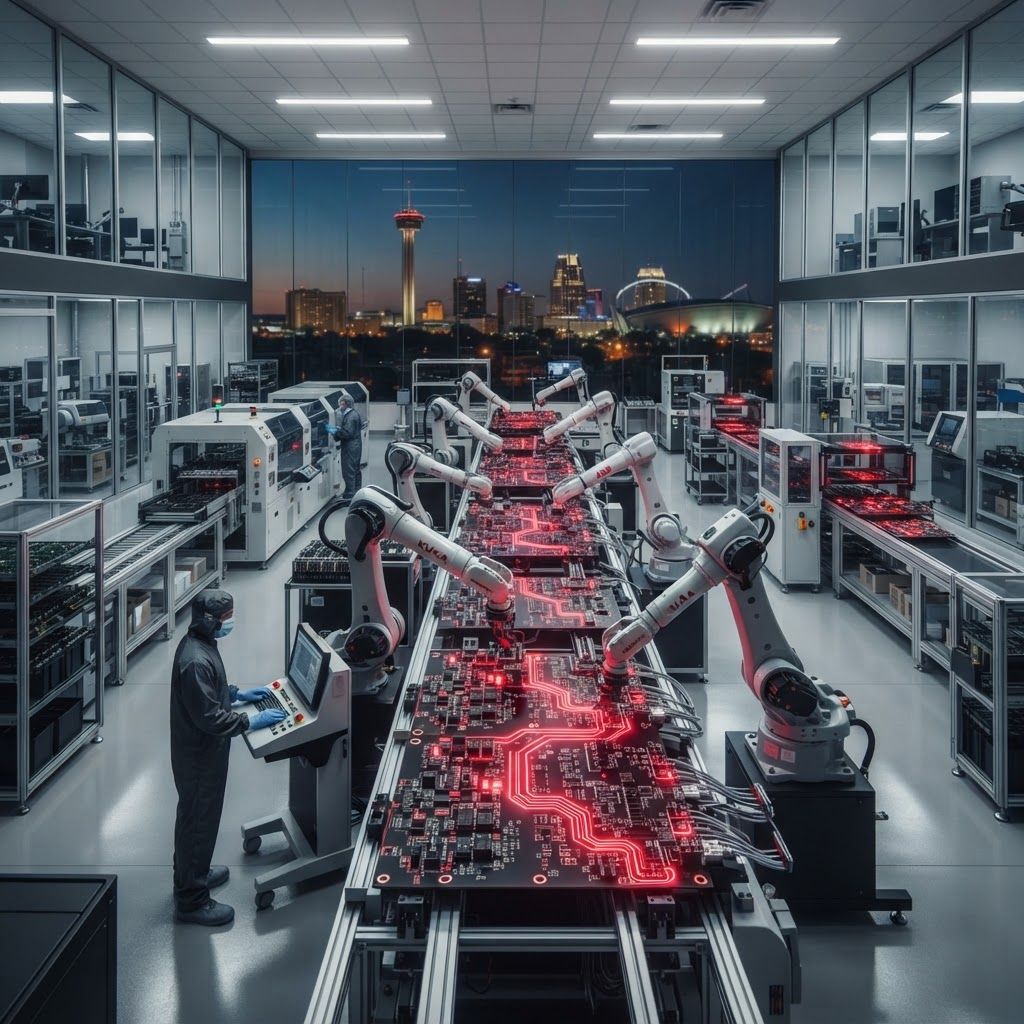
Why electronics manufacturing matters in San Antonio
San Antonio's electronics sector benefits from military and cybersecurity institutions, biomedical research, aerospace activity, and access to engineering talent. Local capabilities range from semiconductor fabrication and printed-circuit assembly to defense communications, testing, sensors, and medical technology. Buyers often need more than assembly capacity; they need design support, secure handling, component traceability, regulatory knowledge, and dependable lifecycle management.
The following companies are notable for local presence or relevance to the regional supply chain. They serve different markets and should not be compared solely on size. A prototype-stage medical device, a rugged defense subsystem, and a high-volume industrial controller require very different certifications, equipment, and commercial models.
1. Tower Semiconductor
Tower Semiconductor operates a fabrication facility in San Antonio and is a cornerstone of the local semiconductor ecosystem. The company manufactures analog-focused integrated circuits using specialized process technologies. Foundry customers value process maturity, engineering collaboration, quality controls, and long product lifecycles. The San Antonio operation also supports skilled jobs in equipment, process engineering, facilities, quality, and operations, strengthening the region's advanced-manufacturing base.
2. Southwest Research Institute
Southwest Research Institute is an independent research and development organization headquartered in San Antonio. Although it is not a conventional volume electronics manufacturer, it develops prototypes, embedded systems, sensors, robotics, communications, and test solutions for government and industry. Its differentiator is multidisciplinary engineering: electronics can be designed alongside mechanical systems, software, cybersecurity, and validation. This is especially useful for novel or demanding applications.
3. Plus One Robotics
San Antonio-based Plus One Robotics develops vision software and robotic automation used in logistics environments. Its work connects cameras, computing, controls, and industrial systems, making it an important participant in the region's electronics and automation landscape. Customers look to the company for practical deployment in high-throughput operations. Reliable perception, remote support, integration, and measurable productivity are central considerations in robotics projects.
4. Knight Aerospace
Knight Aerospace designs and manufactures specialized aerospace products in San Antonio, including mission-oriented cabin systems and transport solutions. Electronics integration is part of delivering complex, certified aerospace equipment. The company's local engineering and manufacturing footprint, attention to quality, and experience with demanding customers distinguish it. Aerospace buyers require rigorous configuration control, documentation, material traceability, and testing.
5. Boeing
Boeing's substantial San Antonio presence focuses on aircraft maintenance, modification, and support. These programs involve avionics, wiring, electronic systems, diagnostics, and integration even when the site is not producing consumer electronics. Boeing brings mature quality processes and experience managing complex platforms. Suppliers seeking participation must be prepared for strict documentation, cybersecurity, counterfeit-part prevention, and delivery-performance requirements.
6. Northrop Grumman
Northrop Grumman supports defense and aerospace programs with capabilities spanning electronics, communications, sensors, and mission systems. Its relevance to San Antonio is strengthened by the city's military and cyber missions. Large defense contractors differentiate themselves through systems engineering, secure operations, and the ability to sustain equipment over long service lives. Vendors should understand export controls, controlled information requirements, and quality expectations.
7. Lockheed Martin
Lockheed Martin's work across Texas and its connections to San Antonio's defense community make it an influential electronics and systems company for the region. It develops advanced avionics, sensors, communications, and integrated defense technologies. Its supply chain values specialized technical performance and repeatability. Small manufacturers can improve readiness by strengthening quality management, traceability, cybersecurity, and program documentation.
8. L3Harris Technologies
L3Harris Technologies specializes in communications, sensing, electronic systems, and mission technology. These capabilities align closely with San Antonio's defense and intelligence ecosystem. The company is known for rugged, high-reliability equipment designed for difficult environments. Potential partners should be ready to demonstrate environmental testing, secure engineering practices, component authenticity, and support for long product lifecycles.
9. Jabil
Jabil is a global manufacturing-services company with broad electronics design, supply-chain, and production capabilities. Even when production for a specific program occurs outside San Antonio, its model is relevant to regional technology companies seeking a path from prototype to scale. Jabil can support design for manufacturability, sourcing, assembly, testing, and fulfillment. Customers should align the chosen facility and engagement model with volume, regulatory, and intellectual-property needs.
10. Sanmina
Sanmina provides integrated manufacturing solutions for complex electronics in industrial, medical, communications, defense, and other markets. Its strengths include printed-circuit-board assembly, systems integration, precision manufacturing, and engineering. San Antonio product companies may consider Sanmina when they need a sophisticated contract manufacturer. Supplier continuity, test coverage, change control, and cost transparency are essential subjects during qualification.
Evaluating an electronics manufacturer
Begin with technical fit. Review assembly technologies, board complexity, component sizes, test capabilities, clean-room needs, environmental screening, and relevant quality certifications. Ask how the manufacturer controls moisture-sensitive devices, electrostatic discharge, counterfeit components, firmware, and engineering changes. For regulated or defense products, confirm audit history and the exact scope of certifications at the facility that will perform the work.
Electronics supply chains continue to face obsolescence, geopolitical risk, and long lead times. Strong partners offer alternate-component analysis, transparent sourcing, and early warnings rather than reacting after a shortage stops production. San Antonio's future growth will likely combine semiconductors, secure communications, robotics, aerospace, and medical technology. Companies that connect engineering talent with disciplined production will be best positioned to serve this high-value market.
