
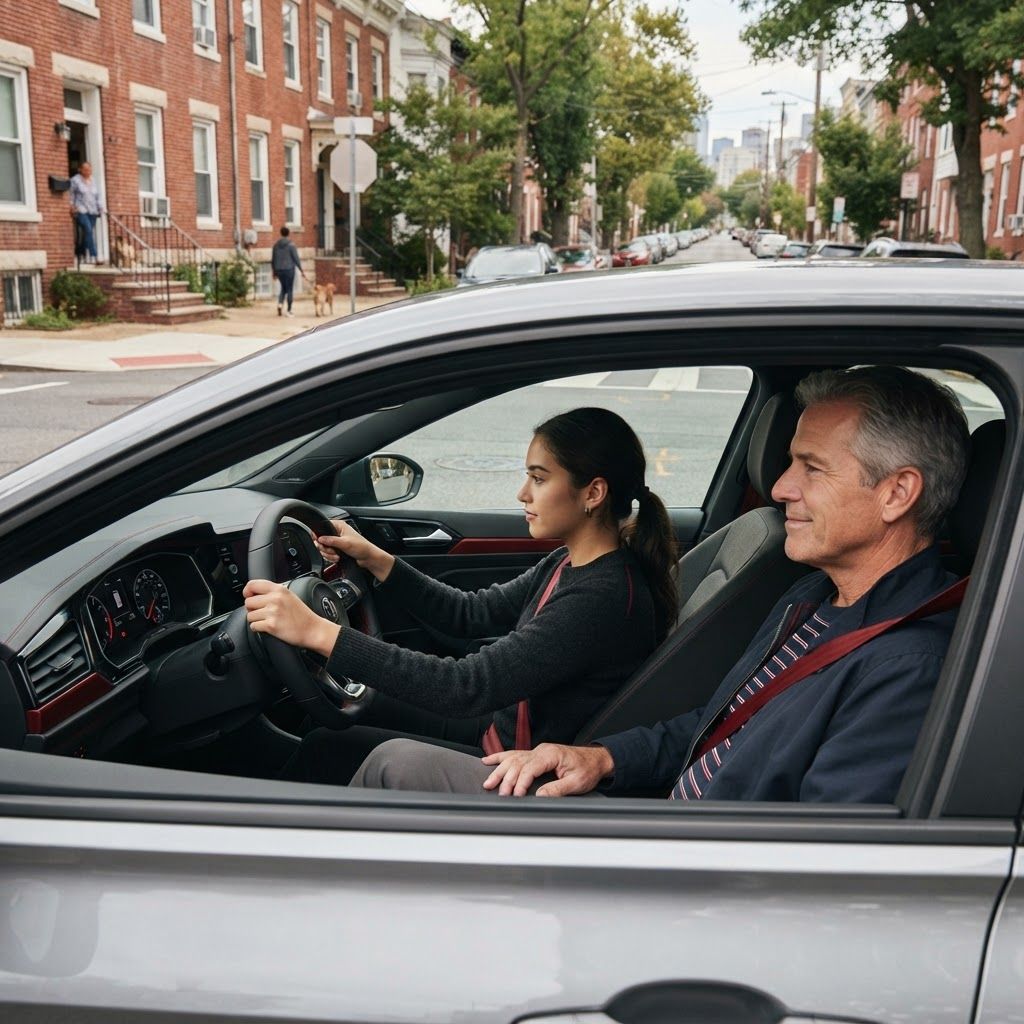
Learning to Drive Safely in Philadelphia
Philadelphia is a demanding but valuable place to learn. Students encounter one-way streets, bicycles, buses, pedestrians, highway merges, parallel parking, irregular intersections, and changing neighborhood traffic patterns. A strong driving school teaches more than the minimum needed for a test. It develops observation, judgment, vehicle control, and the ability to remain composed when other road users make mistakes.
When comparing schools, ask about instructor qualifications, lesson duration, pickup policies, training vehicles, dual controls, insurance, cancellation terms, and road-test preparation. The best instructor for one student may not suit another, so communication style and patience matter. These Philadelphia-area schools offer a useful starting point.
1. Philadelphia Professional Driving School
Philadelphia Professional Driving School focuses on local instruction and road-test preparation. City-based experience is valuable because instructors can expose students gradually to common Philadelphia situations. A good lesson should include a clear objective, active practice, and a brief review of strengths and priorities at the end.
2. Driven2Drive
Driven2Drive is a regional driving school known for structured instruction and test-related services. A larger training operation may offer scheduling flexibility and multiple instructors. Students should still seek consistency where possible, since an instructor familiar with prior lessons can track progress and build skills in sequence.
3. Pennsylvania Driving School
Pennsylvania Driving School serves learners seeking practical behind-the-wheel preparation. Effective instruction connects state rules with real decisions: choosing a safe gap, controlling speed, scanning intersections, and maintaining space. Memorizing signs is necessary, but applying those rules under pressure is the larger challenge.
4. Success Driving School
Success Driving School is a local option for new drivers and adults who need additional confidence. Adult learners often bring specific concerns, such as highway anxiety, a long break from driving, or adapting to United States road conventions. Individualized lessons can address those needs without forcing every student through the same pace.
5. Blue Bell Driving School
Blue Bell Driving School serves the wider Philadelphia region and may suit students in nearby suburbs. Suburban instruction provides practice with higher-speed roads, complex turning lanes, and varied intersection designs. Learners who expect to drive throughout the region benefit from experience beyond one test route.
6. Safe Driving School
Safe Driving School emphasizes the central purpose of instruction: reducing risk through repeatable habits. Defensive driving includes looking far ahead, checking mirrors regularly, identifying escape space, anticipating pedestrians, and adjusting for weather. These habits should become automatic rather than actions performed only during an examination.
7. Stars and Stripes Driving School
Stars and Stripes Driving School is another regional provider offering behind-the-wheel education. Students should ask how lesson plans are adapted after an initial assessment. A beginner needs foundational control in a quiet setting, while a more experienced learner may need targeted work on parking, lane changes, or highway entry.
8. Cantor’s Driving School
Cantor’s Driving School is a long-established regional name offering instruction for teens and adults. Experience across different learners can help instructors recognize common difficulties and explain concepts in more than one way. Parents of teen drivers should ask how they can reinforce skills between professional lessons without creating conflicting instructions.
9. John’s Driving School
John’s Driving School serves portions of the greater Philadelphia area with driver education and practical training. Students should confirm the service area and testing support that applies to their location. Convenience matters because regular practice over time is generally more effective than several lessons compressed immediately before a test.
10. Defensive Driving Academy
Defensive Driving Academy reflects a risk-management approach useful for both new and experienced drivers. Refresher lessons can help motorists correct habits, adapt to a new vehicle, or rebuild confidence after a collision. Training should be treated as a continuing skill rather than a one-time licensing requirement.
What a Good Lesson Should Cover
Early lessons should establish seating position, mirror adjustment, smooth steering, braking, acceleration, lane placement, and observation. Students can then progress to turns, traffic controls, lane changes, parking, multilane roads, and highway driving. Night and wet-weather practice are valuable once foundational control is reliable and conditions are appropriate.
Philadelphia-specific practice should include scanning around parked vehicles, protecting space near cyclists, crossing rail tracks carefully, avoiding blocked intersections, and anticipating pedestrians at corners. Parallel parking is important, but it should not overshadow judgment and hazard recognition.
Preparing for the Road Test
Test preparation should include vehicle documents, control familiarity, signaling, complete stops, speed management, and parking maneuvers. Students should understand why each action matters rather than memorizing a particular route. Anxiety often decreases when procedures have been practiced repeatedly in varied locations.
A school should never guarantee a passing result. Examiners assess performance on the day, and readiness differs by learner. Honest instructors recommend more practice when needed and do not encourage unsafe shortcuts.
Building Skill After Licensing
A license marks the beginning of independent learning. Newly licensed drivers should expand difficulty gradually, limit distractions, avoid impaired or fatigued driving, and practice unfamiliar routes during lower-traffic periods. Families can establish clear rules for passengers, nighttime driving, and phone storage.
The best Philadelphia driving school combines professional standards with an instructor who communicates calmly and corrects errors constructively. Compare policies, ask specific questions, and choose education that prepares the student for years of safe decisions—not merely one successful test.
