
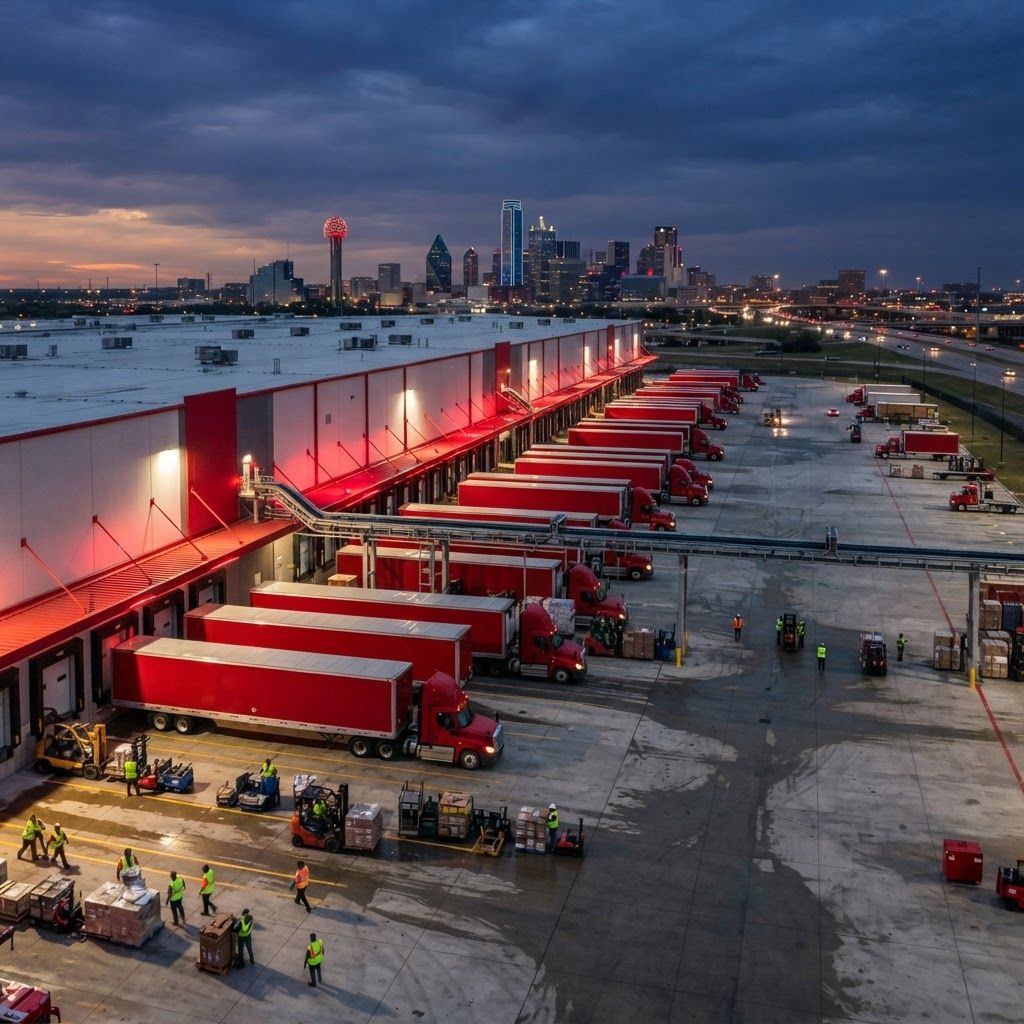
Understanding the Dallas market
Dallas–Fort Worth sits at the intersection of major interstate highways, rail corridors, airports, and a vast concentration of distribution centers. That location makes the metroplex one of the country’s most important inland freight markets. Choosing a freight company in this environment requires more than comparing a headline price. Customers should consider how consistently the provider performs during peak periods, how clearly it communicates exceptions, and whether its network matches the places that matter to them.
The following selection highlights established national brands, regional specialists, and locally relevant providers. It is not a rigid ranking: availability and performance can change by location, season, route, and service category. Readers should request current terms and compare like-for-like options before committing.
1. FedEx Freight
FedEx Freight provides major less-than-truckload coverage with broad terminal reach. Its network, tracking systems, and range of speed options suit businesses moving palletized freight regionally or nationally. For Dallas customers, the best fit depends on the exact route, timing, service level, and support required rather than brand recognition alone.
2. Old Dominion Freight Line
Old Dominion is widely associated with reliable less-than-truckload transportation and careful freight handling. Its service-center network supports consistent regional and long-haul movements. For Dallas customers, the best fit depends on the exact route, timing, service level, and support required rather than brand recognition alone.
3. XPO
XPO operates a large North American less-than-truckload network supported by digital shipment tools. Dallas shippers can use its density for regional distribution and cross-country freight. For Dallas customers, the best fit depends on the exact route, timing, service level, and support required rather than brand recognition alone.
4. Estes Express Lines
Estes offers less-than-truckload, volume, time-critical, and international freight services. A broad portfolio helps businesses consolidate transportation with one established carrier. For Dallas customers, the best fit depends on the exact route, timing, service level, and support required rather than brand recognition alone.
5. Saia LTL Freight
Saia provides regional and national less-than-truckload service with strong Sun Belt coverage. Its Dallas-area presence supports businesses shipping across Texas and adjoining markets. For Dallas customers, the best fit depends on the exact route, timing, service level, and support required rather than brand recognition alone.
6. Southeastern Freight Lines
Southeastern Freight Lines is known for regional LTL service and a quality-focused operating culture. It is especially relevant for freight moving from Dallas toward southern and southeastern markets. For Dallas customers, the best fit depends on the exact route, timing, service level, and support required rather than brand recognition alone.
7. ArcBest
ArcBest combines ABF Freight’s asset-based LTL network with broader logistics capabilities. Customers can coordinate standard freight, expedited moves, and more complex transportation needs. For Dallas customers, the best fit depends on the exact route, timing, service level, and support required rather than brand recognition alone.
8. R+L Carriers
R+L Carriers handles less-than-truckload and related supply-chain services across a large network. Its portfolio includes expedited, cross-border, and specialized shipping options. For Dallas customers, the best fit depends on the exact route, timing, service level, and support required rather than brand recognition alone.
9. TForce Freight
TForce Freight offers less-than-truckload service for businesses requiring broad North American reach. Shipment tracking and multiple service levels support varied delivery requirements. For Dallas customers, the best fit depends on the exact route, timing, service level, and support required rather than brand recognition alone.
10. Schneider
Schneider provides truckload, intermodal, brokerage, and dedicated transportation. Its multimodal scale is useful for Dallas companies balancing cost, capacity, and transit-time priorities. For Dallas customers, the best fit depends on the exact route, timing, service level, and support required rather than brand recognition alone.
How to choose the right provider
Begin by defining the non-negotiables for the freight shipment: origin and destination, preferred timing, budget, capacity, and any special handling or accessibility requirement. Then compare providers using service coverage, on-time performance, cargo visibility, claims handling, equipment access, specialized capacity, safety, and account support. A low quote can become poor value when it excludes essential features, creates avoidable delays, or offers weak assistance when plans change.
Ask how the company measures reliability and resolves disruptions. Useful questions cover cancellation terms, insurance or liability, service guarantees, after-hours help, documentation, and the person responsible for escalation. Business customers should also examine invoicing, reporting, integrations, and the ability to maintain service as volume grows. Consumers should keep confirmations and review all conditions before the service begins.
Industry trends shaping the experience
Across the sector, customers increasingly expect real-time visibility, dynamic capacity matching, alternative-fuel fleets, predictive arrival data, and tighter integration between truck, rail, and air modes. These improvements are making comparison easier while giving operators better ways to anticipate demand and communicate progress. Technology is valuable, but it should reinforce sound operations and human support rather than conceal unclear policies behind a polished interface.
Sustainability is also becoming a practical purchasing factor. Efficient routing, fuller vehicles or loads, modern equipment, reduced idling, and credible emissions reporting can lower environmental impact and operating cost together. Dallas organizations with formal sustainability goals should ask providers for measurable practices instead of broad claims.
Making a confident Dallas choice
The best freight company is the one aligned with the customer’s actual priorities. Shortlist two or three options, verify current availability, compare complete pricing, and read recent feedback about the specific Dallas location or route involved. For regulated, legal, international, or high-value matters, confirm credentials and written terms independently.
Dallas offers an unusually deep provider market, which gives customers meaningful choice. A careful comparison of service scope, reliability, communication, and total value will usually produce a better result than selecting on price or familiarity alone. Each company above has a distinct strength; the right decision comes from matching that strength to the journey, shipment, case, or operation at hand.
