
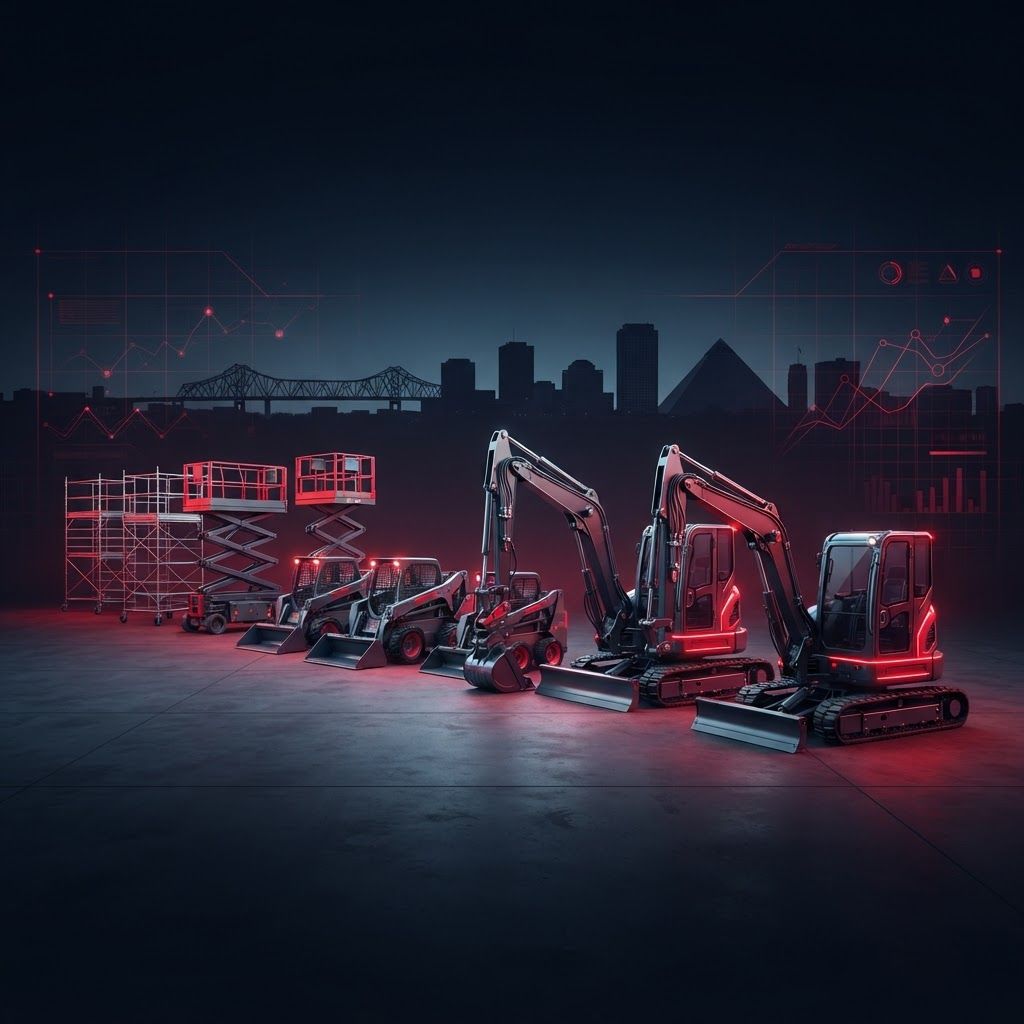
Why Equipment Rental Is Central to Memphis Construction
Memphis is one of the busiest logistics and distribution markets in the country, and that activity drives constant construction of warehouses, cross-dock facilities, roadways, and supporting infrastructure. Alongside that industrial pipeline sits steady commercial development, multi-family construction, and residential remodeling. Very few contractors can justify owning the full range of machines those projects require, especially when utilization would be seasonal or project-specific.
Renting converts a large capital expense into a predictable operating cost, transfers maintenance responsibility to the rental provider, and gives contractors access to newer, better-maintained machines with current emissions and safety features. For specialty tasks, renting is often the only sensible option, since a machine used for two weeks a year cannot pay for itself.
The Rental Providers Serving the Region
National rental networks maintain a strong presence in the Memphis market, including United Rentals, Sunbelt Rentals, Herc Rentals, and H&E Equipment Services. Their advantages are fleet depth, multiple branch locations, standardized safety documentation, national account billing, and the ability to source a specific machine from another region when local inventory is committed.
Dealer-affiliated rental operations represent another important tier, including yards affiliated with major manufacturers such as Caterpillar, John Deere, Komatsu, and Bobcat. These providers combine rental fleets with factory-trained service departments and parts inventory, which shortens downtime when a machine needs attention mid-project. Rent-to-own programs are common here, allowing contractors to apply rental payments toward purchase when a machine proves essential.
Independent and regional rental yards round out the market. These businesses often compete on responsiveness, delivery flexibility, relationship pricing, and willingness to accommodate short-notice needs. Homeowner-focused rental counters, including those inside large home improvement retailers, serve the smaller end with compact equipment, tools, and trailers.
Equipment Categories Available Locally
Earthmoving equipment forms the backbone of most rental fleets. This includes mini excavators from one to ten tons, full-size hydraulic excavators, skid steer and compact track loaders, wheel loaders, backhoes, dozers, and motor graders. Compaction equipment covers plate compactors, rammers, walk-behind rollers, and ride-on smooth drum and pneumatic rollers used heavily on pad and paving work.
Aerial and material handling equipment is in constant demand for warehouse and commercial interiors, including scissor lifts, articulating and telescopic boom lifts, telehandlers, rough terrain forklifts, and personnel lifts. Concrete equipment includes mixers, power trowels, screeds, saws, core drills, and vibrators. Trench and utility work draws on trenchers, walk-behind and ride-on models, hydraulic breakers, trench shoring boxes, and pumps for dewatering.
Support equipment matters just as much on a job site: portable generators, towable light towers, air compressors, welders, pressure washers, heaters, temporary fencing, and traffic control devices. Many yards also rent specialized attachments including augers, grapples, hydraulic thumbs, brush cutters, and pallet forks, which dramatically extend the usefulness of a single carrier machine.
How Rental Pricing Actually Works
Rental rates are typically quoted daily, weekly, and monthly, with the effective per-day cost dropping sharply at the weekly and monthly tiers. A project expected to run eight to ten days is almost always cheaper on a weekly plus daily structure than on straight daily rates, and monthly rates frequently cost less than three weeks. Understanding these breakpoints is one of the easiest ways for contractors to reduce equipment spend.
Beyond the base rate, budgets should account for delivery and pickup charges, which vary by machine size and distance; fuel, either refilled by the renter or billed at pickup; environmental and recovery fees; rental protection or damage waiver, which is not the same as insurance; and sales tax. Overtime hour charges apply on many machines when usage exceeds a standard shift, typically eight hours per day, which matters for double-shift work. Reading the rental agreement carefully prevents surprises at invoicing.
Service Levels That Separate the Best Yards
The best rental providers in Memphis distinguish themselves through availability and uptime rather than headline rates. Practical indicators include accurate real-time inventory information, reliable delivery windows, clean and fully serviced machines that arrive with current inspection documentation, and field service response that resolves breakdowns quickly or swaps the machine outright.
Documentation and safety support also matter. Reputable yards provide operator manuals, current annual inspection records for aerial equipment, and familiarization briefings when required. For contractors bidding public or institutional work, that paperwork is a compliance requirement rather than a nicety. Account management is the final differentiator, with strong providers assigning representatives who understand a contractor's recurring needs and proactively reserve equipment ahead of seasonal peaks.
Trends Shaping Equipment Rental
Telematics has become standard on modern fleets, giving both the rental company and the contractor visibility into machine hours, location, idle time, and fault codes. That data supports preventive maintenance and helps contractors verify utilization and control fuel waste. Compact equipment continues to grow in popularity because urban infill and interior work reward machines that fit through gates and doorways while accepting a wide range of attachments.
Electrification is advancing steadily, particularly in aerial lifts, compact loaders, and mini excavators, driven by indoor air quality and noise restrictions on occupied-building work. Meanwhile, digital rental platforms have streamlined reservations, contract signing, and off-rental requests, reducing the phone time contractors spend managing fleets across multiple job sites.
Planning Rentals Around a Schedule
Effective rental management starts with the construction schedule. Reserve high-demand equipment well ahead of peak spring and summer activity, since aerial lifts and compact track loaders are frequently committed weeks out. Confirm site access and ground conditions before delivery, because a machine that cannot reach the work area still accrues rental charges. Match machine size to both the task and the access constraint rather than defaulting to the largest option.
Just as important is timely off-rental. Charges continue until the equipment is formally released and picked up, so notifying the yard the moment work finishes protects the budget. Document machine condition with photos at delivery and pickup to avoid damage disputes, and keep fuel and daily maintenance responsibilities clear with operators.
Choosing the Right Rental Partner
The strongest choice depends on the work. Large national yards suit contractors who need fleet depth, multi-site consistency, and national billing. Dealer-affiliated rental operations suit those who value factory service support and possible purchase conversion. Independent yards often serve small and mid-sized contractors best through flexibility and relationship pricing. In a market as construction-intensive as Memphis, most successful contractors maintain relationships with more than one provider, ensuring that when a critical machine goes down or a schedule accelerates, there is always a second source ready to deliver.
