
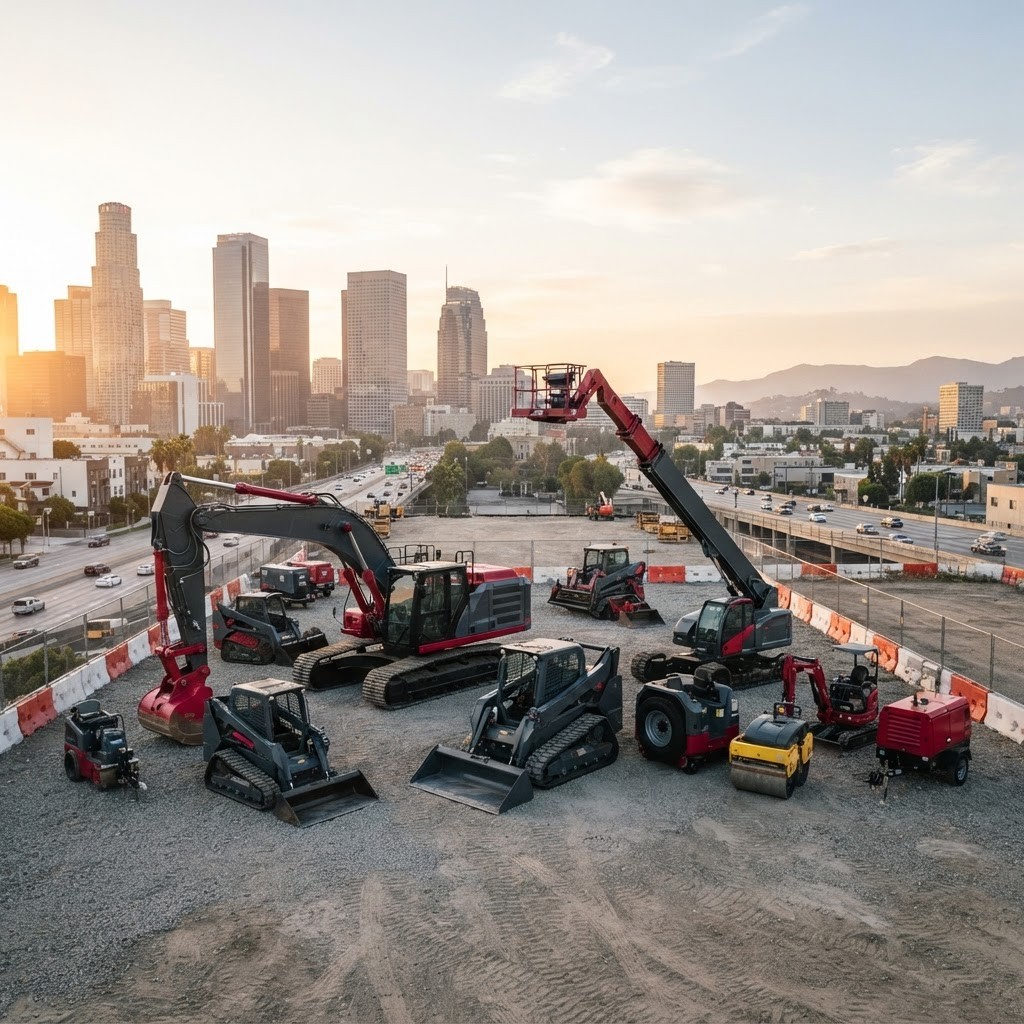
Renting Equipment in Los Angeles
Construction equipment rental helps contractors scale quickly without tying up capital in machines that may sit between projects. In Los Angeles, the decision also involves traffic, restricted delivery windows, limited staging, emissions requirements, hillside access, and noise-sensitive neighborhoods. A dependable rental partner must provide the right machine, compatible attachments, safe delivery, and responsive field service. The providers below range from national fleets to major regional specialists and should be compared according to location, equipment class, and project demands.
1. United Rentals
United Rentals offers one of the broadest fleets, including aerial lifts, earthmoving equipment, forklifts, power systems, trench safety, pumps, and site services. Multiple regional branches and digital fleet tools can support large contractors managing several jobs. Its specialty divisions are useful when projects require engineered trench protection or temporary power beyond standard equipment rental.
2. Sunbelt Rentals
Sunbelt Rentals provides extensive general and specialty equipment across Southern California. Offerings include aerial work platforms, climate control, power generation, shoring, flooring solutions, pumps, and tools. The company’s breadth allows customers to consolidate vendors, though project teams should still confirm branch-specific inventory and service commitments.
3. Herc Rentals
Herc Rentals supplies aerial, material-handling, earthmoving, compaction, lighting, power, and general construction equipment. It serves contractors, industrial clients, and facility operators requiring short- or long-term rentals. Telematics and account reporting can help larger users monitor utilization, hours, and off-rent timing.
4. H&E Rentals
H&E Rentals operates a substantial fleet focused on aerial, earthmoving, material handling, and general equipment. Its sales and service background supports knowledgeable equipment matching and maintenance. Contractors should discuss ground conditions, reach, capacity, access width, and required attachments rather than requesting equipment by a familiar model alone.
5. EquipmentShare
EquipmentShare combines rental equipment with connected fleet technology. Its platform emphasizes utilization data, location visibility, and equipment management, which can be valuable on distributed projects. Technology is most useful when teams establish clear processes for assignment, inspections, fuel, and off-rent requests.
6. BigRentz
BigRentz operates as an equipment rental marketplace that coordinates inventory through a broad supplier network. This model can help source machines across locations or for specialized requirements. Customers should clarify which local provider will deliver, who handles service, and how transportation or cancellation terms are applied.
7. Quinn Rental Services
Quinn Rental Services is a major California equipment provider associated with Caterpillar machinery and a strong regional service network. Its fleet is relevant for earthmoving, power, material handling, and heavy construction. Dealer-level technical knowledge and parts access can be an advantage on demanding or long-duration assignments.
8. Holt of California
Holt of California provides Caterpillar rental equipment and support in parts of the state, serving heavy civil, grading, utility, and building work. Contractors value reliable maintenance and machine guidance when production depends on equipment uptime. Availability in the exact Los Angeles service area should be confirmed during planning.
9. PDQ Rentals
PDQ Rentals is a Southern California equipment rental provider offering aerial lifts, earthmoving machines, forklifts, compaction equipment, generators, and tools. A regional company may offer practical local knowledge and responsive relationships. Contractors should compare weekend policies, delivery windows, damage waiver terms, and field-service coverage.
10. Ahern Rentals
Ahern Rentals has longstanding expertise in aerial and material-handling equipment along with broader construction fleet categories. Its experience is especially relevant where boom lifts, scissor lifts, and telehandlers must be selected for precise height, outreach, terrain, and capacity needs. Operator training and site-specific planning remain essential.
How to Choose the Right Machine
Begin with the task, site, and load rather than a model name. Document working height, horizontal reach, rated capacity, soil conditions, slope, overhead hazards, access dimensions, indoor or outdoor use, and attachment requirements. Electric or low-emission equipment may be necessary indoors or in regulated environments. Compact equipment can improve access, but it must still deliver adequate stability and production.
Ask for maintenance status, inspection documents, operating manuals, and a pre-delivery condition report. Photograph the machine on arrival and record fuel or charge level, hours, and visible damage. Confirm who may operate it and what training or certification is required. Daily inspections should follow manufacturer guidance, and defects must be reported promptly.
Understanding Total Rental Cost
The quoted daily or monthly rate is only one component. Review delivery and pickup, environmental fees, taxes, fuel, cleaning, excess hours, attachments, damage waiver, tire or track damage, and cancellation terms. Clearly document the off-rent procedure; charges may continue until the supplier receives formal notice even if the machine is idle.
Downtime can cost more than the rental itself. Ask about field-service response, replacement equipment, after-hours support, and responsibility when a machine fails. For long projects, compare rental with rental-purchase or ownership, including maintenance, storage, transportation, depreciation, and utilization.
Technology and Sustainability Trends
Telematics increasingly tracks location, hours, idle time, fault codes, and maintenance. Electric mini excavators, compact loaders, and aerial equipment are expanding, helping reduce local emissions and noise. Contractors are also using digital reservations and automated utilization reporting to limit unnecessary rentals. These tools create value only when project managers act on the data.
Final Rental Strategy
The best Los Angeles rental provider is the one that combines suitable inventory, dependable machines, realistic delivery commitments, transparent terms, and responsive support. Establish preferred-vendor standards while keeping alternatives for specialty needs and shortages. Careful equipment planning improves safety, productivity, and cost control, allowing crews to focus on construction instead of preventable fleet problems.
