
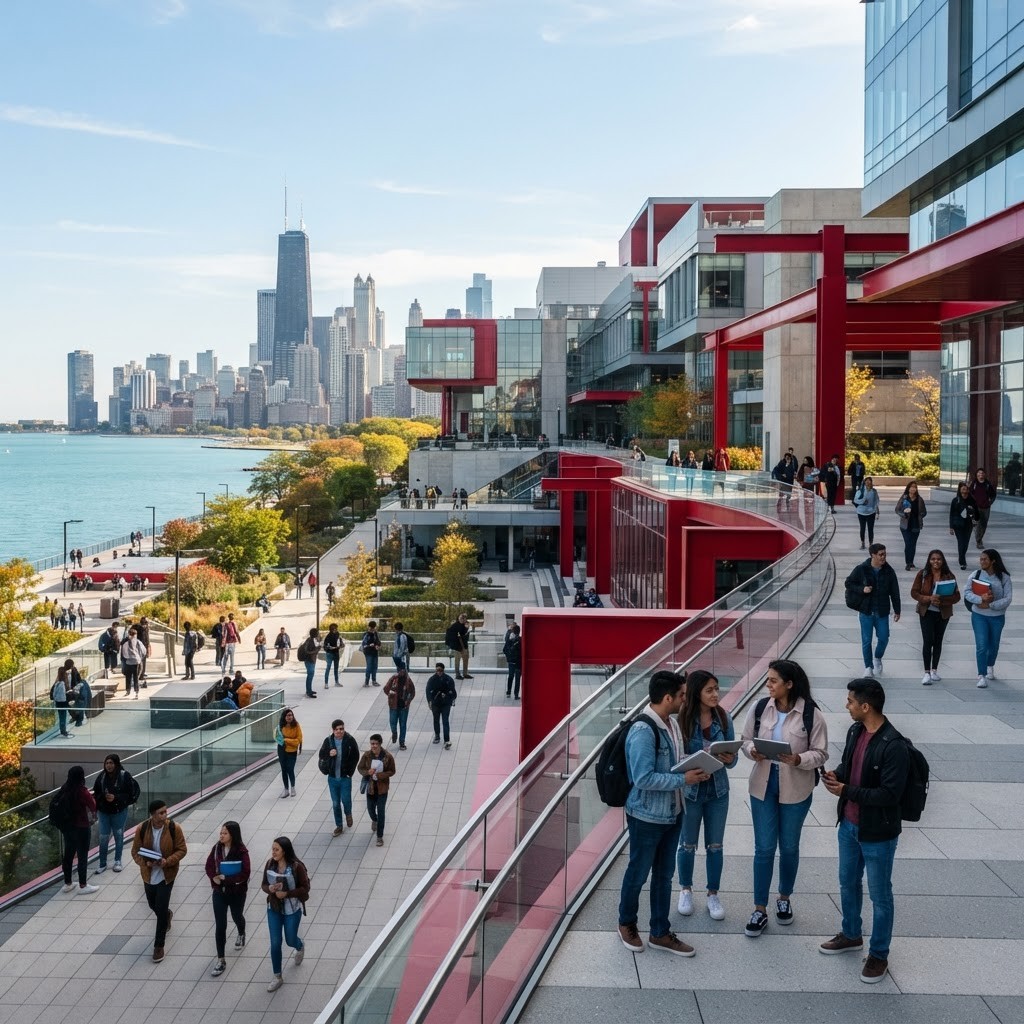
Finding the Right Chicago College
Studying in Chicago places students inside a major center for finance, technology, healthcare, manufacturing, media, arts, and public service. The city itself becomes part of the curriculum through internships, cultural institutions, community projects, and professional networks. Yet institutions differ greatly in size, cost, campus environment, academic focus, and student support.
This selection includes universities and specialized colleges commonly considered by students seeking an undergraduate experience in Chicago. The term college is used broadly, with attention to distinctive strengths rather than a rigid numerical ranking.
1. University of Chicago
The University of Chicago is globally respected for intellectual rigor, research, and its influential Core curriculum. Its Hyde Park campus supports deep study across economics, sciences, humanities, social sciences, and public policy. The environment rewards curiosity and debate, but applicants should consider whether its intense academic culture matches their learning style.
2. Northwestern University
Northwestern University is located in nearby Evanston with strong connections to downtown Chicago. It offers highly regarded programs in journalism, engineering, communication, music, business, and the liberal arts. Students benefit from a traditional lakeside campus while remaining close to city internships and cultural opportunities.
3. University of Illinois Chicago
University of Illinois Chicago is a major public research institution with a diverse student body and a practical urban location. It is particularly prominent in healthcare, engineering, business, architecture, and public service. For many Illinois residents, its combination of scale, research access, and public-university value is compelling.
4. Loyola University Chicago
Loyola University Chicago combines a lakeside undergraduate campus with downtown professional facilities. Its Jesuit tradition emphasizes ethical leadership and service, while academic offerings span business, nursing, sciences, communication, and liberal arts. Students seeking community engagement and an urban residential experience may find a strong fit.
5. DePaul University
DePaul University is known for integrating academic study with Chicago's professional landscape. Campuses in Lincoln Park and the Loop support programs in business, computing, communication, arts, education, and liberal studies. Its large alumni network and internship orientation are valuable for career-minded students.
6. Illinois Institute of Technology
Illinois Institute of Technology focuses on engineering, computing, architecture, science, business, and design. Its Bronzeville campus has a distinctive modernist identity and direct access to Chicago industries. Project-based learners and students interested in applied technology may appreciate its specialized environment.
7. School of the Art Institute of Chicago
School of the Art Institute of Chicago offers an interdisciplinary education in visual art, design, writing, and related creative fields. Its downtown setting places studios near museums, galleries, and architecture. Students should consider portfolio expectations, studio culture, and the self-directed nature of an art-school education.
8. Columbia College Chicago
Columbia College Chicago specializes in creative disciplines such as film, music, media, performing arts, design, and communication. The South Loop campus is woven into the city rather than enclosed behind traditional gates. Its career-focused creative programs suit students who want sustained hands-on practice and industry exposure.
9. Roosevelt University
Roosevelt University offers programs in business, performing arts, education, sciences, and social justice-oriented fields. Its central Chicago presence creates access to employers and cultural venues. The institution can appeal to students seeking an inclusive mission and a campus experience closely integrated with downtown.
10. City Colleges of Chicago
City Colleges of Chicago comprises seven community colleges offering associate degrees, certificates, transfer pathways, and workforce programs. It is an important and often economical entry point to higher education. Each college has distinct career specializations, allowing students to align location and training with goals in healthcare, logistics, technology, culinary arts, and other fields.
Comparing Cost, Outcomes, and Experience
Students should compare net price rather than published tuition because grants and scholarships can change the real cost substantially. Review graduation rates, debt, internship access, career support, class sizes, housing, and the requirements for the intended major. A prestigious overall name may be less relevant than the resources and outcomes within a specific department.
Visit campuses at different times, speak with current students, and test the commute between housing, classes, and likely internship areas. Chicago rewards students who engage beyond campus, but urban independence requires planning and confidence. The best college will provide academic challenge, financial sustainability, supportive relationships, and a credible route toward the student's next step.
Using Chicago as an Extension of Campus
Prospective students should ask how frequently undergraduates gain access to internships, research, community partnerships, and alumni mentors. Location alone does not guarantee opportunity; strong advising helps students turn the city into practical experience. Museums, theaters, hospitals, public agencies, startups, and major employers can all enrich a degree when participation is intentional. Students should also examine transit costs, winter commuting, and whether schedules leave time for off-campus work. A college that meaningfully connects coursework to Chicago can add substantial value without sacrificing academic depth.
