
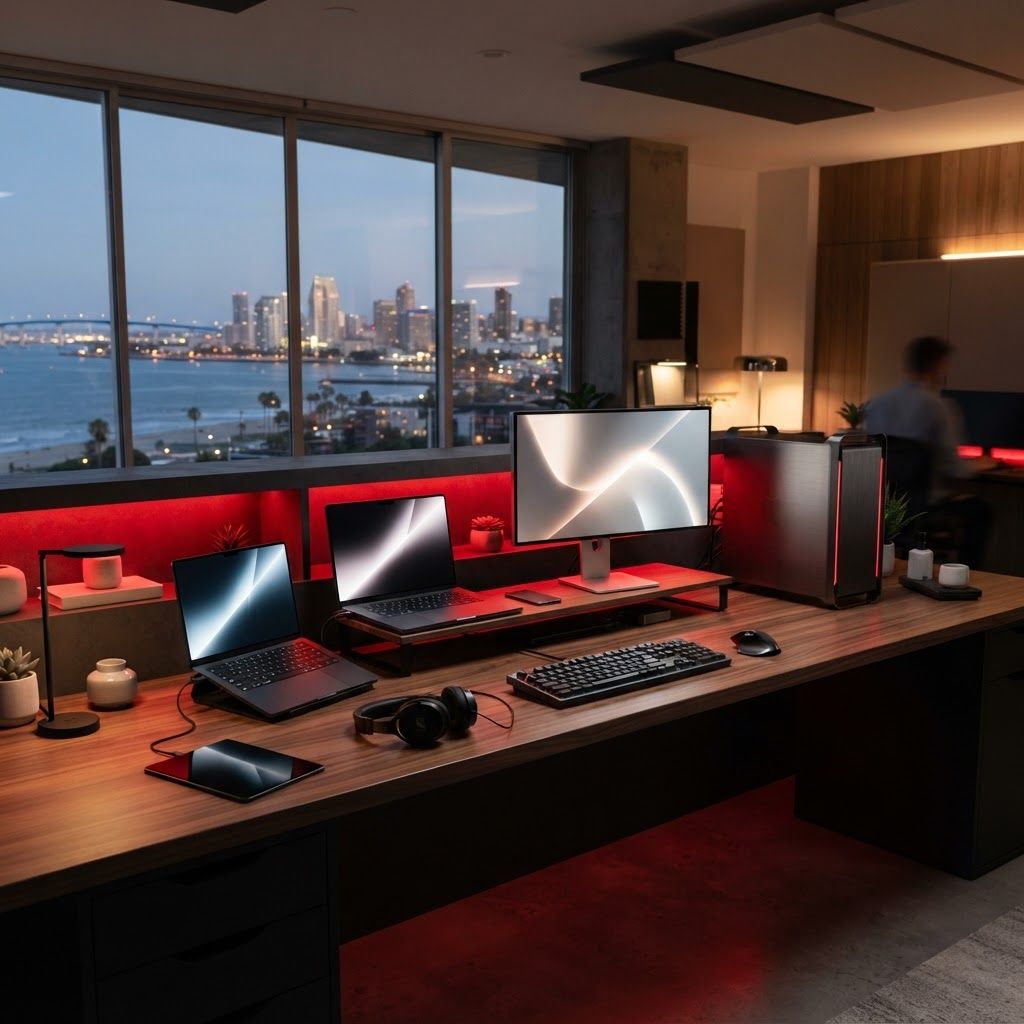
Choosing a Computer in San Diego
San Diego's economy spans biotechnology, defense, tourism, education, software, design, and small business. Computer needs therefore range from portable student laptops and secure business fleets to engineering workstations and gaming systems. The best brand is not simply the one with the fastest processor. Buyers should consider build quality, battery life, warranty support, operating system, repairability, and compatibility with required applications. These ten brands are broadly available through regional retailers and business channels.
1. Apple
Apple is a leading choice for creative professionals, students, executives, and users already invested in its ecosystem. MacBook models are known for battery efficiency, strong displays, quiet performance, and close integration with other Apple devices. The brand's retail presence in San Diego gives buyers access to demonstrations and service. Macs are particularly attractive for media, design, and general productivity, although specialized Windows-only engineering or enterprise software should be checked before purchase.
2. Dell
Dell offers one of the broadest computer portfolios, from affordable home laptops to premium ultraportables, business systems, monitors, and powerful workstations. San Diego companies often value Dell's enterprise purchasing, configuration, and support options. The Latitude and Precision families serve professional environments, while consumer lines cover everyday work and gaming. Buyers should compare individual model quality because the range spans many price levels and construction standards.
3. HP
HP serves households, schools, businesses, and technical professionals with laptops, desktops, all-in-ones, and workstations. Its extensive channel availability makes replacement accessories and service relatively accessible. Business-oriented EliteBook and ProBook models emphasize manageability, while Z workstations target demanding creative and technical workloads. HP is a practical option for San Diego organizations that want standardized devices across teams without limiting themselves to one form factor or budget tier.
4. Lenovo
Lenovo is respected for ThinkPad business laptops, recognizable keyboards, durable construction, and a wide selection of configurations. The brand also produces Yoga convertibles, Legion gaming systems, and compact desktops. ThinkPads are especially suitable for consultants, researchers, and hybrid workers who prioritize input comfort and ports. San Diego buyers who travel between offices, campuses, and client sites may appreciate the emphasis on practical mobility and enterprise features.
5. Microsoft
Microsoft's Surface line showcases Windows in polished laptops, tablets, and convertible designs. Surface devices are compelling for users who value touch, pen input, video calls, and a clean first-party experience. They fit mobile professionals, educators, and students who move between note-taking and conventional desktop tasks. Repair and upgrade options vary by model, so buyers should consider expected lifespan and storage needs before selecting a configuration.
6. ASUS
ASUS is strong in gaming, creator laptops, ultraportables, and value-focused computers. Its Republic of Gamers systems appeal to performance enthusiasts, while Zenbook and ProArt models address mobility and creative work. The company often introduces unusual display formats and advanced cooling designs. San Diego creators and developers may find compelling performance per dollar, though they should compare warranty terms and local service convenience with brands that operate larger direct-support networks.
7. Acer
Acer covers entry-level notebooks, Chromebooks, gaming computers, and productivity machines. It is often a sensible choice for families, schools, and buyers seeking solid specifications at an accessible price. Chromebook models can suit browser-based learning and simple office tasks, while Predator systems target gaming. As with any value-oriented range, careful model-level research matters; screen quality, memory capacity, and construction can differ substantially across price points.
8. MSI
MSI is best known for performance laptops and desktops designed for gaming, content creation, and intensive computing. Strong graphics options and cooling systems make the brand relevant to 3D artists, video editors, engineers, and gamers. Some models prioritize power over battery life or understated styling. Buyers should match the machine to how it will actually be used, including whether it will remain at a desk or travel frequently around San Diego.
9. Samsung
Samsung's Galaxy Book computers emphasize slim design, high-quality displays, and integration with the broader Galaxy device family. They are attractive to users who want a premium Windows laptop and already use Samsung phones or tablets. Certain models feature touch and convertible functionality. The selection is narrower than Dell or HP, but the ecosystem experience and display expertise can make Samsung a distinctive option for mobile productivity and media consumption.
10. Framework
Framework differentiates itself through modular, repairable laptops with replaceable ports and upgradeable components. This approach appeals to technically comfortable buyers who want to extend device life and reduce electronic waste. For San Diego's engineering and sustainability-minded communities, repairability is a meaningful benefit. Framework lacks the scale and physical retail footprint of major brands, but its transparent design philosophy offers an alternative to sealed, difficult-to-service notebooks.
Match Specifications to Real Work
General office users should prioritize a modern processor, sufficient memory, a comfortable display, and reliable battery life rather than paying for unnecessary graphics power. Video, 3D, scientific, and engineering workloads may require dedicated graphics and more memory. Students should check departmental software requirements. Businesses should consider device management, security features, docks, and support response. Coastal commuting and frequent travel also make weight and durability important.
Support, Sustainability, and Value
Total cost includes accessories, warranty coverage, downtime, and replacement cycles. A less expensive computer can become costly if it cannot be repaired or lacks enough memory after two years. Buyers should inspect warranty conditions, data backup practices, and authorized service options. Energy efficiency and repairability are increasingly relevant as California organizations pursue sustainability goals. The strongest purchase balances present performance with a realistic useful life.
Final Recommendation
Apple offers a cohesive premium ecosystem, Dell and HP provide breadth, Lenovo excels in practical business designs, and Microsoft delivers flexible Windows hardware. ASUS, Acer, MSI, and Samsung meet more specific value, gaming, creator, or ecosystem preferences, while Framework leads on modularity. San Diego buyers should begin with software and workflow requirements, then compare specific models rather than relying on brand reputation alone.
