
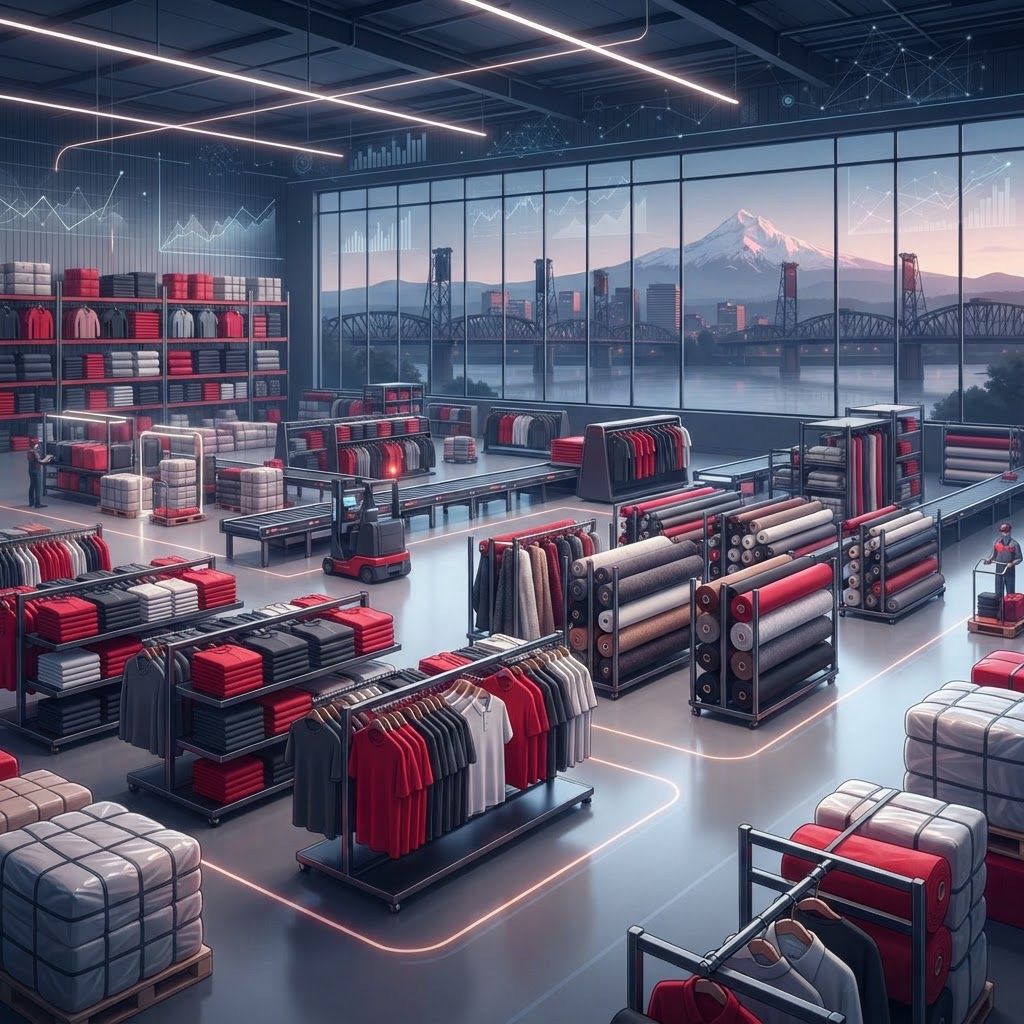
Portland: An Underrated Apparel Sourcing Capital
Portland occupies an unusual position in the American apparel industry. It is the design and engineering home of some of the largest athletic and outdoor brands in the world, which means the city has spent decades accumulating deep technical talent in pattern making, materials science, fit engineering and supply chain management. That expertise did not stay locked inside corporate campuses. It spilled outward into a dense ecosystem of small factories, sample rooms, importers and wholesale distributors that now serve boutiques, uniform programs, print shops and emerging labels across the Pacific Northwest.
The result is a wholesale market with unusual range. A buyer in Portland can source blank fleece for screen printing in the morning, review recycled performance knits at lunch and place a small batch order for cut and sew streetwear in the afternoon. Very few metropolitan areas of comparable size offer that combination of technical depth and independent flexibility, and it is the main reason regional retailers keep their sourcing local rather than routing everything through Los Angeles or overseas agents.
What Separates a Great Clothing Wholesaler From an Average One
Price per unit is the number most buyers fixate on, but experienced retailers know it rarely determines profitability. The variables that matter more are fill rate, consistency of sizing across production runs, honesty about lead times and the willingness to work with a growing account rather than only established volume buyers. A wholesaler that quotes an attractive price and then ships eighty percent of the order six weeks late has cost far more than a slightly more expensive partner who delivers complete and on schedule.
Minimum order quantities deserve close attention as well. Some distributors operate on case pack logic where you accept a predetermined size curve, while others allow open stock picking by unit. For a small boutique, the ability to reorder three of a bestselling size rather than a full case of twelve can be the difference between healthy cash flow and dead inventory. Ask directly about reorder policy, restocking timelines and how the company handles discontinued colorways.
Finally, verify sustainability claims. Portland buyers are sophisticated and their customers ask pointed questions. A credible wholesaler can name the certification behind an organic cotton or recycled polyester claim and produce documentation on request. Vague language about eco friendly fabric without any traceability is a warning sign rather than a selling point.
The Top 10 Clothing Wholesalers in Portland
1. Rose City Apparel Group
Rose City Apparel Group is widely regarded as the most complete full service wholesaler in the metro area. Its catalog spans basics, knitwear, denim and light outerwear, and the company maintains a large local warehouse so that regional accounts can receive next day delivery. Buyers consistently praise the accuracy of its sizing specs and the depth of stock on core programs, which makes it a dependable anchor supplier for shops that cannot afford stockouts on everyday sellers.
2. Cascade Textile Supply
Cascade Textile Supply serves the makers rather than the resellers. It stocks performance knits, softshell laminates, waterproof breathable membranes, linings, zippers and trims by the roll and the box, supporting the outdoor and technical brands that cluster around Portland. Its reputation rests on technical literacy, since its sales staff can discuss hydrostatic head ratings, stretch recovery and abrasion resistance with genuine authority rather than reading from a spec sheet.
3. Portland Fashion Wholesale Co.
This distributor focuses on contemporary women's apparel and accessories with a fast turning assortment refreshed on a near weekly basis. Boutique owners appreciate the low minimums and mixed case flexibility, which allows them to test trends without absorbing significant risk. The company also runs a physical showroom, and buyers who visit in person tend to leave with a much sharper read on fabric quality than photographs can convey.
4. Willamette Garment Distributors
Willamette Garment Distributors built its business on workwear, hospitality attire and corporate uniform programs. Its strength is managed inventory, where the company holds dedicated stock for a client and replenishes automatically as sizes deplete. Hotels, restaurant groups and healthcare employers value this because it removes the administrative burden of forecasting uniform demand across dozens of locations and constantly shifting headcounts.
5. Northwest Blank Apparel
Screen printers and embroiderers form the core customer base here. Northwest Blank Apparel carries deep inventory in tees, hoodies, caps and bags across multiple price tiers, from budget promotional garments to premium ring spun and tri blend options. Same day will call pickup is a defining advantage for decorators working under tight event deadlines, and the company is known for absorbing rush requests without hostile surcharges.
6. Bridgetown Threads Wholesale
Bridgetown Threads occupies the small batch cut and sew niche, offering short production runs for independent designers and emerging labels. Order minimums are low by industry standards, and the company provides pattern grading and sampling support that helps first time founders avoid expensive fit mistakes. Many Portland labels that later scaled into national distribution produced their earliest collections through this kind of partner.
7. Pacific Rim Apparel Imports
For buyers who need container level volume, Pacific Rim Apparel Imports manages overseas sourcing, factory vetting, quality inspection and customs clearance. Its value lies in compliance and risk management, since the company handles documentation, duty classification and audit paperwork that most small importers are poorly equipped to navigate. Landed cost transparency is a recurring theme in positive buyer feedback.
8. Stumptown Streetwear Supply
Stumptown Streetwear Supply mirrors Portland's independent creative culture with a curated assortment of graphic apparel, heavyweight fleece, headwear and skate influenced silhouettes. It is a favorite among specialty retailers who need product with a distinct point of view rather than interchangeable basics. The buying team is aggressive about dropping stale styles, which keeps the assortment feeling current.
9. Columbia Basin Uniform Supply
This supplier concentrates on industrial and safety apparel, including high visibility garments, flame resistant clothing and durable outerwear for construction, utilities and logistics crews. Because compliance drives purchasing in these categories, the company invests heavily in documentation and standards knowledge, and it can explain exactly which specification a garment satisfies and why that matters for a given worksite.
10. Evergreen Sustainable Textiles
Evergreen Sustainable Textiles serves buyers building genuinely traceable collections. It focuses on organic cotton, recycled synthetics, hemp blends and low impact dye processes, and it backs claims with certification documentation rather than marketing language. Brands using sustainability as a core positioning pillar tend to consolidate their sourcing here specifically because the paper trail withstands scrutiny.
Trends Reshaping Apparel Wholesale in Portland
Three shifts dominate current conversations among local buyers. The first is inventory discipline. After several volatile seasons, retailers are ordering narrower assortments more frequently rather than committing to large seasonal buys, which pushes wholesalers to hold more stock locally and support faster replenishment. The second is nearshoring. Rising freight volatility and longer overseas lead times have made regional and Mexican production more attractive for replenishment programs even when unit costs are higher.
The third is traceability. Customers and increasingly regulators want to know where a garment came from and what it was made of. Wholesalers investing in material documentation and factory transparency now hold a competitive advantage that will only grow, while those relying on vague claims are steadily losing accounts to better documented competitors.
Building a Productive Wholesale Relationship
Start with a small trial order and evaluate the entire experience, not just the garment. Was the packing list accurate, did substitutions occur without notice, how quickly did someone respond when a problem arose. Communicate your sell through data with partners you intend to keep, because a wholesaler who understands your velocity can hold stock in your favor and warn you before a program is discontinued. Pay on terms consistently, since reliable payment history is often what secures allocation when inventory is tight.
Final Thoughts
Portland's clothing wholesale market rewards buyers who do their homework. The city offers technical depth, creative independence and a genuine culture of accountability that larger sourcing hubs sometimes lack. Whether you need decorated blanks by the pallet, certified sustainable knits or a partner willing to produce fifty units of a first collection, the ten companies above represent the strongest starting points for building a supply chain that holds up under pressure.
