
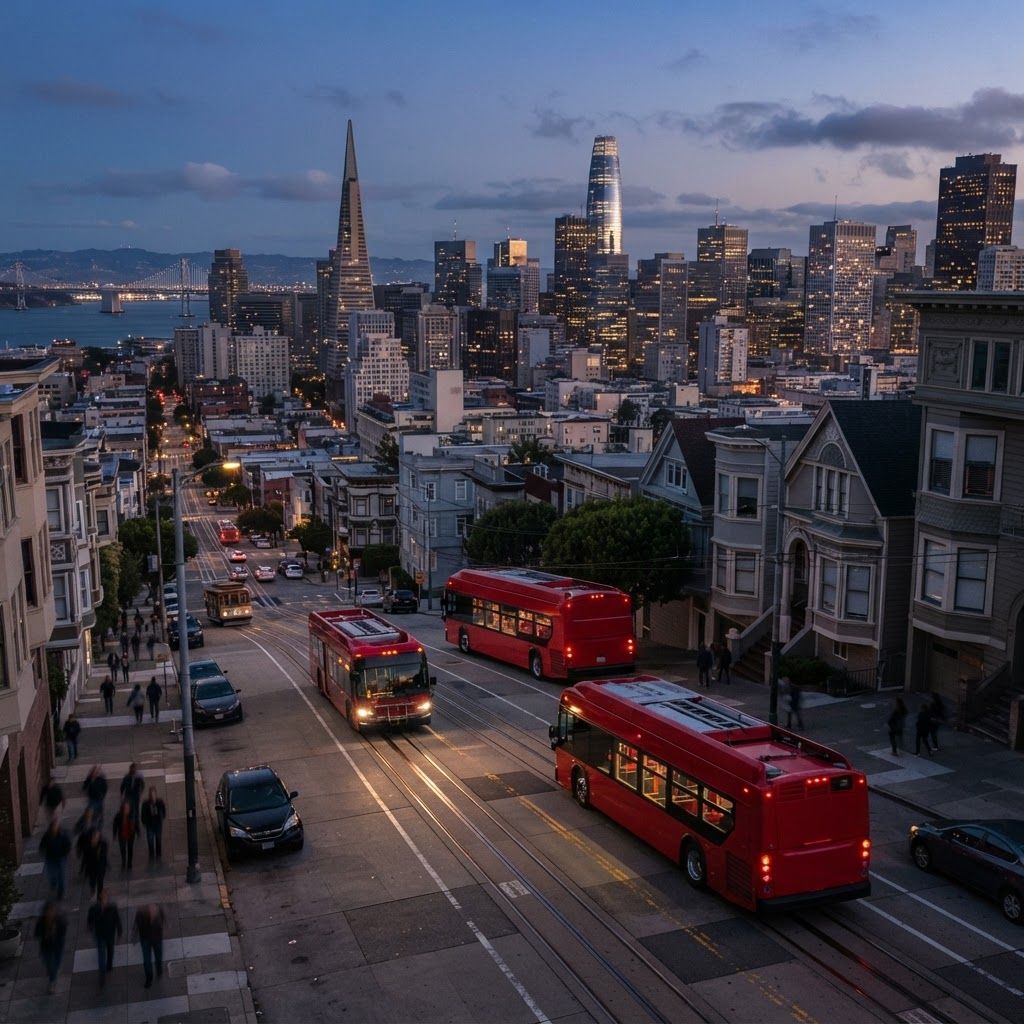
Why Bus Travel Matters in San Francisco
San Francisco is one of the most transit-dependent cities in the United States, and buses form the backbone of daily mobility for hundreds of thousands of residents, commuters, and visitors. The city's famously steep hills, dense neighborhoods, and limited parking make bus service an essential and often preferred way to move around. Beyond the well-known public system, a thriving ecosystem of private charter, tour, and corporate shuttle operators keeps the region connected. Choosing the right bus company depends on whether you need daily commuting, group travel, tourism, or scheduled intercity connections.
The Public Transit Foundation
The San Francisco Municipal Transportation Agency, widely known as Muni, operates the largest bus fleet in the city. Its extensive network of diesel-electric hybrid and fully electric trolley buses reaches virtually every corner of San Francisco, from the Marina to the Mission. Muni is prized for its frequency, affordability, and integration with light rail and cable cars. For regional travel, AC Transit connects San Francisco with the East Bay across the Bay Bridge, offering transbay commuter routes that relieve pressure on the region's crowded highways.
Leading Charter and Coach Operators
For group travel, weddings, corporate events, and sightseeing, private charter companies play a vital role. Operators such as Bauer's Intelligent Transportation have built strong reputations for premium motorcoaches, executive shuttles, and technology-forward fleets favored by Bay Area tech firms. Companies like Royal Coach Tours and Storer Coachways provide comfortable long-distance coaches for excursions to wine country, Lake Tahoe, and beyond. These operators emphasize professional drivers, modern amenities such as Wi-Fi and reclining seats, and rigorous safety standards.
Tour and Sightseeing Buses
San Francisco's tourism industry supports a robust selection of sightseeing bus companies. Big Bus Tours and City Sightseeing operate open-top double-decker buses that give visitors panoramic views of landmarks including the Golden Gate Bridge, Fisherman's Wharf, and Chinatown. These hop-on, hop-off services combine transportation with narrated commentary, making them a favorite for first-time visitors who want flexibility and context during their stay.
Corporate and Commuter Shuttles
The rise of the technology sector transformed private bus travel in the Bay Area. Corporate shuttle programs, many operated by contractors like Bauer's and WeDriveU, transport employees between San Francisco and Silicon Valley campuses. These services reduce single-occupancy vehicle trips, ease traffic congestion, and offer employees productive commute time. Their popularity underscores a broader regional trend toward shared, sustainable mobility.
What to Look for in a Bus Company
When selecting a bus provider in San Francisco, riders and organizers should weigh several factors. Safety record and driver training are paramount, especially given the city's challenging terrain and traffic. Fleet condition, accessibility features, and environmental credentials such as electric or hybrid vehicles increasingly influence decisions. Reliability, transparent pricing, and responsive customer service round out the essentials. For charters, confirming licensing and insurance provides peace of mind.
Trends Shaping the Future
Electrification is the defining trend in San Francisco bus travel. Muni has committed to a zero-emission fleet, and private operators are steadily adding battery-electric coaches. Real-time tracking apps, contactless payment, and improved accessibility continue to enhance the rider experience. As the city invests in dedicated bus lanes and transit-first policies, bus travel is poised to become even faster and more dependable.
How to Compare Your Options
A useful comparison begins with the details of the journey or shipment rather than a headline price alone. Consider the starting point, destination, desired schedule, volume, accessibility needs, and any special handling requirements. Then examine each operator's service area, operating hours, cancellation terms, safety practices, and ability to provide dependable status updates. Established companies should communicate clearly about what is included, where extra fees may apply, and what customers can expect if weather, congestion, or another disruption affects the plan. Reviews can reveal recurring strengths, but recent feedback and patterns across several sources are more useful than a single enthusiastic or negative comment.
San Francisco-specific experience deserves extra weight. The city's hills, loading restrictions, crowded curb space, major events, microclimates, and connections across bridges or to airports can complicate even a routine trip. Providers familiar with neighborhood access rules and regional traffic patterns are better equipped to set realistic schedules. Sustainability may also matter: efficient routing, shared capacity, electric equipment, and transparent emissions initiatives can reduce environmental impact without sacrificing service quality. Before making a decision, request a clear description of the service, confirm insurance or passenger protections where relevant, and verify how support is handled before, during, and after the job.
Making the Most of the Service
Good preparation improves almost every transportation experience. Book early during conventions, holidays, summer travel periods, and major city events, when capacity can tighten quickly. Provide accurate dimensions, passenger counts, addresses, timing, and special requirements so the operator can assign suitable equipment. Keep essential confirmation details available, allow reasonable time for San Francisco traffic, and identify backup options for truly time-sensitive plans. For recurring business needs, track punctuality, condition, communication, and total cost over several jobs rather than judging performance by price alone. A provider that consistently prevents problems and responds well when conditions change often delivers the strongest long-term value.
Conclusion
From the sprawling reach of Muni to the polished fleets of premium charter operators, San Francisco offers a bus company for nearly every need. Whether you are commuting across the Bay Bridge, planning a group excursion, or exploring the city's iconic sights, the region's diverse operators combine reliability, comfort, and a growing commitment to sustainability. Evaluating your priorities and the reputation of each provider ensures a smooth and satisfying journey through one of America's great transit cities.
