
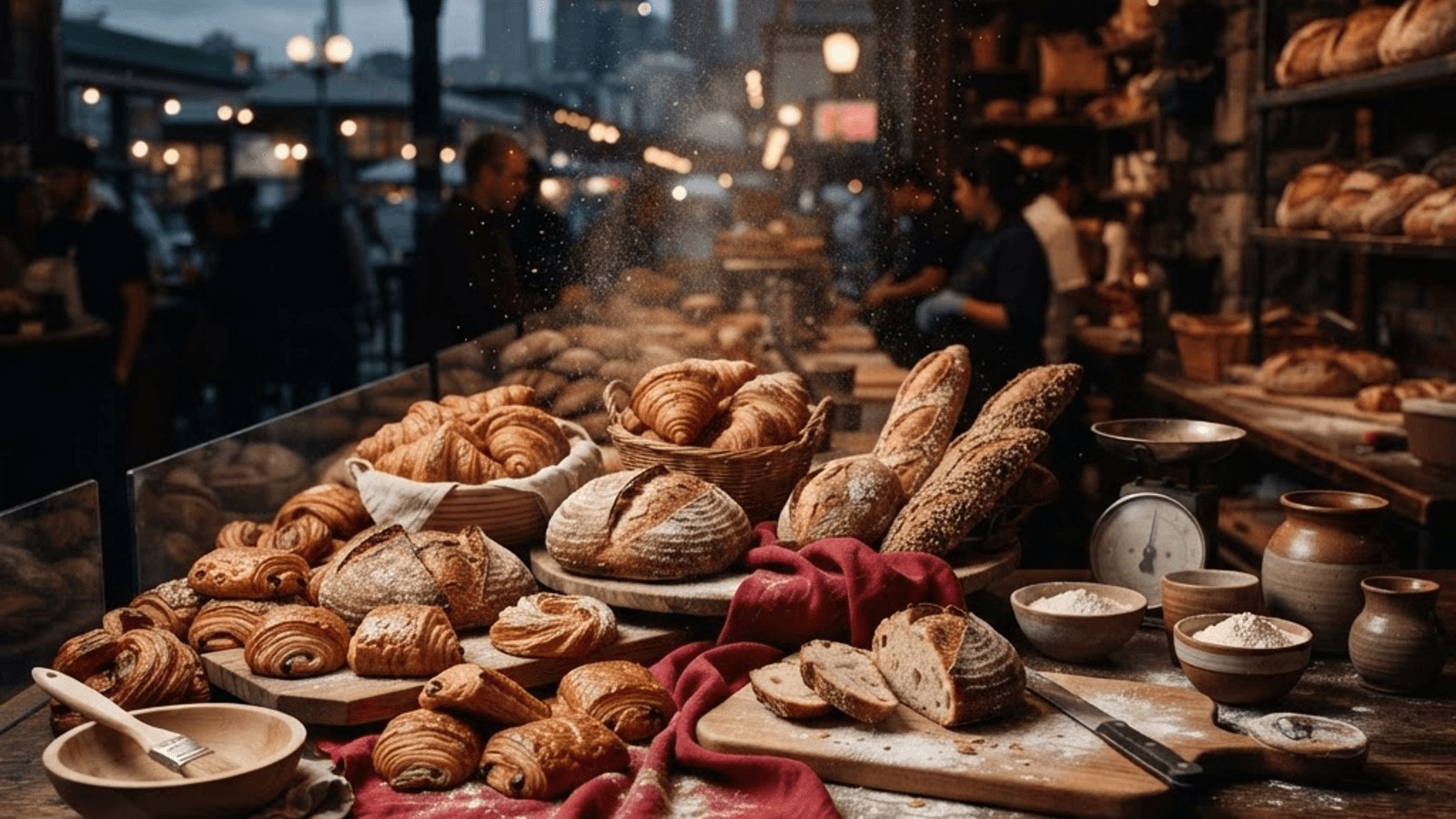
The Rise of Northwest Craft Baking
Washington has an unusual advantage in baking: it grows its own grain. The Palouse region in the southeast produces some of the finest soft white and hard red wheat in North America, and a network of regional mills now stone grinds heritage varieties for bakers who care about flavor and freshness. Combined with a cool, damp climate that suits long fermentation, this has produced a baking culture centered on naturally leavened bread, restrained sweetness and seasonal fruit.
The state also benefits from remarkable produce. Summer brings cherries, peaches, raspberries and blueberries. Autumn brings apples, pears and hazelnuts. Bakeries build menus around this calendar rather than importing the same fillings year round, which is why a visit in July tastes different from a visit in October.
The Top 10 Bakeries in Washington
1. Sea Wolf Bakers, Seattle
Sea Wolf earned its reputation through disciplined sourdough baking and a small, focused menu. Loaves are fermented slowly for depth of flavor and baked to a dark, blistered crust. The bakery is equally admired for morning pastries and seasonal galettes, and it exemplifies the Seattle approach of doing a few things exceptionally well.
2. Columbia City Bakery, Seattle
A neighborhood institution, Columbia City Bakery supplies bread to many of the city finest restaurants while operating a beloved retail counter. Its baguettes, country loaves and croissants are consistent benchmarks, and its wholesale reputation reflects the reliability that professional kitchens require.
3. Bakery Nouveau, West Seattle and Beyond
Founded by an internationally decorated baker, Bakery Nouveau is known for laminated pastry executed with unusual precision, including twice baked almond croissants that draw lines on weekends. The bakery also produces refined chocolate work and cakes, making it a destination for both casual pastry and special occasion desserts.
4. Grand Central Bakery, Seattle
Grand Central helped popularize rustic hearth bread in the Pacific Northwest decades ago and continues to operate cafes and a substantial wholesale business. It is recognized for sourcing regional ingredients, supporting Northwest wheat growers and maintaining approachable, everyday quality across many locations.
5. Le Panier, Pike Place Market, Seattle
Set within the historic Pike Place Market, Le Panier offers classic French baking in a setting that captures the energy of the city waterfront. Its croissants, macarons and brioche have anchored the market for years, and it remains one of the most reliable stops for visitors exploring downtown Seattle.
6. Corvus and Company, Tacoma
Tacoma has developed a strong independent baking scene, and bakeries in this tier combine naturally leavened bread with inventive pastry and coffee service. They differentiate through community focus, collaborations with nearby farms and menus that change with what is available locally.
7. Petit Pierre Bakery, Spokane
Spokane bakeries bring French technique to the Inland Northwest, producing viennoiserie, tarts and celebration cakes for a growing food culture east of the Cascades. Proximity to Palouse wheat gives these bakeries direct access to freshly milled flour, a genuine advantage in flavor.
8. The Original Bakery, Bellingham
Bellingham and the northern coast support bakeries built around organic ingredients and cooperative values. Whole grain breads, seeded loaves and hearty scones reflect regional preferences, and many of these bakeries maintain relationships with nearby organic farms in the Skagit Valley.
9. Bavarian Style Bakeries of Leavenworth
The alpine themed town of Leavenworth hosts bakeries specializing in Central European traditions: pretzels, strudel, stollen and dense rye breads. They offer a distinct counterpoint to French and Italian influenced coastal bakeries and are a highlight for travelers crossing the Cascades.
10. Yakima Valley Fruit Bakeries
In the agricultural heart of the state, bakeries build their identity around fruit picked within miles of the oven. Cherry pies in July, peach kuchen in August and apple pastries through autumn showcase the produce that makes Washington famous. Simplicity is the point; the fruit does the work.
What Makes Washington Baking Distinctive
Three factors stand out. First, flour quality: access to freshly milled regional wheat produces more aromatic bread than commodity flour allows. Second, fermentation culture: long, cool proofing suits the climate and yields better texture and digestibility. Third, seasonality: menus follow the harvest closely, which keeps offerings fresh and supports local growers.
Trends in the Local Baking Scene
Whole grain and heritage varieties continue to gain ground as bakers explore einkorn, spelt and regional landrace wheats. Gluten free and vegan baking has improved substantially, with dedicated production spaces preventing cross contamination. Many bakeries now operate on preorder models to reduce waste, and coffee programs have become serious rather than incidental. There is also growing transparency about sourcing, with bakeries naming the farm and mill behind their flour.
How to Judge a Great Bakery
Look at the crust and crumb of a plain loaf, since bread with nothing to hide behind reveals technique immediately. A well made croissant should shatter slightly and show open, honeycombed layers rather than a bready interior. Ask what changed on the menu this month; a genuine answer signals seasonal cooking. Observe whether the shop sells out, which usually indicates baking to demand rather than holding inventory. Finally, taste the simplest item on offer, because excellence shows most clearly without embellishment.
Conclusion
From Pike Place Market to the Palouse, Washington bakeries combine excellent local grain, patient fermentation and abundant regional fruit. Whether you want a dark sourdough loaf, a precisely laminated pastry or a cherry pie made from fruit picked that week, the state offers depth that rivals any baking region in the country. Visit early, follow the seasons and try the plain loaf first.
