
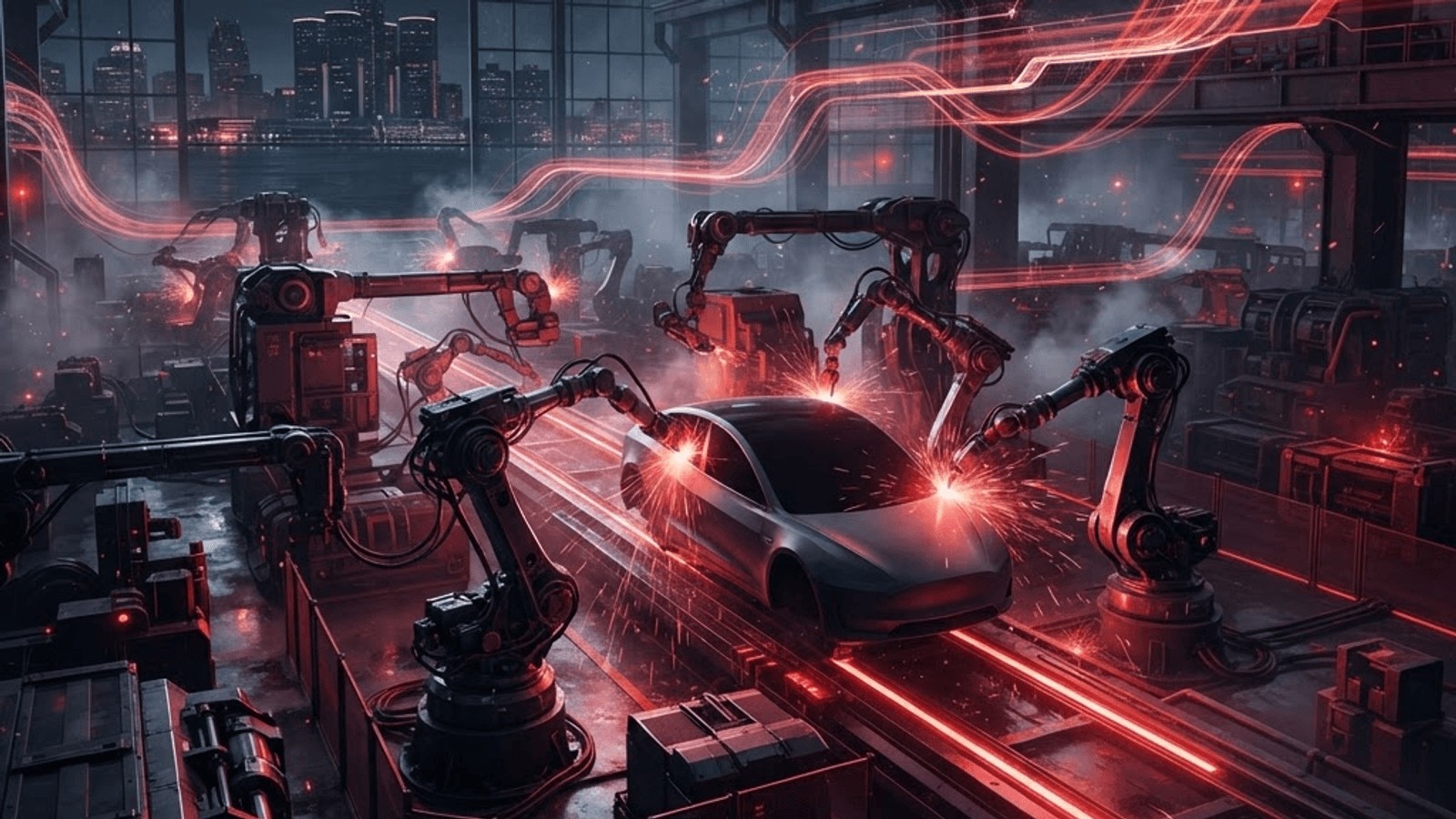
Detroit and the Business of Building Vehicles
No city is more closely identified with an industry than Detroit is with automobiles. More than a century after the moving assembly line reshaped global manufacturing, the metro area still hosts vehicle assembly plants, powertrain facilities, stamping operations, engineering centers, proving grounds, and one of the densest supplier networks anywhere in the world. What has changed is the content of the product. Vehicles built in Detroit today contain electric drive units, high-voltage batteries, advanced driver assistance sensors, and software stacks that would have been unimaginable to earlier generations of engineers.
That transition has been demanding but also generative. Battery plants, electric drive assembly lines, and software development centers have joined traditional machining and stamping operations, and the region's workforce has retrained at remarkable speed. For buyers, engineers, and job seekers, understanding the structure of this ecosystem is essential.
What Defines a World-Class Automotive Manufacturer
Automotive manufacturing is unforgiving. Programs run for years at high volume with penalties for any interruption, so excellence is measured in parts per million defect rates, on-time delivery percentages, and launch performance. The best manufacturers demonstrate mature quality management systems, disciplined production part approval processes, statistical process control on critical dimensions, robust supplier development programs, and the financial strength to invest in tooling ahead of revenue. Increasingly, they also demonstrate credible environmental performance, because automakers now audit their supply chains on emissions and materials as rigorously as on quality.
1. General Motors
Headquartered in downtown Detroit, General Motors operates assembly, powertrain, and battery facilities across southeast Michigan along with its principal engineering campus. Its investment in electric vehicle architectures and battery production has reshaped several Michigan plants, and its scale makes it the anchor customer for hundreds of regional suppliers.
2. Ford Motor Company
Ford's home in Dearborn includes the historic Rouge complex, extensive engineering facilities, and advanced manufacturing operations. The company has invested heavily in electric trucks and vans, battery development, and modernized assembly, and its supplier relationships extend throughout the metro area.
3. Stellantis North American Operations
Stellantis maintains major assembly plants, stamping operations, and technical centers in the Detroit region, including facilities within the city itself. Its multi-brand portfolio supports a wide range of vehicle programs, giving regional suppliers exposure to trucks, SUVs, and performance vehicles alike.
4. Tier-One Powertrain and Drivetrain Suppliers
Detroit's tier-one suppliers produce transmissions, axles, electric drive units, driveshafts, and differentials. These companies operate precision machining and assembly plants with in-line gauging and end-of-line functional testing, and many have converted portions of their capacity from internal combustion components to electrified drivetrains.
5. Battery and Electrification Manufacturers
Battery cell, module, and pack manufacturing has become one of the fastest-growing segments in Michigan. Facilities in and around Detroit produce cells, assemble modules and packs, and build thermal management and battery management hardware, requiring cleanroom-adjacent discipline and entirely new safety protocols.
6. Stamping, Tooling, and Die Manufacturers
Detroit's tool and die industry is among the deepest in the world. These shops design and build the stamping dies, fixtures, and check gauges that make volume body production possible, along with progressive dies for smaller components. Their engineering judgment often determines whether an ambitious body design is manufacturable at all.
7. Interior and Seating Systems Suppliers
Interior systems suppliers deliver seats, instrument panels, door trim, consoles, and overhead systems as complete modules sequenced to the assembly line. Their capability spans textiles, plastics, foam, electronics, and just-in-time logistics, making them among the most operationally complex suppliers in the industry.
8. Automotive Plastics and Injection Molders
Injection molders across the metro area produce interior and exterior trim, under-hood components, fluid reservoirs, and structural plastics. Leading operations combine tooling expertise, scientific molding practices, and secondary processes including painting, welding, and assembly under one roof.
9. Contract Engineering and Low-Volume Vehicle Manufacturers
Detroit hosts engineering services firms and low-volume manufacturers that build prototypes, specialty vehicles, upfits, and limited production runs. These organizations provide design, validation, and build capability to automakers, startups, and fleet customers who need vehicles that fall outside mass-production economics.
10. Automation, Robotics, and Assembly Equipment Builders
The machines that build vehicles are themselves manufactured in Detroit. Automation integrators and equipment builders design robotic welding cells, assembly lines, leak test stations, and vision inspection systems, exporting Michigan manufacturing expertise to plants worldwide.
Trends Reshaping Automotive Manufacturing
Electrification continues to dominate capital planning, though the pace has moderated and hybrid programs have regained importance, requiring suppliers to maintain flexibility across propulsion types. Software-defined vehicles are shifting value toward electronics and code, prompting mechanical suppliers to build software competency. Supply chain regionalization is bringing more content back to North America, benefiting Detroit suppliers who can scale. Additive manufacturing has moved into tooling, fixtures, and some production parts, compressing development timelines. Finally, sustainability requirements are pushing recycled content, closed-loop aluminum, and verified low-carbon steel into standard specifications.
How to Evaluate an Automotive Supplier
Start with quality and delivery data over at least three years, not a single quarter. Review launch history on comparable programs, since launch is where most supplier failures surface. Assess capacity headroom honestly, including labor availability and tooling condition. Examine sub-tier supplier management, because most disruptions originate below the first tier. Confirm engineering capability for design support and problem solving rather than pure build-to-print execution. Walk the floor: housekeeping, visual management, and operator engagement reveal the underlying culture quickly.
Final Thoughts
Detroit's automotive manufacturers are navigating the largest technological transition in the industry's history while continuing to build millions of vehicles a year. The companies profiled here span global automakers, precision component makers, and the equipment builders behind them, and together they explain why the region remains indispensable. For anyone sourcing automotive capability, the depth, discipline, and adaptability concentrated in the Detroit area remain unmatched.
