
How Boston Decorates
Boston interiors are shaped by their containers. A Back Bay parlour with fourteen-foot ceilings, ornate mouldings, and tall bay windows demands different furnishings than a Seaport apartment with floor-to-ceiling glass and open plan living. A South End brownstone floor-through has beautiful proportions and almost no closet space. A Cambridge two-family has charm, low ceilings on the upper floor, and radiators in inconvenient positions. Successful decorating in this city is largely a negotiation with existing architecture.
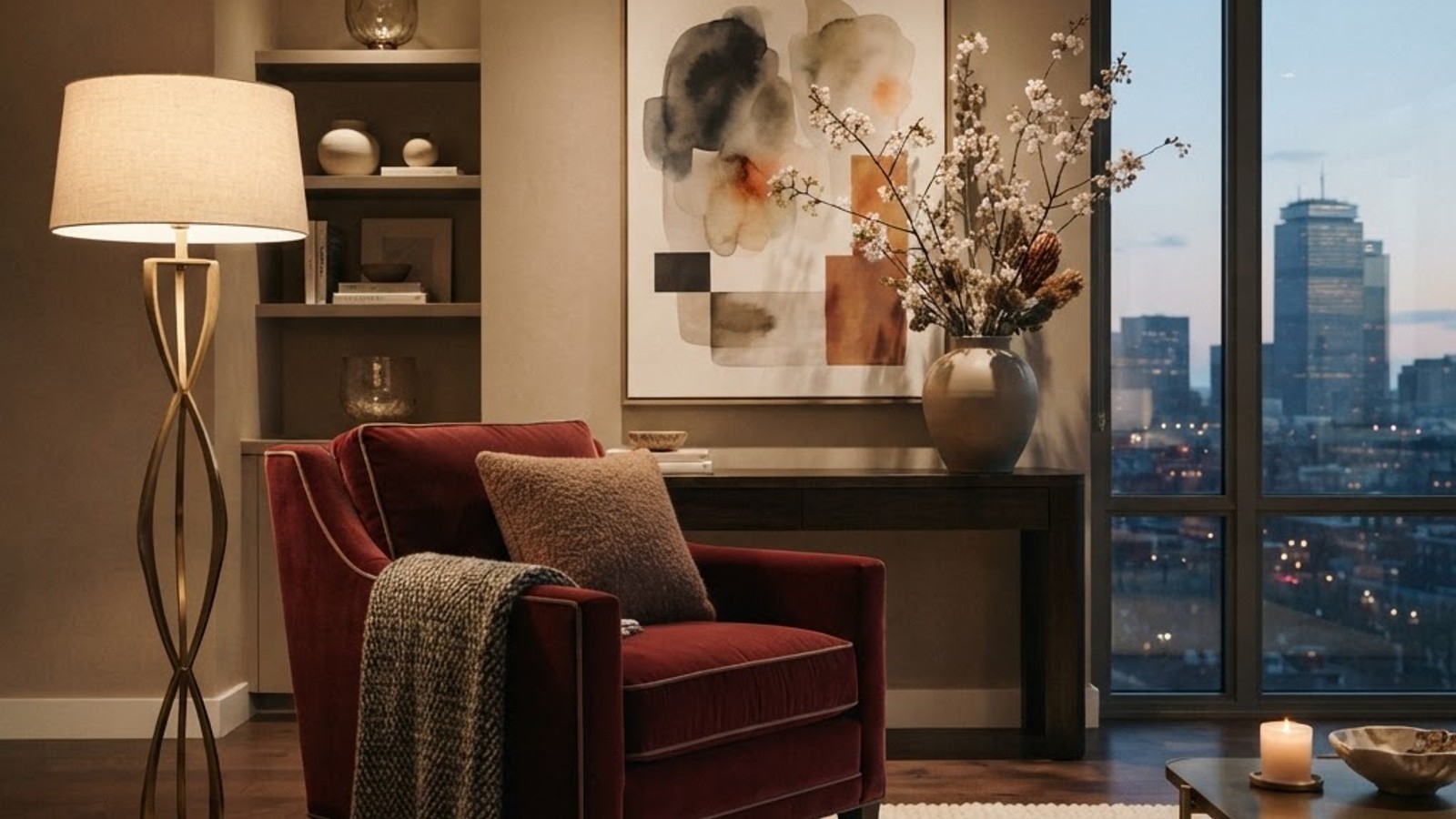
The prevailing local aesthetic reflects that negotiation: restrained colour palettes that let original woodwork and plaster detail read clearly, natural materials, a strong preference for quality over quantity, and a willingness to mix antique or vintage pieces with contemporary upholstery. New England's long winters also push interiors toward warmth — layered textiles, wool, wood tones, and generous lighting rather than a single ceiling fixture.
What Distinguishes a Strong Decor Retailer
The best brands in the market do more than sell objects. They offer design consultation that begins with measurements and floor plans rather than product selection. They are honest about lead times, which for custom upholstery routinely run several months. They provide material and finish samples for review in the actual room, since Boston's northern light renders colour differently than a showroom. They handle delivery competently in buildings with narrow stairs, and they will tell you when a sofa cannot physically enter your apartment before you buy it — a service Boston shoppers learn to value.
Ten Home Decor Brands and Showrooms Worth Visiting
1. Circle Furniture. A New England institution focused on sustainably made, largely American-built furniture with genuine longevity. Their design consultants are known for practical space planning, and their emphasis on solid wood construction and non-toxic finishes appeals to buyers thinking in decades rather than seasons.
2. Boston Interiors. A regional retailer offering broad style range from transitional to contemporary, with strong custom upholstery programmes. Popular for its accessible complimentary design services and consistent quality across price points.
3. Room and Board. Known for clean modern silhouettes, primarily American manufacturing, and transparent material sourcing. Their scaled-down pieces suit Boston's smaller urban rooms particularly well, and their design associates are adept at planning tight floor plans.
4. Design Within Reach. The destination for authentic modern and mid-century design classics. Valued by clients furnishing contemporary condominiums who want licensed originals with documented provenance rather than reproductions.
5. Machine Age. A specialist in twentieth-century modern furniture and vintage design, offering curated originals with real character. Popular among collectors and designers seeking pieces that cannot be sourced new.
6. Lekker Home. A South End showroom focused on European contemporary design, with a carefully edited selection of furniture, lighting, and accessories. Strong reputation for thoughtful curation and knowledgeable staff who understand architectural context.
7. Restoration Hardware. Recognised for substantial, architecturally scaled furniture and a cohesive neutral aesthetic that works well in larger historic rooms. Their in-house design services handle whole-room and whole-home projects.
8. Serena and Lily. A coastal-influenced brand well suited to New England sensibilities, offering woven textures, rattan, performance fabrics, and a lighter palette. Frequently chosen for guest rooms, sunrooms, and second homes on the Cape and North Shore.
9. Weeks and Leo. A locally rooted home goods and lifestyle brand offering artisan-made accessories, ceramics, textiles, and gifts. Valued for supporting independent makers and for pieces that add personality without major commitment.
10. Sault New England. A distinctive lifestyle and home goods shop known for eclectic, personality-driven objects, vintage finds, and unconventional accessories. A useful counterweight for interiors that risk becoming too coordinated.
Trends Defining Boston Interiors
Several directions are prominent. Warm minimalism has replaced stark white interiors, with layered neutrals, plaster-textured walls, and natural wood taking precedence over high contrast. Sustainability has become a purchasing criterion rather than a marketing line, with buyers asking about wood sourcing, finish chemistry, and repairability. Vintage and antique integration is strongly favoured, both for character and for environmental reasons, and Boston's dense antique market makes it practical. Multifunctional furniture continues to grow, driven by small urban footprints and continued home working. Bold accent colour is returning in controlled doses — a lacquered built-in, a saturated dining room, a patterned entryway — while primary furnishings remain restrained. Lighting is increasingly treated as sculpture, with decorative fixtures replacing recessed-only schemes.
Practical Advice for Furnishing a Boston Home
Measure everything, including stairwell turns, doorway widths, and elevator dimensions, before committing to large pieces. Test paint and fabric samples in the actual room across a full day, because northern light and short winter days change colours dramatically. Buy fewer, better pieces for items subject to daily use, particularly seating and dining tables. Invest in window treatments and rugs early; they define proportion and warmth more than most people expect. Plan lighting in layers — ambient, task, and accent — rather than relying on ceiling fixtures alone. And build the room over time rather than purchasing a complete set, which is how interiors acquire personality.
Final Thoughts
The brands above succeed in Boston because they understand the city's architecture and its residents' preference for durable quality over disposable trend. Whether furnishing a historic parlour or a new waterfront apartment, start with the room's proportions and light, then choose pieces that will still make sense in fifteen years.
