
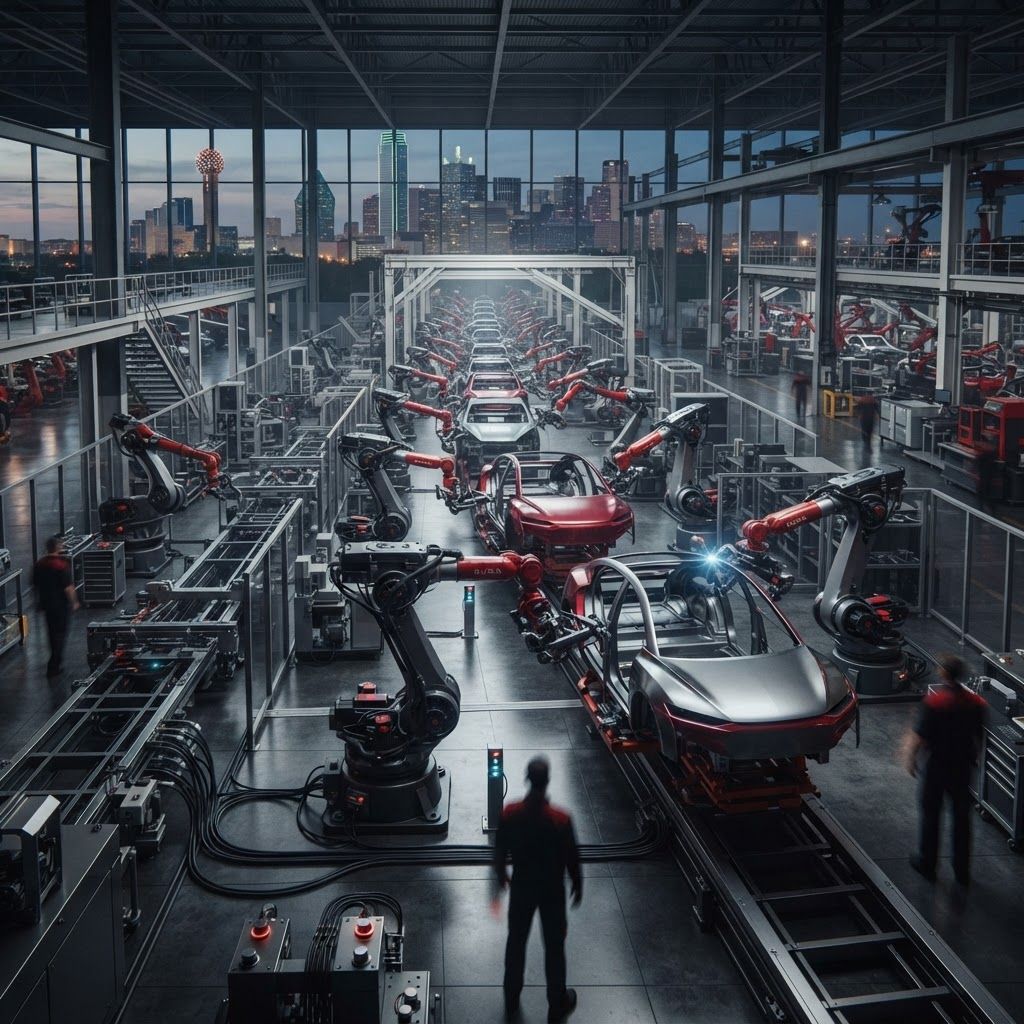
Understanding Automotive Manufacturing in Dallas
Dallas is not a traditional single-company auto town. Instead, the wider Metroplex supports a diverse mobility economy built around assembly plants, commercial vehicles, specialty bodies, trailers, aftermarket engineering, and a dense logistics network. Interstate access, rail connections, a central national location, and a large industrial workforce make North Texas attractive for both production and distribution.
This list uses Dallas in the regional sense, including important facilities throughout Dallas–Fort Worth. Companies are evaluated for manufacturing scale, specialization, reputation, local economic importance, and usefulness to buyers or job seekers. Capabilities vary greatly, so readers should distinguish complete vehicle production from components and specialty upfitting.
1. General Motors
General Motors’ Arlington Assembly plant is the region’s largest and most recognizable automotive manufacturing operation. The facility produces full-size sport utility vehicles and combines body, paint, assembly, quality, and logistics operations at considerable scale. Continuous investment in automation and production technology has made the plant a cornerstone of North Texas manufacturing. Its extensive supplier base also creates opportunities throughout the Metroplex.
2. Peterbilt Motors Company
Peterbilt, headquartered in Denton, is a premier manufacturer of heavy- and medium-duty trucks. The brand is known for distinctive design, durable engineering, driver-focused cabs, and vehicles configured for long-haul, vocational, and specialized applications. Its local operations connect advanced manufacturing with product development and dealer support. Peterbilt is an especially important North Texas employer and a major customer for component and fabrication suppliers.
3. PACCAR
PACCAR, Peterbilt’s parent company, maintains deep operational and technical ties to the Dallas–Fort Worth market. Beyond final truck assembly, its ecosystem encompasses powertrain technologies, connected vehicle systems, parts distribution, and financial services. The company’s focus on efficiency, quality, and alternative powertrains reflects the broader commercial vehicle industry’s transition toward lower emissions and smarter fleets.
4. International Motors
International Motors has a notable North Texas presence through truck production and commercial vehicle support in the wider region. Its products serve freight, delivery, school transportation, and vocational markets. The manufacturer brings expertise in diesel and emerging electric platforms, fleet connectivity, and lifecycle service. Commercial customers value manufacturers that can pair vehicle configurations with a dependable parts and dealer network.
5. REV Group
REV Group businesses contribute specialty vehicle manufacturing expertise to the region, including vehicles designed for emergency response, commercial use, and other mission-specific applications. Specialty manufacturing differs from high-volume passenger vehicle assembly because each build may require custom electrical systems, storage, safety equipment, and body configurations. Engineering flexibility and careful quality control are key differentiators.
6. Supreme Corporation
Supreme Corporation is known for truck bodies used in delivery, service, and vocational fleets. Its regional manufacturing capabilities support dry-freight bodies, cutaway configurations, and application-specific equipment. Fleet managers often choose body manufacturers based on payload needs, route conditions, repairability, and the ability to standardize specifications across multiple vehicles.
7. Fontaine Modification
Fontaine Modification supports commercial vehicle customers with engineering, production modifications, and specialized configurations. Such work may include equipment installation, chassis changes, cab alterations, and systems integration after the base vehicle leaves the original assembly line. The company occupies an important niche between mass production and one-off customization, helping fleets deploy purpose-built trucks efficiently.
8. Utility Trailer Manufacturing Company
Utility Trailer’s regional operations serve the freight economy with dry vans, refrigerated trailers, and other transportation equipment. Trailer manufacturing demands expertise in lightweight structures, thermal performance, durability, and repair-friendly design. Dallas–Fort Worth’s position as a distribution hub creates steady demand from carriers, food logistics providers, and private fleets.
9. Great Dane
Great Dane supports North Texas customers with trailers and transportation equipment engineered for freight and temperature-controlled operations. The company’s reputation rests on durable designs, materials engineering, and a broad service ecosystem. As fleets pursue better fuel economy and payload utilization, aerodynamic improvements, lighter materials, and telematics integration have become increasingly important purchasing considerations.
10. Load Trail
Load Trail manufactures trailers in North Texas for construction, agriculture, equipment hauling, and commercial use. Its product range includes utility, dump, gooseneck, and equipment trailers. The company represents the region’s strength in practical, configurable manufacturing and serves customers who prioritize structural durability, usable features, and dealer availability.
Regional Supplier Advantages
The Metroplex also gives manufacturers access to tire, glass, plastics, electronics, seating, coatings, machining, and logistics suppliers. This proximity can shorten engineering loops and reduce freight complexity. It also supports workforce mobility between passenger vehicle, truck, trailer, aerospace, and heavy-equipment programs, spreading useful production knowledge across the region.
What Buyers Should Compare
Vehicle and fleet buyers should compare more than acquisition price. Payload, total cost of ownership, warranty support, parts availability, fuel or energy consumption, technician familiarity, and resale value all affect long-term economics. For specialty vehicles, confirm weight distribution, electrical loads, compliance requirements, and the upfitter’s responsibility for final certification.
North Texas automotive manufacturing is being reshaped by robotics, connected fleets, advanced driver-assistance systems, alternative fuels, and electric powertrains. Dallas offers a particularly strong environment for commercial and specialty mobility because manufacturing is reinforced by logistics companies, fleet operators, suppliers, and transportation talent. That combination should keep the region relevant as vehicles become cleaner, more connected, and increasingly software-defined.
