
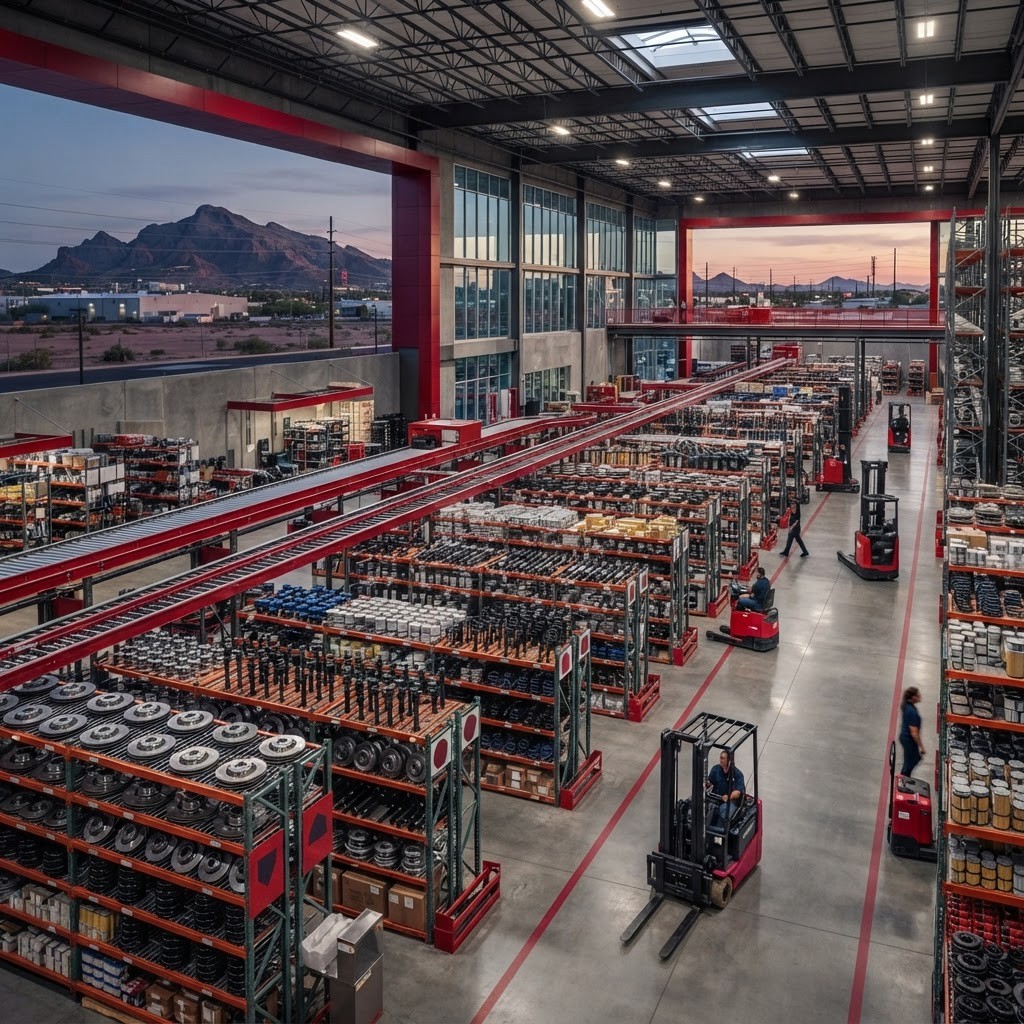
Auto Parts Supply in a Desert Driving Market
Extreme heat, long commutes, dust, and year-round driving put unusual pressure on Phoenix vehicles. Cooling systems, batteries, air conditioning, belts, hoses, filters, and tires can wear quickly. Professional buyers therefore need accurate cataloging, fast delivery, dependable warranties, and brands appropriate for demanding conditions. The following wholesalers serve passenger, commercial, collision, and heavy-duty segments.
1. NAPA Auto Parts
NAPA's distribution network supports independent repair shops, fleets, and consumers with broad replacement-part coverage. Professional programs can include delivery, technical information, tools, and shop solutions. Phoenix technicians benefit from ready access to cooling, electrical, HVAC, filtration, and chassis categories. Buyers should compare product grades within each line rather than assuming all options are equivalent.
2. O'Reilly Auto Parts
O'Reilly operates an extensive store and distribution network with commercial service for repair businesses. Its strength is convenient local inventory backed by rapid transfers. Shops can reduce stalled bays when common parts arrive quickly. Catalog accuracy and responsive warranty handling are especially important when labor time exceeds the component's purchase price.
3. AutoZone Pro
AutoZone Pro serves commercial repair customers with parts delivery, account tools, and broad vehicle coverage. Its large Phoenix footprint can help multi-location operators standardize procurement. Professional buyers should establish preferred quality tiers and monitor return rates so speed does not come at the expense of long-term reliability.
4. Advance Professional
Advance Professional provides parts, equipment, and commercial support through its distribution network. It is relevant to general repair shops looking for consolidated sourcing across undercar, engine management, electrical, and maintenance categories. Availability can vary by market, so buyers should verify route frequency and local stocking strength.
5. Parts Authority
Parts Authority is a major aftermarket distributor serving installers and parts retailers. Its model emphasizes broad brand access and professional delivery. Shops handling diverse makes may value the ability to source original-equipment-equivalent and aftermarket options through one account. Clear VIN-based lookup remains crucial for vehicles with midyear production changes.
6. Factory Motor Parts
Factory Motor Parts distributes automotive parts to service centers, fleets, and dealerships. It is known for established manufacturer relationships and professional-market focus. Fleet buyers may appreciate assistance with standardizing maintenance products and managing predictable replenishment across high-use items.
7. LKQ
LKQ supplies recycled, remanufactured, and aftermarket parts, with particular relevance to collision repair and major component replacement. Recycled original equipment can offer cost and sustainability advantages when properly graded and documented. Buyers should verify condition, mileage where applicable, warranty, included components, and delivery inspection procedures.
8. Keystone Automotive Industries
Keystone, part of LKQ, is widely recognized for aftermarket collision parts, accessories, and related products. Body shops value category depth across lamps, sheet metal, bumpers, cooling, and appearance items. Fit, finish, certification, insurer requirements, and return handling should all factor into supplier selection.
9. RWC Group
RWC Group supports commercial truck customers with parts, service, and dealership capabilities in the region. Heavy-duty fleets require suppliers that understand uptime, vehicle configurations, and roadside consequences. Access to trained counter staff and reliable identification can prevent expensive ordering errors on commercial equipment.
10. FinishMaster
FinishMaster specializes in automotive and industrial paint, coatings, and collision-repair supplies. Body shops can source refinishing systems, abrasives, masking, safety products, and equipment through a technically focused distributor. Product-system compatibility and technician training are central because refinishing quality depends on disciplined preparation and application.
How Phoenix Shops Should Compare Suppliers
Track fill rate, delivery time, catalog errors, warranty labor, and return friction by vendor. A slightly cheaper part is not a saving if it causes a comeback or occupies a bay twice. Ask about temperature-sensitive storage for batteries, chemicals, adhesives, and electronics. For critical cooling and air-conditioning parts, prioritize proven quality and complete installation kits.
Most professional shops use multiple distributors: a primary full-line source, a backup for urgent stock, and specialists for collision, heavy-duty, or dealer-only components. Establish purchasing controls so technicians receive the right quality tier without delaying repairs. A strong Phoenix auto-parts wholesaler supports accuracy, speed, technical confidence, and predictable total cost—four essentials in a market where heat exposes weak components quickly.
