
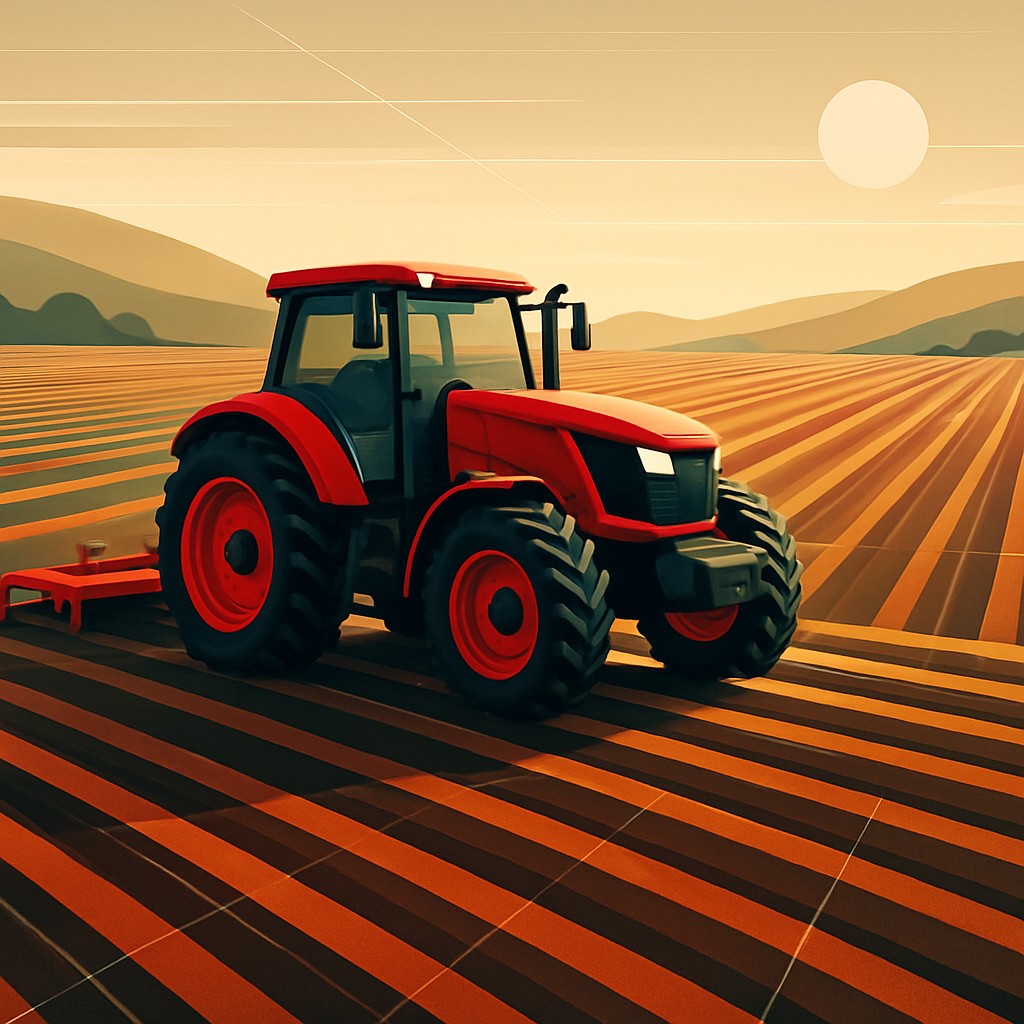
Mechanisation and the Future of Guinean Agriculture
Agriculture employs a large share of Guinea's population, with rice, maize, cassava, fonio, and groundnuts forming the heart of the rural economy. Yet much of this farming has traditionally depended on manual labour and basic hand tools. Today, that is changing. As farmers seek higher productivity and more reliable harvests, demand for tractors, tillers, irrigation systems, and post-harvest equipment is rising steadily. Mechanisation reduces the physical burden of farming, expands cultivable area, and helps smallholders compete in increasingly demanding markets.
The brands featured below have earned strong reputations among Guinean farmers and agribusinesses. Some are global manufacturers with extensive dealer networks, while others are regional suppliers and assemblers attuned to local conditions. Together, they are powering a quiet agricultural revolution.
The Top Agricultural Equipment Brands
1. Massey Ferguson. A globally trusted name, Massey Ferguson tractors are valued in Guinea for durability, fuel efficiency, and suitability to varied terrain. Their availability of spare parts and field-proven reliability make them a popular choice for medium and large farms.
2. John Deere. Renowned worldwide, John Deere equipment is associated with advanced engineering and long service life. From tractors to implements, the brand appeals to commercial operations seeking performance and resale value.
3. New Holland. Offering a versatile range of tractors and harvesting machinery, New Holland is favoured for comfort, ease of operation, and adaptability to both row crops and grain production.
4. Sonalika. An increasingly visible brand across West Africa, Sonalika provides affordable, robust tractors well suited to smallholder budgets without sacrificing essential power and reliability.
5. Mahindra. Known for value and toughness, Mahindra tractors have gained traction among Guinean farmers who need dependable machines for diverse tasks at competitive prices.
6. Kubota. Specialising in compact and mid-range equipment, Kubota is prized for irrigation pumps, power tillers, and small tractors ideal for rice cultivation and market gardening.
7. AGCO. As a multi-brand agricultural machinery group, AGCO supplies a broad portfolio of equipment and supports mechanisation programmes aimed at modernising regional farming.
8. Case IH. With powerful tractors and harvesting solutions, Case IH serves larger commercial farms that require high-capacity machinery for intensive production.
9. TAFE (Tractors and Farm Equipment). Offering economical and sturdy tractors, TAFE has become a practical option for cooperatives and emerging commercial growers seeking strong value.
10. Honda Power Equipment. Beyond tractors, smaller machinery matters enormously. Honda's water pumps, generators, and engines are widely relied upon for irrigation and processing across rural Guinea.
Why Equipment Choice Matters
Selecting the right agricultural equipment is about more than horsepower. Farmers must consider after-sales support, spare-part availability, fuel economy, and suitability to local soil and crop types. A tractor that performs well in dry savannah may struggle in waterlogged rice fields, while irrigation equipment must match water sources and plot sizes. The best brands succeed in Guinea precisely because they combine quality machinery with accessible servicing and training.
Financing also plays a decisive role. Equipment represents a major investment, and brands or dealers that offer flexible payment options, leasing, or cooperative purchasing arrangements help make mechanisation attainable for smallholders who form the majority of the farming community.
Emerging Trends in Farm Mechanisation
Several trends are influencing the market. There is growing interest in equipment tailored to smallholder realities, such as two-wheel tractors and compact tillers that suit fragmented landholdings. Demand for post-harvest technology, including threshers, dryers, and milling machines, is expanding as farmers seek to reduce losses and add value. Solar-powered irrigation is gaining attention as a sustainable alternative to diesel pumps. Across the board, the emphasis is shifting from simply owning a machine to maximising its productivity through proper use and maintenance.
Conclusion
Agricultural equipment is a catalyst for transformation in Guinea, enabling farmers to cultivate more land, harvest more efficiently, and improve their incomes. The ten brands highlighted here have built their reputations on reliability, support, and value, earning the confidence of farmers from smallholdings to large enterprises. As mechanisation deepens and new technologies arrive, these brands will remain central to building a more productive, resilient, and prosperous agricultural future for the country.
