
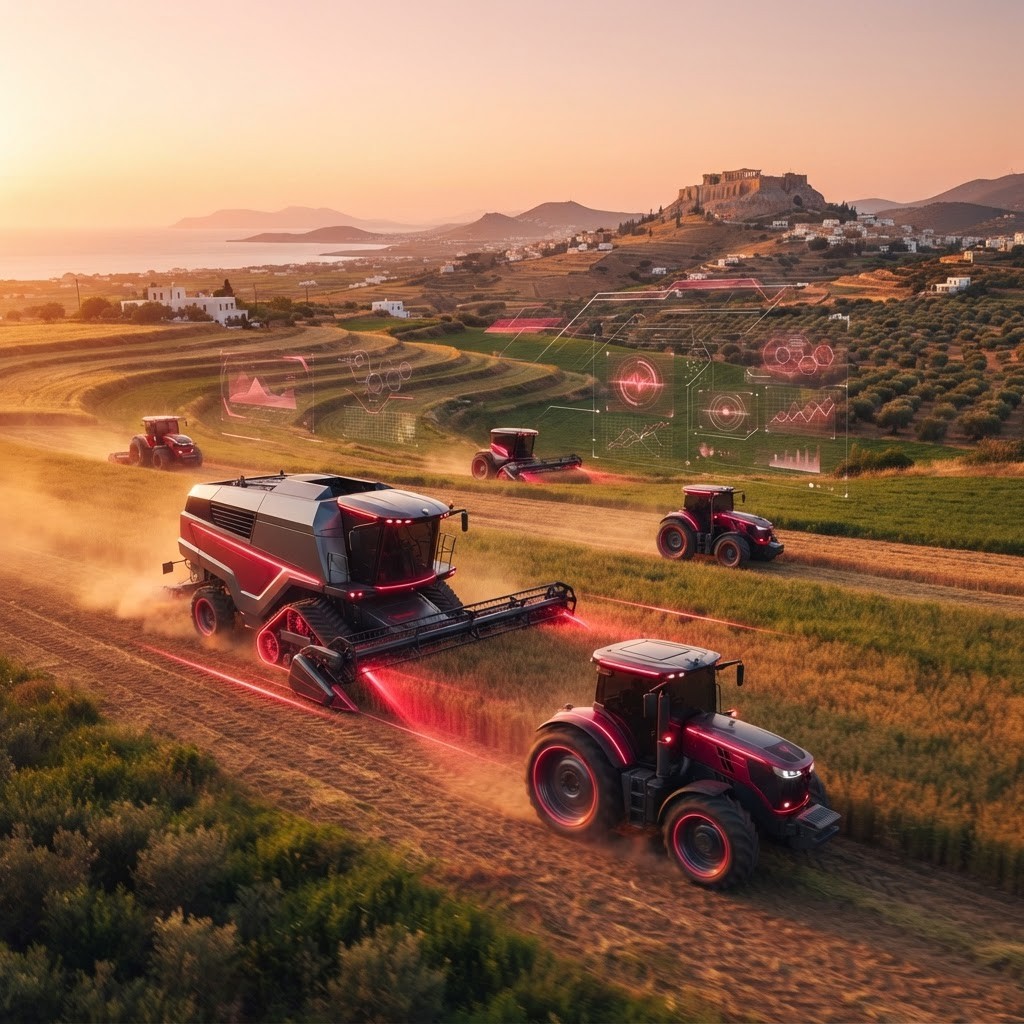
The Role of Machinery in Greek Agriculture
Agriculture remains central to the Greek economy, and the machinery that powers it has become increasingly sophisticated. From tractors and harvesters to irrigation systems and precision tools, quality equipment enables Greek farmers to boost productivity, reduce labor costs, and compete in demanding export markets. The country's diverse terrain, ranging from flat plains to hillside olive groves and vineyards, requires a broad range of reliable machinery tailored to different crops and landscapes.
Greek farmers rely on both global manufacturers with strong local dealer networks and specialized suppliers that understand Mediterranean farming conditions. The best brands combine durability, efficiency, and responsive after-sales support, which is essential given the seasonal intensity of agricultural work.
What to Look for in Agricultural Equipment
When choosing agricultural machinery, Greek farmers prioritize reliability, fuel efficiency, ease of maintenance, and the availability of spare parts. After-sales service and local technical support are critical, since downtime during planting or harvest can be costly. Increasingly, buyers also value technology features such as GPS guidance, precision controls, and fuel-saving engines that lower operating costs and improve accuracy.
Leading Agricultural Equipment Brands in Greece
John Deere is one of the most trusted names among Greek farmers, offering a comprehensive range of tractors, harvesters, and precision agriculture solutions. Its strong dealer and service network makes it a popular choice for professional operations.
New Holland is widely used across Greece for its versatile tractors and harvesting equipment, valued for reliability and a broad product lineup suited to varied farm sizes.
Massey Ferguson enjoys a loyal following thanks to durable, straightforward tractors that perform well in demanding conditions and are backed by accessible service.
Kubota is especially popular for compact and mid-range tractors ideal for orchards, vineyards, and smaller holdings common in Greek agriculture.
Specialized and Regional Suppliers
Fendt appeals to farmers seeking premium, high-technology tractors with advanced automation and efficiency, particularly for larger arable operations. Deutz-Fahr is respected for robust engines and dependable performance across a range of applications.
For olive and fruit cultivation, specialized brands supplying harvesting shakers, pruning equipment, and orchard machinery are essential. Companies focused on Mediterranean crops provide tools tailored to olives, citrus, and grapes, addressing the specific needs of Greek producers. Local distributors also import and service specialized irrigation and spraying equipment vital to water-conscious farming.
Irrigation and Precision Technology
Water management is critical in Greece's dry summers, making irrigation equipment a key category. Brands offering drip irrigation systems, pumps, and smart controllers help farmers conserve water while maximizing yields. Precision agriculture technology, including GPS-guided tractors and sensor-based monitoring, is gaining traction as farmers seek to optimize inputs and reduce waste. These innovations improve both profitability and sustainability, aligning with European environmental goals.
The Importance of Local Dealers and Service
In Greece, the strength of a brand often depends on its local dealer network. Farmers value suppliers who provide prompt maintenance, readily available spare parts, and knowledgeable technical support. Established dealers across regions such as Thessaly, Macedonia, and the Peloponnese ensure that leading brands remain practical choices for everyday farming. This local presence is frequently the deciding factor when farmers invest in expensive machinery expected to last many seasons.
Trends Shaping Farm Machinery
The agricultural equipment market in Greece is evolving alongside global trends. Automation and smart farming are increasingly prominent, with data-driven machinery helping farmers make better decisions. Fuel efficiency and lower emissions are growing priorities as environmental regulations tighten and operating costs rise. There is also rising interest in electric and hybrid equipment for smaller applications, reflecting a broader shift toward sustainability. Used and refurbished machinery markets remain active, giving smaller farms access to quality equipment at lower cost.
Matching Equipment to Greek Farming Needs
One of the defining characteristics of Greek agriculture is its diversity, and the best equipment brands succeed by catering to this variety. Large arable farms in the plains of Thessaly and Macedonia require powerful, high-capacity tractors and harvesters for cereals, cotton, and maize. In contrast, the hillside olive groves and vineyards of the Peloponnese, Crete, and the islands demand compact, maneuverable machinery and specialized harvesting tools. Livestock and dairy farms need feeding, baling, and handling equipment suited to their operations. The brands that thrive in Greece are those that offer versatile lineups and knowledgeable dealers who can recommend the right machine for each crop and terrain. This tailored approach, combined with financing options and trade-in programs, helps farms of all sizes access the equipment they need to remain efficient and competitive.
Conclusion
The best agricultural equipment brands in Greece, including John Deere, New Holland, Massey Ferguson, Kubota, Fendt, and Deutz-Fahr, provide the reliability, efficiency, and support that modern farming demands. Complemented by specialized suppliers for olives, vineyards, and irrigation, these brands help Greek farmers stay productive and competitive. As technology advances and sustainability becomes ever more important, dependable machinery backed by strong local service will continue to be the foundation of successful Greek agriculture.
