
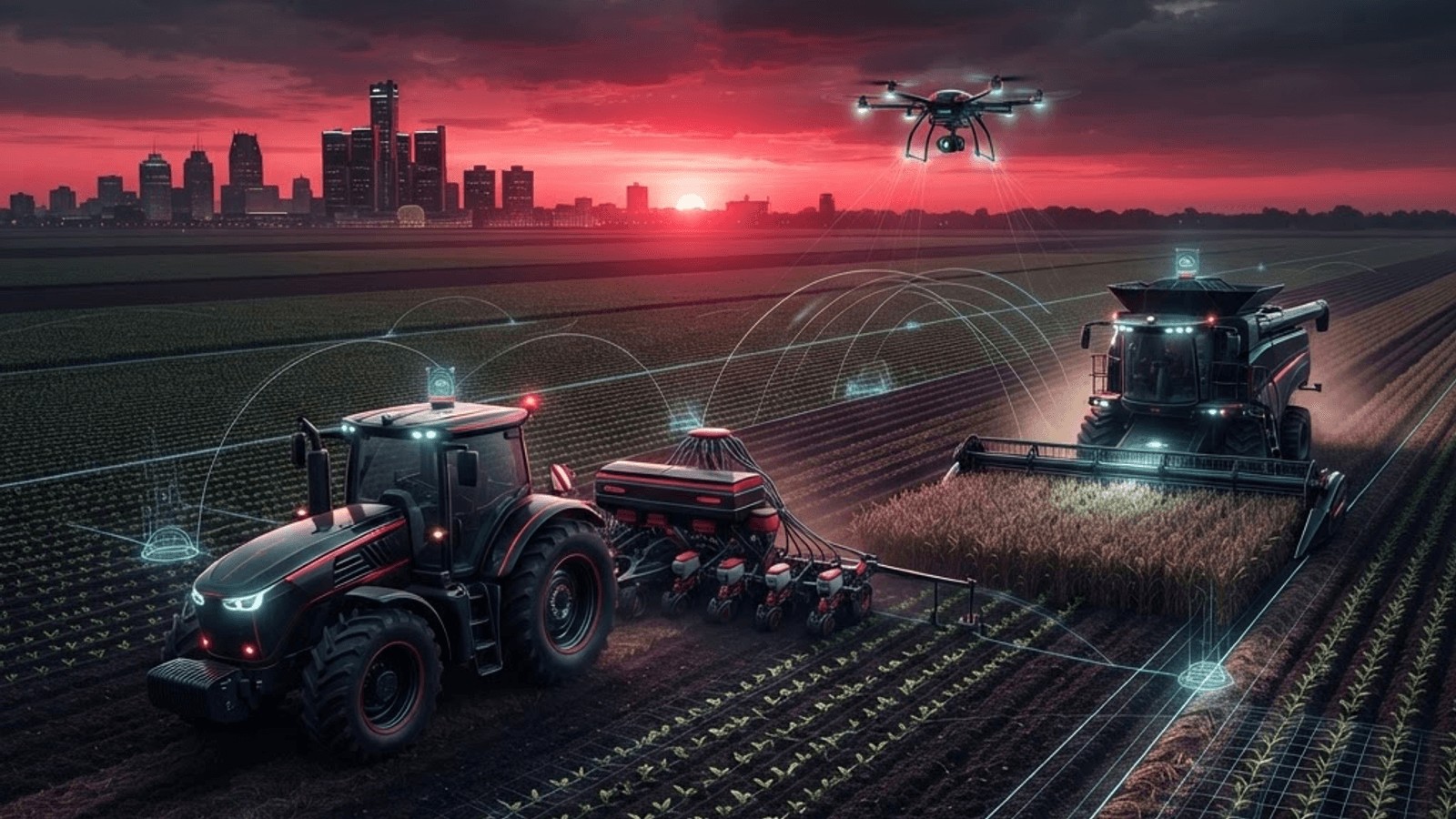
Agricultural Equipment in a Manufacturing City
Detroit is known for building vehicles, but the region's relationship with agricultural machinery runs deeper than most people realize. Michigan is one of the most agriculturally diverse states in the country, producing fruit, vegetables, dairy, grain and specialty crops, and the metro Detroit area sits within reach of substantial farmland in Wayne, Washtenaw, Monroe, Oakland and Macomb counties. At the same time, the city's own urban farming movement has created demand for compact, versatile equipment suited to small intensive plots.
The result is a market where the same dealer network may serve a thousand-acre grain operation and a half-acre neighborhood farm in the same week. Equipment brands that succeed here tend to offer wide product ranges, strong parts availability and technology that improves efficiency without overwhelming the operator.
Understanding Equipment Needs by Farm Scale
Machinery decisions follow scale closely. Large row crop operations prioritize horsepower, capacity and precision guidance, investing in high-output tractors, planters, sprayers and combines where every hour of field efficiency matters. Mid-sized diversified farms need flexible utility tractors with loaders and a range of implements for tillage, mowing, hauling and material handling.
Small farms and urban growers operate in an entirely different zone. Compact and sub-compact tractors, walk-behind tractors, two-wheel cultivators, precision seeders, and small-scale tillage and bed-shaping tools deliver more practical value than large machinery that cannot maneuver in tight plots. Greenhouse and controlled environment operations add another category altogether: irrigation systems, environmental controls, propagation equipment and post-harvest wash and pack lines.
Ten Agricultural Equipment Brands to Know
John Deere remains the reference point in agricultural machinery. Its strengths include an extensive product line from compact utility tractors to large combines, an advanced precision agriculture platform for guidance and field data, and a dealer network that provides dependable parts and service support across Michigan.
Case IH is widely respected among row crop producers for high-horsepower tractors, planters and harvesting equipment, along with automation and guidance systems that improve accuracy on large acreage.
New Holland Agriculture offers a broad range spanning tractors, hay and forage equipment and harvesting machinery, and has invested notably in alternative fuel and efficiency technologies that appeal to operations focused on reducing input costs.
Kubota dominates the compact and sub-compact segment that matters most to small farms, orchards, vegetable growers and urban agriculture. Its reputation for reliability, maneuverability and strong resale value makes it a frequent first tractor purchase.
Massey Ferguson serves mid-sized and diversified farms with practical, straightforward machinery, often chosen by operators who value mechanical simplicity and value pricing alongside modern capability.
Kioti has built a solid following in the compact tractor market with well-equipped machines at competitive price points, appealing to smaller operations, market farms and property owners managing acreage.
Bobcat anchors the compact equipment category with skid-steer and track loaders, compact excavators and a wide attachment range. For farms handling materials, building infrastructure or managing compost, this versatility is difficult to replace.
Toro and Rain Bird supply the irrigation systems that determine yield in dry seasons, from drip tape and micro-irrigation for intensive vegetable production to pump and control systems for larger fields.
BCS and Grillo walk-behind tractors are specialized favorites among urban and small-scale market farmers, powering rotary plows, tillers, flail mowers and bed preparation implements on plots where a ride-on tractor cannot operate efficiently.
Johnny's Selected Seeds tool line, Jang seeders and comparable small-farm equipment brands complete the picture with precision seeders, wheel hoes, harvest tools and season-extension hardware designed specifically for intensive small-acreage production.
Technology Trends Reshaping Farm Equipment
Precision agriculture has moved from premium feature to mainstream expectation. Satellite guidance, automated steering, variable rate application and section control reduce overlap, seed waste and chemical use while improving consistency. On larger farms, these systems often pay for themselves through input savings alone.
Data integration is the natural extension. Modern machinery generates detailed records of planting, application and yield, enabling field-level analysis that guides future decisions. The practical challenge is interoperability, since equipment from different manufacturers does not always share data easily, a friction point buyers should investigate before committing to a platform.
Electrification and alternative power are advancing steadily, particularly in compact equipment where battery systems already offer quiet operation, low maintenance and zero local emissions, an appealing combination for urban farms operating near residences. Autonomy is progressing too, with automated guidance and semi-autonomous field operation moving from demonstration toward commercial availability.
Repairability has become a genuinely contentious topic. Farmers increasingly weigh access to diagnostic tools, software and parts when selecting brands, and manufacturers are responding with expanded self-service resources.
How to Choose Agricultural Equipment
Start with the operation rather than the machine. Define the tasks, acreage, soil conditions, row spacing and seasonal timing, then identify the smallest equipment that accomplishes the work reliably. Oversized machinery is a common and expensive error, particularly on small farms where compaction and maneuverability matter more than raw capacity.
Weigh dealer support heavily. During planting or harvest, a machine down for a week can cost more than the price difference between brands. Ask about local parts inventory, field service response and loaner availability.
Evaluate used equipment seriously. Well-maintained older tractors and implements deliver excellent value, especially for straightforward tasks that do not require advanced electronics. Conversely, when precision technology drives measurable input savings, newer equipment often justifies its premium.
Finally, consider sharing and rental. Equipment cooperatives, custom operators and rental arrangements let smaller Detroit-area farms access capability they could never justify purchasing outright.
Looking Ahead
Agricultural equipment in the Detroit region is diversifying alongside the farms it serves. Large operations continue adopting precision and automation, while urban and small-scale growers drive demand for compact, electrified and highly specialized tools. Brands that serve both ends credibly, with dependable support and open access to data and repair, will define the next phase of the market.
