
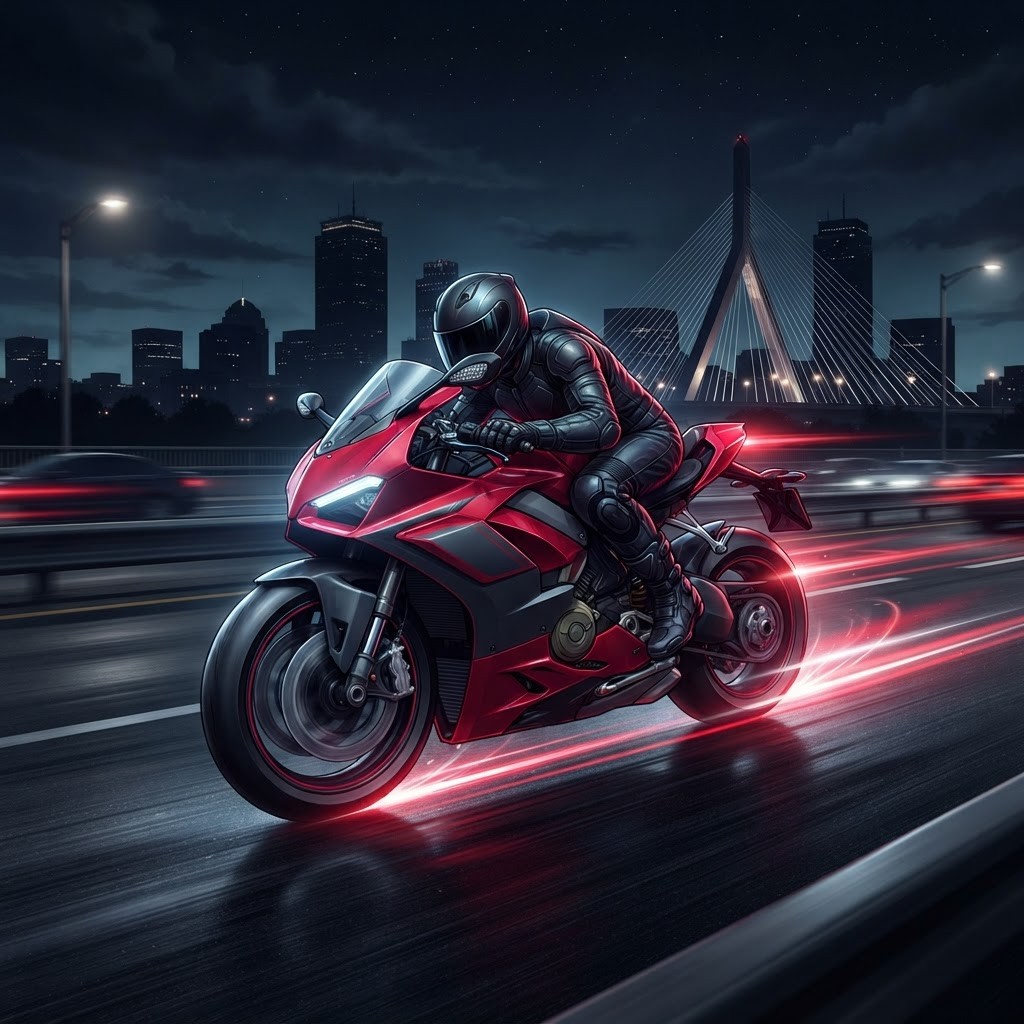
Riding a Motorcycle in Greater Boston
Motorcycling in Boston is a distinctive experience. The riding season is compressed, roughly spanning April through October for most riders, and the urban environment demands maneuverability. Narrow colonial-era streets, dense traffic, uneven pavement, and heavy seasonal tourism all reward compact, nimble machines with good low-speed handling and strong brakes.
At the same time, the region offers exceptional recreational riding. Within an hour or two, riders reach the coastal roads of the North and South Shores, the hills of central Massachusetts, and the mountain routes of New Hampshire and Vermont. That combination of tight city commuting and rewarding weekend touring explains why versatile mid-displacement machines are so popular locally.
Harley-Davidson
Harley-Davidson remains deeply embedded in New England riding culture, supported by an active regional dealer and club network. Its cruisers and touring models suit riders who prioritize highway comfort, distinctive character, and long-distance capability toward destinations like the White Mountains or coastal Maine. Recent lineup expansion into lighter and more agile models has broadened appeal to riders who found traditional touring bikes too large for city use.
Honda
Honda is arguably the most practical choice for Boston conditions. Its reputation for reliability, low maintenance demands, and strong resale value matters in a climate where machines sit through long winters. The lineup spans small commuters, versatile mid-size standards, adventure models, and sport bikes, and dealer parts availability across the region is excellent. New riders frequently start on a Honda and experienced riders often keep one as a dependable everyday machine.
Yamaha
Yamaha combines engineering quality with an engaging riding character that appeals across experience levels. Its mid-displacement standards and sport models are especially well suited to Boston, offering enough power for highway merging while remaining manageable in traffic. Yamaha's adventure and sport-touring offerings work well for riders splitting time between city commuting and weekend trips through New England back roads.
Kawasaki
Kawasaki has a strong regional following, particularly for its versatile middleweight platforms. The brand offers value-focused pricing without sacrificing performance, and its naked sport models deliver upright ergonomics that suit stop-and-go urban riding better than aggressive sport positions. Kawasaki's small-displacement models are also common choices for riders completing their first season.
Suzuki
Suzuki's appeal in Boston rests on durability and straightforward mechanical design that is relatively easy and affordable to maintain. Its dual-sport and adventure models handle rough New England pavement well, while its long-running sport and standard platforms have extensive aftermarket and parts support. For budget-conscious riders wanting proven engineering, Suzuki is consistently competitive.
BMW Motorrad
BMW Motorrad serves riders focused on touring capability and technology. Heated grips and seats, adaptive electronics, sophisticated rider aids, and excellent weather protection are genuinely useful in a climate with cold shoulder seasons and unpredictable rain. Its adventure-touring platforms are popular among riders who take extended trips through northern New England and Canada, and the brand's shaft-drive models reduce maintenance for high-mileage users.
Ducati
Ducati occupies the performance and design end of the Boston market, attracting riders who value character, handling precision, and visual distinction. Its naked and sport-touring lines have become notably more practical in recent years, with improved ergonomics and electronics packages. Ducati ownership in the region typically involves a specialist dealer relationship, given the maintenance and setup expertise these machines benefit from.
Triumph
Triumph's modern classic range fits Boston's aesthetic and streets particularly well. The bikes offer approachable power delivery, upright riding positions, moderate weight, and styling that complements the city's historic character. Triumph also produces capable adventure and roadster models, giving riders a path to upgrade within the brand as their needs evolve.
Royal Enfield
Royal Enfield has gained substantial ground in urban American markets, including Boston, by offering simple, affordable, characterful motorcycles with modest power output. For city riding where top speed matters far less than manageability and low purchase cost, these machines make considerable sense. They also appeal to riders seeking a mechanically straightforward bike that is approachable for owner maintenance.
KTM and Indian Motorcycle
KTM rounds out the market for riders drawn to lightweight performance, supermoto, and adventure riding on unpaved New England roads and trails. Indian Motorcycle, meanwhile, serves the American cruiser and touring segment with a strong emphasis on comfort and heritage styling. Both are supported by regional dealers including established multi-brand operations such as Greater Boston Motorsports, Parkway Cycle, and Cycles 128, which stock several manufacturers under one roof.
Choosing the Right Motorcycle for Boston
Practical fit should outweigh brand loyalty. Seat height and weight determine whether a rider can confidently manage stop-and-go traffic and tight parking. Turning radius and steering lock matter enormously on narrow streets. Fuel range affects convenience for longer rides north or west of the city. And storage capability influences whether the bike can handle errands and commuting rather than only recreation.
New riders should strongly consider smaller displacement machines. A well-chosen bike in the 300 to 500 cubic centimeter range builds skill faster, costs less to insure, and is far more forgiving of the mistakes every beginner makes. Boston's traffic density makes low-speed control the most important early skill, and lighter machines teach it better.
Seasonal Ownership and Maintenance
Winter storage planning is part of motorcycle ownership here. Fuel stabilization, battery tending, tire pressure management, and protection from road salt exposure all extend machine life. Many riders use storage facilities or heated garages, and spring pre-season inspection of brakes, tires, chain, and fluids should be treated as mandatory rather than optional.
Insurance, registration, and licensing requirements in Massachusetts also warrant attention. Completing an approved rider training course improves safety outcomes measurably and often reduces insurance costs. Given the region's aggressive traffic and frequent pavement irregularities, quality protective gear and defensive riding habits matter more here than in many other markets — and experienced local riders consistently identify visibility management as the single most important survival skill on Boston streets.
