
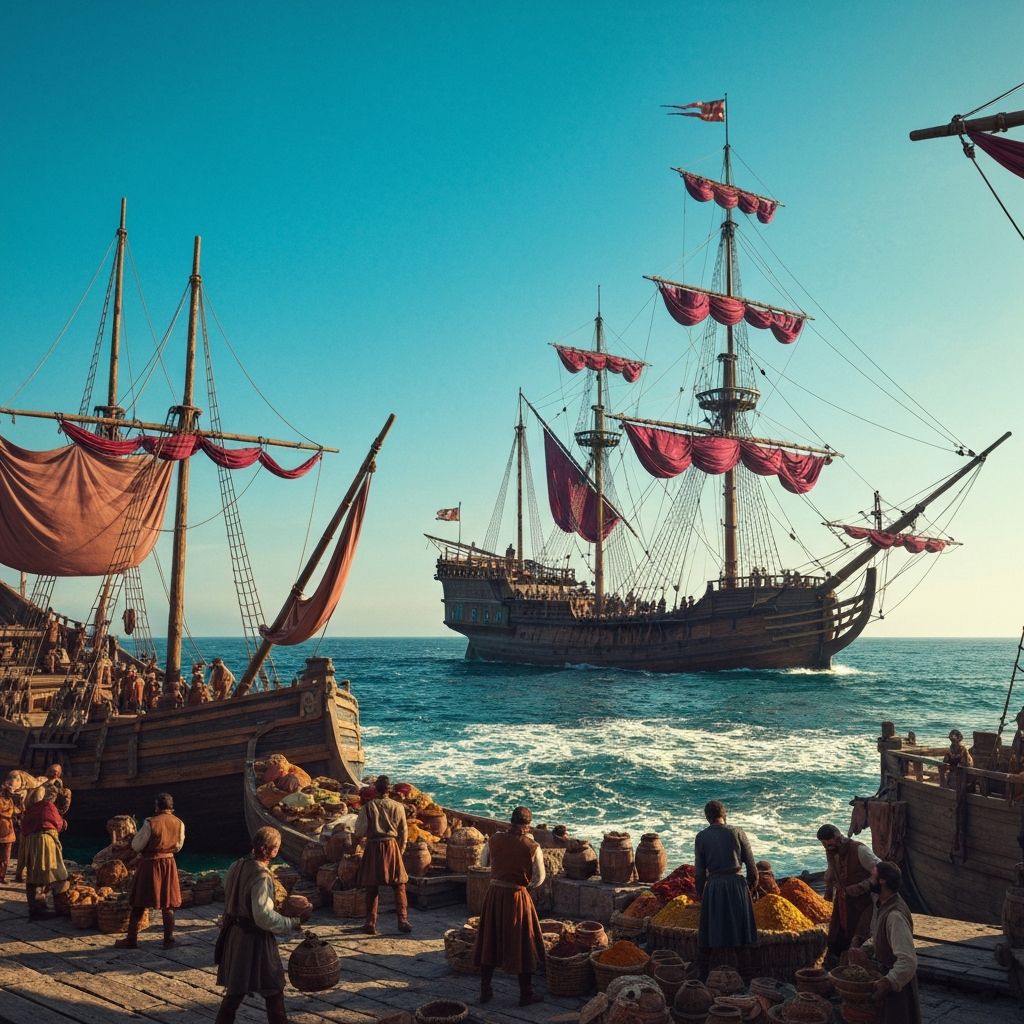
Ships That Changed History
Throughout human history, ships have played a pivotal role in exploration, trade, warfare, and cultural exchange. From ancient wooden vessels that first crossed the Mediterranean to modern steel behemoths that traverse the world's oceans, certain ships have achieved a level of fame that transcends their original purpose. These famous ships are remembered not just for their physical characteristics but for the stories they carry, the events they witnessed, and the impact they had on the course of human civilization.
The names of famous ships evoke powerful images and emotions. They remind us of great voyages of discovery, dramatic naval battles, tragic disasters, and triumphant achievements. Whether they sailed centuries ago or in the modern era, these vessels have become part of our collective cultural heritage, their names recognized by people around the world even if the ships themselves have long since been consigned to the depths of the ocean or the pages of history books.
RMS Titanic: The Unsinkable Ship
Perhaps the most famous ship in all of history is the RMS Titanic, a British passenger liner that sank on its maiden voyage across the Atlantic Ocean on April 15, 1912, after striking an iceberg. The Titanic was the largest and most luxurious ship of its era, measuring 882 feet in length and capable of carrying over 2,200 passengers and crew. It was built by the Harland and Wolff shipyard in Belfast, Ireland, and was operated by the White Star Line.
The Titanic was widely believed to be unsinkable due to its advanced safety features, including a double-bottomed hull and 16 watertight compartments. However, the iceberg collision breached five of these compartments, exceeding the ship's design limits and causing it to sink in less than three hours. Of the approximately 2,224 people on board, more than 1,500 perished in the disaster, making it one of the deadliest peacetime maritime disasters in history.
The sinking of the Titanic had far-reaching consequences for maritime safety. It led to the establishment of the International Ice Patrol, which monitors iceberg dangers in the North Atlantic, and prompted major reforms in ship safety regulations, including requirements for sufficient lifeboat capacity for all passengers and crew, 24-hour radio communication, and regular safety drills. The Titanic's story has been told and retold in countless books, films, and documentaries, ensuring that its legacy endures more than a century after its fateful voyage.
The Mayflower: A Voyage to the New World
The Mayflower is one of the most historically significant ships in American history. In 1620, this English merchant ship carried 102 passengers, known as the Pilgrims, from Plymouth, England, to the shores of what is now Massachusetts. The voyage took 66 days and was fraught with storms, cramped conditions, and illness. Despite these hardships, the Pilgrims successfully established Plymouth Colony, one of the earliest European settlements in North America.
The Mayflower itself was a relatively modest vessel, estimated to be about 100 feet long and 25 feet wide. It was originally used as a cargo ship for transporting goods like wine and cloth across the English Channel. Its conversion to a passenger vessel for the transatlantic voyage was not particularly comfortable; the passengers were crowded into the lower decks with limited headroom, poor ventilation, and no privacy.
The significance of the Mayflower extends far beyond the ship itself. The Mayflower Compact, a governing document drafted and signed by the male passengers aboard the ship before they disembarked, is considered one of the foundational documents of American democracy. It established a framework for self-governance and majority rule that influenced the development of democratic institutions in the United States. Today, millions of Americans trace their ancestry back to the Mayflower passengers, and the ship remains a powerful symbol of courage, perseverance, and the quest for religious and personal freedom.
HMS Victory: Nelson's Flagship
HMS Victory is perhaps the most famous warship in the history of the Royal Navy. Launched in 1765, the Victory served as the flagship of Admiral Lord Horatio Nelson at the Battle of Trafalgar on October 21, 1805, one of the most decisive naval engagements in history. In this battle, the British fleet under Nelson's command defeated the combined fleets of France and Spain, ensuring British naval supremacy for over a century and thwarting Napoleon's plans to invade Britain.
The Victory was a first-rate ship of the line, carrying 104 guns across three gun decks and crewed by approximately 850 sailors and marines. The ship was 227 feet long and weighed 3,500 tons, making it one of the largest and most powerful warships of its era. Its design and construction exemplified the pinnacle of wooden warship technology, and its combat record solidified its place in naval history.
The Battle of Trafalgar was a triumph for the British fleet but came at a great personal cost: Admiral Nelson was fatally shot by a French sniper during the battle and died aboard the Victory. His death elevated him to the status of a national hero, and the Victory became a shrine to his memory. Today, HMS Victory is preserved in dry dock at the Portsmouth Historic Dockyard in England, where it serves as both a museum ship and the official flagship of the First Sea Lord, making it the oldest commissioned warship in the world still in service.
USS Constitution: Old Ironsides
The USS Constitution, affectionately known as "Old Ironsides," is one of the most famous warships in American naval history. Launched in 1797, the Constitution is one of six original frigates authorized by the Naval Act of 1794 and is the oldest commissioned warship still afloat in the world. The ship earned its nickname during the War of 1812, when British cannonballs appeared to bounce off its thick oak hull, leading sailors to exclaim that its sides were made of iron.
During the War of 1812, the Constitution achieved a string of impressive victories against the Royal Navy, which was considered the most powerful naval force in the world at the time. These victories boosted American morale during a difficult war and established the United States as a credible naval power. The ship's most famous engagement was its defeat of HMS Guerriere on August 19, 1812, in which the Constitution dismasted and captured the British frigate in a fierce 35-minute battle.
The Constitution has been saved from scrapping on multiple occasions, most notably in 1830 when Oliver Wendell Holmes published the poem "Old Ironsides," which rallied public support for the ship's preservation. Today, the USS Constitution is berthed at the Charlestown Navy Yard in Boston, Massachusetts, where it serves as a museum ship and a symbol of American naval heritage. The ship is still manned by active-duty U.S. Navy sailors and makes periodic turnaround cruises in Boston Harbor.
Santa Maria: Columbus's Flagship
The Santa Maria was the largest of three ships used by Christopher Columbus on his first voyage across the Atlantic Ocean in 1492. Along with the Nina and the Pinta, the Santa Maria sailed from Palos de la Frontera, Spain, on August 3, 1492, and reached the Bahamas on October 12, 1492, an event that would dramatically alter the course of world history by initiating sustained European contact with the Americas.
The Santa Maria was a carrack, a type of merchant vessel that was common in the 15th century. It was approximately 62 feet long and had a crew of about 40 men. While it was the flagship of Columbus's fleet, it was not the ideal vessel for exploration; it was relatively slow and not as maneuverable as the smaller Nina and Pinta. On Christmas Day 1492, the Santa Maria ran aground on a reef near present-day Haiti and had to be abandoned. Columbus used the ship's timber to build a small fort called La Navidad, which became the first European settlement in the Americas.
Despite its relatively short career, the Santa Maria's role in the Age of Exploration has ensured its place as one of the most famous ships in history. Replicas of the Santa Maria have been built and displayed in museums around the world, and the ship remains a powerful symbol of the spirit of exploration that drove Europeans to venture across unknown oceans in search of new lands and opportunities.
Other Notable Famous Ships
Beyond these iconic vessels, numerous other ships have earned their place in history. The Lusitania, a British ocean liner torpedoed by a German submarine in 1915, played a role in drawing the United States into World War I. The Bismarck, a German battleship sunk in 1941, was one of the most powerful warships ever built and is remembered for its dramatic pursuit and destruction by the British Royal Navy. The Endurance, Sir Ernest Shackleton's expedition ship, became famous when it was trapped and crushed by Antarctic pack ice in 1915, leading to one of the greatest survival stories in exploration history.
More recent famous ships include the aircraft carrier USS Enterprise, which served in the United States Navy from 1961 to 2012 and was the first nuclear-powered aircraft carrier in the world. The research vessel Calypso, used by Jacques Cousteau for his ocean exploration and conservation efforts, helped bring the wonders of the underwater world to millions of viewers worldwide.
Each of these famous ships tells a unique story about human ambition, courage, tragedy, and achievement. Their names continue to resonate across generations, reminding us of the profound impact that maritime exploration and seafaring have had on shaping the world we live in today.
