
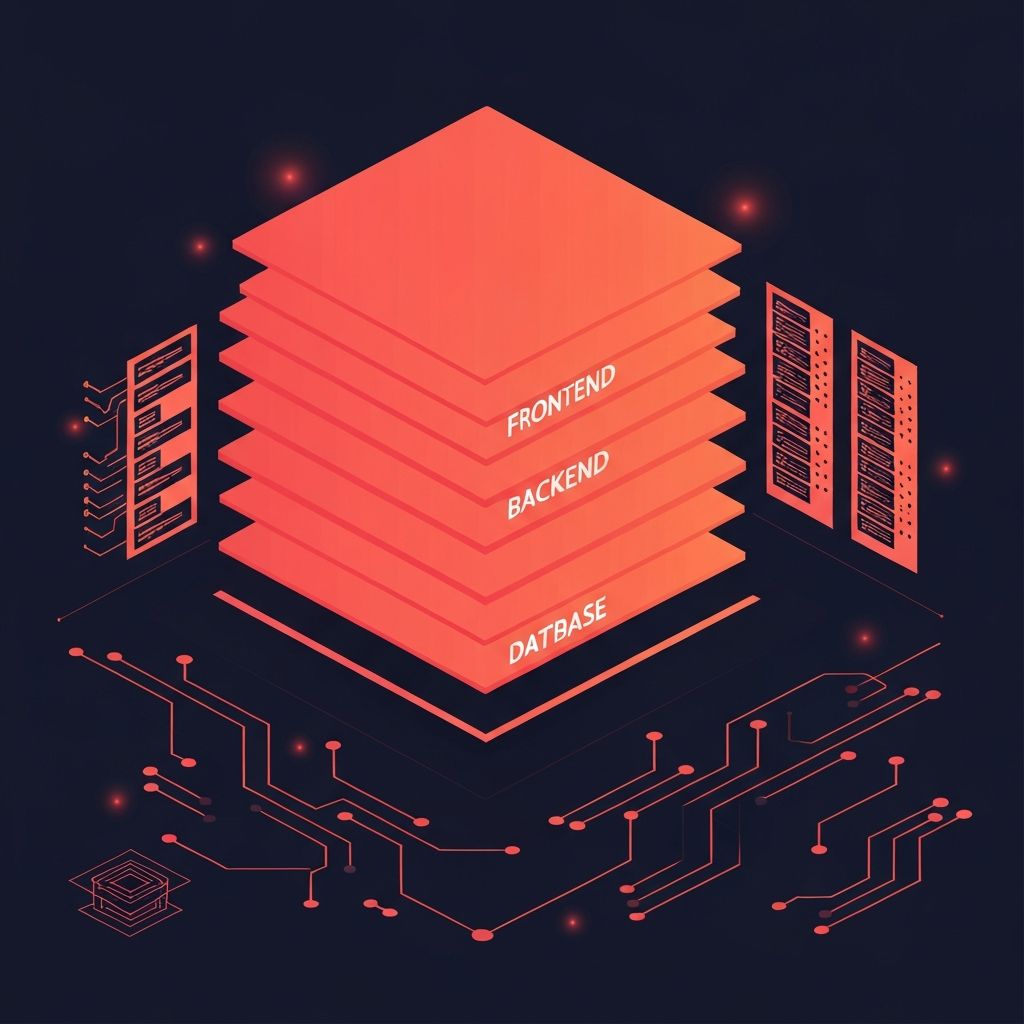
What Modern Full Stack Web Design Means Today
Modern full stack web design is the practice of crafting websites and web applications where the visual design, front-end interactions, and back-end systems work as a single coherent product. It is more than the old definition of full stack development, which focused on engineers who could code on both sides of the network. Today's full stack designer-developer thinks about user experience, performance, data architecture, and deployment as parts of one connected discipline, with each layer informing the others.
This unified approach has been driven by the rise of frameworks like Next.js, Nuxt, SvelteKit, and Remix that blur the line between client and server. Edge computing, serverless functions, and modern hosting platforms have made deployment trivial, freeing teams to focus on the experience instead of the plumbing. The result is a renaissance in what one small team can build.
Why Brands Hire AAMAX.CO for Full Stack Projects
Building a modern full stack web product requires expertise across many disciplines. AAMAX.CO brings together designers, front-end engineers, back-end developers, and SEO specialists to deliver complete digital products that look great, perform well, and rank in search engines. Their team handles everything from discovery and design to deployment and ongoing optimization, making them an ideal partner for ambitious projects that need both creative vision and technical depth.
The Modern Stack at a Glance
A typical modern full stack might include React or Vue for the front-end, a meta-framework like Next.js for routing and rendering, a serverless or edge runtime for execution, a managed database like PostgreSQL or a specialized service for content and authentication, and a content delivery network for global distribution. Tooling like TypeScript, Tailwind CSS, and modern build systems like Turbopack or Vite tie everything together with strong types, fast iteration, and consistent design tokens.
The exact pieces matter less than the principles they embody: composability, type safety, performance by default, and developer experience. Stacks that respect these principles let teams ship faster, debug more easily, and maintain higher quality over time.
Design Systems as a Foundation
A design system is the connective tissue of modern full stack design. By defining tokens for color, spacing, typography, and motion, then exposing them as reusable components, teams ensure consistency across pages and products. Design systems also serve as living documentation, helping new team members ramp up quickly and clarifying intent for non-designers like product managers and engineers.
Tools like Figma for design and Storybook for development make it possible to keep design and code synchronized. When the design system is shared between disciplines, the gap between mockups and shipped product narrows dramatically, and small inconsistencies that used to slip through are caught early.
Rendering Strategies
Modern full stack frameworks support multiple rendering strategies, often within a single application. Static generation produces lightning-fast pages for content that does not change often, server-side rendering delivers fresh data with great performance, and client-side rendering powers highly interactive experiences. The key skill is knowing which strategy fits each part of the application.
Newer patterns like incremental static regeneration, partial hydration, and React Server Components blur these lines further. They allow developers to mix static and dynamic content within the same page, sending only the JavaScript that genuinely needs to run on the client. This dramatically improves performance without sacrificing interactivity where it matters.
API Design and Data Architecture
The data layer is where many full stack projects succeed or fail. RESTful APIs remain the workhorse, but GraphQL and tRPC have gained popularity for their type safety and flexibility. Whichever approach is chosen, consistent contracts, strong validation, and clear error handling are essential. Tools like Zod, Valibot, or io-ts bridge the gap between front-end and back-end types, catching mismatches at build time rather than in production.
Caching is just as important as the API itself. Edge caching, database query caching, and client-side caching all play distinct roles, and getting them right transforms perceived performance. Modern frameworks include sophisticated caching primitives that make this easier than ever, but they still require thoughtful application.
Authentication and Security
Modern full stack authentication relies on industry-standard patterns like OAuth, OpenID Connect, and passwordless email or magic link flows. Session management uses HTTP-only cookies with proper security attributes, and credential storage uses strong hashing algorithms like bcrypt or argon2. Treating security as a first-class concern from the start prevents the costly retrofits that plague many older codebases.
Beyond authentication, modern stacks emphasize input validation, output encoding, content security policies, and regular dependency audits. Automated tooling can catch many issues before they reach production, but a security-aware culture across the team is the ultimate safeguard.
Deployment and Observability
Modern hosting platforms have made deployment a one-click operation, complete with preview environments for every branch, automatic SSL, and global CDNs. This convenience is paired with sophisticated observability tools that surface real user metrics, error tracking, and performance budgets in dashboards anyone on the team can read. Combining great hosting with professional web application development services produces products that scale gracefully from launch to thousands or millions of users.
Performance and Core Web Vitals
Modern full stack design treats performance as a non-negotiable feature. Core Web Vitals influence search rankings and user satisfaction, and meeting them requires attention at every layer. Image optimization, font loading strategies, code splitting, and selective hydration all contribute. Continuous performance monitoring ensures regressions get caught before they affect real users.
Looking Forward
The line between design and development continues to blur. AI-assisted tooling is accelerating both disciplines, while frameworks keep pushing more complexity to the platform layer. The full stack designers and developers who thrive will be those who embrace this convergence, focusing on outcomes for users rather than allegiance to any single role or tool. Modern full stack web design is, at its core, a commitment to building experiences that work end to end, beautifully.
