
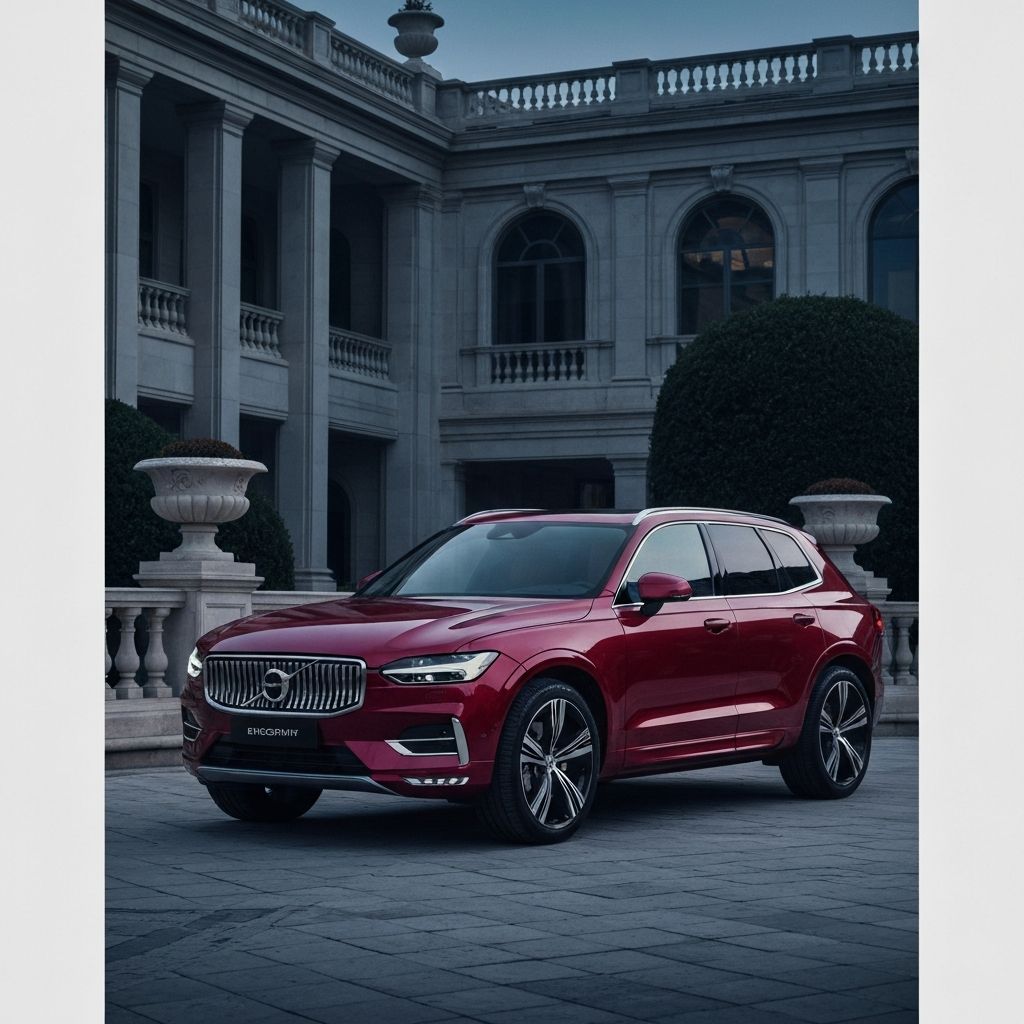
The Volvo Brand Identity
The question of whether Volvo is a luxury brand is one that comes up frequently among car buyers, automotive enthusiasts, and industry analysts. The answer is not as straightforward as it might seem, because Volvo occupies a unique position in the automotive market that blurs the traditional boundaries between mainstream and luxury segments. Understanding where Volvo fits requires examining its history, current product lineup, pricing strategy, brand values, and how it compares to established luxury competitors.
Volvo was founded in 1927 in Gothenburg, Sweden, with a mission to build cars that were safe, durable, and well-suited to the demanding Scandinavian climate and road conditions. For decades, Volvo was primarily known as a practical, safety-conscious brand that produced reliable but unremarkable vehicles aimed at families and professionals who prioritized substance over style.
The brand's identity underwent a significant transformation beginning in 2010, when Chinese automotive company Geely acquired Volvo from Ford Motor Company. Under Geely's ownership, Volvo has invested heavily in design, technology, and premium positioning, launching a new generation of vehicles that compete directly with traditional luxury brands like BMW, Mercedes-Benz, Audi, and Lexus.
Volvo's Current Product Lineup
Volvo's current lineup consists of sedans, wagons, SUVs, and crossovers that span from the compact XC40 to the flagship XC90. Each model is available in multiple trim levels, including the sporty R-Design, the comfort-oriented Inscription, and the performance-focused Polestar Engineered editions. Volvo has also made a strong push into electrification, offering plug-in hybrid versions of most models and the fully electric EX30, EX40, and EX90.
The XC90, Volvo's flagship three-row luxury SUV, is often cited as the vehicle that most clearly positions the brand in the luxury segment. With a starting price of approximately $58,000 and a fully loaded price that can exceed $80,000, the XC90 competes directly with the BMW X5, Mercedes-Benz GLE, Audi Q7, and Lexus RX. The interior features premium materials including driftwood trim, Nappa leather upholstery, and a large portrait-oriented touchscreen infotainment system that has become a Volvo signature.
The S90 sedan and V90 wagon also compete in the luxury segment, offering refined design, advanced technology, and a comfortable driving experience at price points that align with their German and Japanese luxury competitors. The smaller S60 sedan, V60 wagon, XC60, and XC40 models bridge the gap between mainstream and luxury, offering many premium features at more accessible price points.
Pricing Comparison with Luxury Brands
One of the clearest indicators of whether a brand is luxury is its pricing relative to mainstream and luxury competitors. Volvo's pricing places it squarely in the premium segment, with significant overlap with established luxury brands.
The Volvo XC40, the brand's entry-level model, starts at approximately $38,000, which is comparable to the BMW X1 ($40,000), Audi Q3 ($38,000), and Mercedes-Benz GLA ($40,000). The XC60, Volvo's best-selling model, starts at approximately $45,000, comparable to the BMW X3 ($48,000), Audi Q5 ($45,000), and Mercedes GLC ($48,000).
At the top of the range, the XC90 and S90 are priced competitively with their luxury counterparts, and the fully electric EX90, starting at approximately $80,000, competes with the BMW iX, Mercedes EQS SUV, and Audi Q8 e-tron.
This pricing analysis confirms that Volvo vehicles are priced at luxury levels, though they often offer a slight value advantage compared to their German competitors. This positioning as a premium alternative to the traditional luxury brands is a deliberate strategy that appeals to buyers who want luxury features and quality without the badge premium associated with BMW, Mercedes, or Audi.
Build Quality and Materials
The quality of materials and craftsmanship is a hallmark of luxury vehicles, and Volvo has made significant strides in this area over the past decade. Modern Volvos feature interiors that are widely praised by automotive journalists and consumers alike for their elegant design, high-quality materials, and meticulous attention to detail.
Volvo interiors are characterized by a Scandinavian design philosophy that emphasizes clean lines, natural materials, and understated elegance. The use of genuine wood, premium leather, brushed aluminum, and crystal glass accents from Orrefors creates an atmosphere of quiet luxury that stands out from the more aggressive styling of some German competitors.
The seats in Volvo vehicles are consistently rated among the best in the automotive industry. Designed with input from orthopedic specialists, Volvo seats provide exceptional comfort and support for long-distance driving. The front seats in most models offer heating, ventilation, and massage functions, features that are typically associated with luxury vehicles.
Build quality has also improved significantly under Geely's ownership. Volvo's Scalable Product Architecture and Compact Modular Architecture platforms provide a solid foundation for the brand's vehicles, with tight panel gaps, minimal road and wind noise, and a refined ride quality that meets luxury standards.
Technology and Safety Features
Technology and safety have always been central to Volvo's brand identity, and the current generation of vehicles continues this tradition with some of the most advanced features available in any vehicle.
Volvo's Sensus infotainment system, featuring a large portrait-oriented touchscreen, was one of the first systems in the industry to consolidate most vehicle functions into a single touchscreen interface. The system has since been updated with Google's Android Automotive operating system, providing built-in Google Maps, Google Assistant, and access to apps through the Google Play Store. This integration is more seamless and capable than many competing infotainment systems.
Safety technology is where Volvo truly shines and arguably sets the standard for the entire industry. Volvo was the first manufacturer to introduce the three-point seat belt, and the company continues to lead in safety innovation. Current Volvo models feature a comprehensive suite of driver assistance systems including adaptive cruise control with pilot assist, automatic emergency braking with pedestrian and cyclist detection, blind spot monitoring with cross-traffic alert, lane keeping aid, and run-off road protection.
Volvo's commitment to safety extends beyond technology. The company has set a goal of zero fatalities in new Volvo vehicles, driving ongoing research and development in areas such as autonomous driving, connected safety features, and advanced structural design.
How Volvo Compares to Traditional Luxury Brands
When compared directly to established luxury brands, Volvo holds its own in several key areas while falling short in others. Understanding these differences can help potential buyers decide whether Volvo is the right choice for their needs and preferences.
In terms of comfort and interior design, Volvo is competitive with and in some cases superior to its German luxury competitors. The Scandinavian design aesthetic, premium materials, and exceptional seat comfort make Volvo interiors some of the most pleasant places to spend time in the automotive world.
In terms of driving dynamics, Volvo tends to prioritize comfort and refinement over sportiness. While Volvo vehicles handle well and provide a smooth, composed ride, they do not offer the same level of driving engagement as a BMW or the dynamic precision of an Audi with Quattro all-wheel drive. For buyers who prioritize sporty handling and driving excitement, the traditional German luxury brands may be a better fit.
In terms of prestige and brand cachet, Volvo does not carry the same social status as BMW, Mercedes-Benz, or Audi. The luxury car market is partly driven by perception and brand image, and Volvo's historical association with practical, safety-focused vehicles means it does not command the same aspirational appeal as the established luxury marques. However, for many buyers, Volvo's understated approach is part of its appeal, representing a conscious choice to prioritize substance over showiness.
The Premium vs. Luxury Debate
Some automotive analysts draw a distinction between premium and luxury brands, placing Volvo in the premium category alongside brands like Acura, Infiniti, and Lincoln, while reserving the luxury label for brands like BMW, Mercedes-Benz, Porsche, and Lexus.
This distinction is somewhat subjective and depends on how one defines luxury. If luxury is defined primarily by price, features, and quality, then Volvo clearly qualifies. If luxury is defined by brand prestige, driving dynamics, and aspirational appeal, then Volvo may fall slightly below the top tier of luxury brands.
The reality is that the line between premium and luxury has become increasingly blurred in recent years. Volvo's latest vehicles offer features, quality, and refinement that are indistinguishable from vehicles sold under the BMW, Mercedes, and Audi badges. The primary difference lies in brand perception, which is gradually shifting as more consumers experience and appreciate what modern Volvos have to offer.
Resale Value and Ownership Experience
Resale value is another important consideration for luxury car buyers, as premium vehicles are significant investments. Volvo's resale values have historically been lower than those of BMW, Mercedes, and Lexus, though the gap has narrowed in recent years as the brand's reputation and desirability have increased.
The ownership experience for Volvo is generally positive, with the brand consistently receiving high marks for customer satisfaction. Volvo dealerships are undergoing renovations to create a more premium retail experience, and the brand has introduced digital purchasing options and subscription services that appeal to modern luxury buyers.
Warranty coverage is competitive, with Volvo offering a four-year, 50,000-mile basic warranty and complimentary scheduled maintenance for the first three years or 36,000 miles. This coverage is on par with most luxury competitors and helps offset concerns about maintenance costs.
Conclusion
Is Volvo a luxury brand? The answer depends on your definition of luxury, but by most objective measures, the answer is yes, or at the very least, Volvo is a premium brand that is rapidly closing the gap with established luxury competitors. Modern Volvo vehicles offer pricing, quality, technology, and comfort that are competitive with BMW, Mercedes-Benz, Audi, and Lexus. While Volvo may not carry the same brand prestige or offer the same driving dynamics as some competitors, its unique combination of Scandinavian design, industry-leading safety, and understated elegance has carved out a compelling niche in the luxury market that appeals to discerning buyers who value substance, quality, and individuality over tradition and status.
