
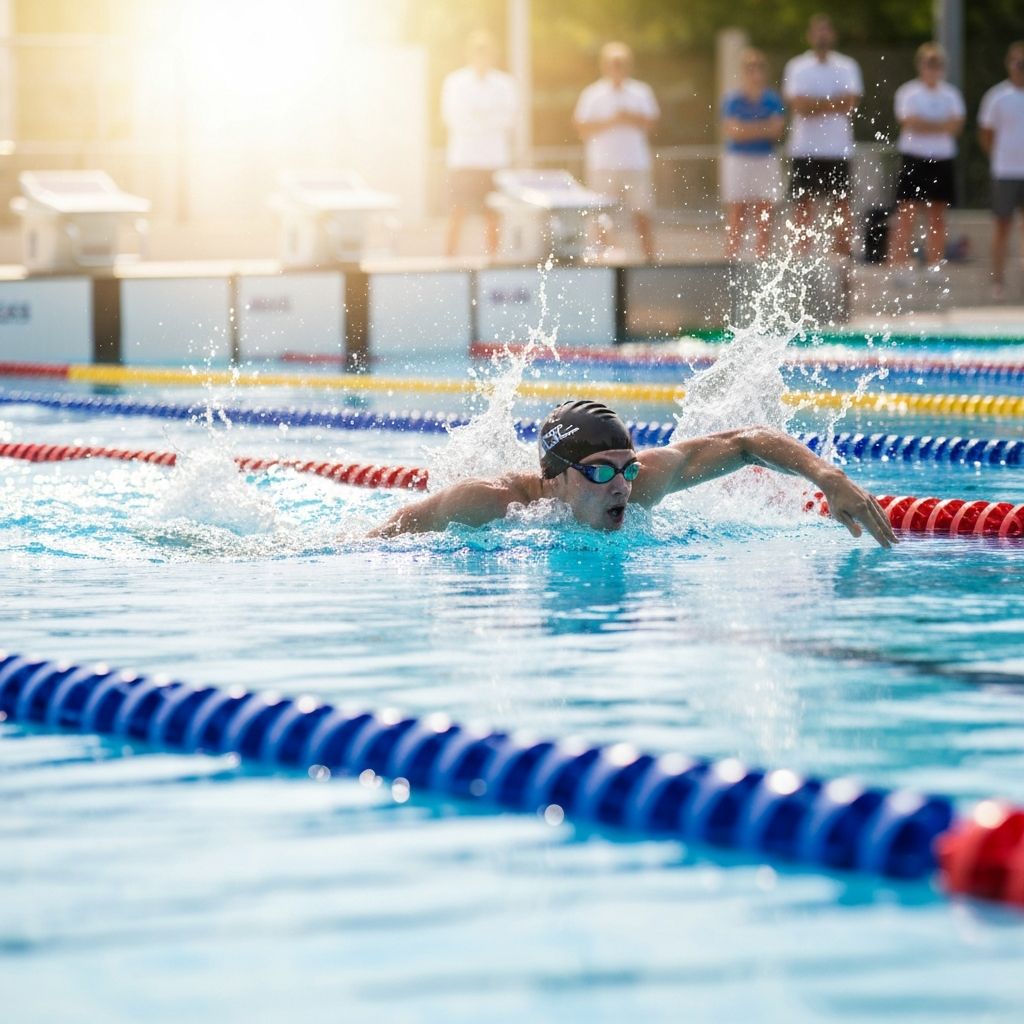
Defining What Makes a Sport
Before addressing whether swimming qualifies as a sport, it is important to establish what defines a sport in the first place. While there is no single universally accepted definition, most definitions share common elements: physical exertion, skill development, competition, and a structured set of rules. The Oxford English Dictionary defines a sport as "an activity involving physical exertion and skill in which an individual or team competes against another or others for entertainment." By this and virtually every other widely accepted definition, swimming clearly qualifies as a sport.
The debate about whether certain activities are "real sports" often arises from subjective opinions and cultural biases rather than objective criteria. Activities that involve judgment-based scoring, individual performance, or a lack of ball-based competition are sometimes questioned by those who hold narrow definitions of what constitutes a sport. However, the overwhelming consensus among athletic organizations, international governing bodies, and the general public is that swimming is not only a sport but one of the most demanding and prestigious athletic disciplines in the world.
The Physical Demands of Competitive Swimming
Competitive swimming is one of the most physically demanding sports in existence. Swimmers must develop and maintain exceptional cardiovascular endurance, muscular strength, flexibility, and neuromuscular coordination. The physical demands of swimming are comprehensive, engaging virtually every major muscle group in the body simultaneously, which is why swimming is often described as a total-body workout.
Elite competitive swimmers train for hours each day, often logging 5,000 to 10,000 meters or more in the pool during a single training session. Training programs typically include a combination of endurance swimming, sprint work, technique drills, and dry-land strength training. The training volume and intensity required to compete at the highest levels of swimming are comparable to, and in many cases exceed, the training demands of other major sports.
The anaerobic and aerobic energy systems are both heavily taxed during competitive swimming events. Sprint events, such as the 50-meter and 100-meter freestyle, require explosive power and anaerobic capacity, while distance events, such as the 800-meter and 1500-meter freestyle, demand exceptional aerobic endurance and pacing strategy. The versatility required to compete across different events and strokes adds another layer of athletic complexity.
Competitive Structure and Governance
Swimming has a well-established competitive structure that spans from local club meets to international championships and the Olympic Games. The sport is governed internationally by World Aquatics (formerly FINA), which sets the rules, oversees competitions, and maintains world records. National governing bodies, such as USA Swimming, British Swimming, and Swimming Australia, organize domestic competitions and develop athletes for international representation.
Competitive swimming events are categorized by stroke (freestyle, backstroke, breaststroke, butterfly, and individual medley) and distance. Relay events add a team component to the sport, requiring coordinated efforts from groups of four swimmers. The structured nature of competitive swimming, with its clear rules, standardized distances, and objective timing-based results, firmly establishes it as a legitimate sport.
Swimming competitions are held at various levels, including age-group meets, high school and college championships, national championships, world championships, and the Olympic Games. The progression from youth swimming to elite international competition provides a clear pathway for athletic development, similar to the developmental pipelines found in other major sports.
Swimming in the Olympic Games
Swimming has been a core sport of the Olympic Games since the first modern Olympics in Athens in 1896. It is one of only a handful of sports that have been featured at every Summer Olympics since the games' inception, underscoring its status as a fundamental athletic discipline. The Olympic swimming program has expanded over the decades and now includes 35 individual and relay events for men and women, as well as mixed-gender relay events introduced in recent years.
The Olympic swimming competition is one of the most watched and anticipated events of the Summer Games. Legendary swimmers such as Michael Phelps, who holds the record for the most Olympic gold medals in history with 23, have become global sporting icons. Other swimming legends like Mark Spitz, Ian Thorpe, Katie Ledecky, and Caeleb Dressel have captivated audiences worldwide with their athletic achievements and contributed to swimming's prominence in the global sporting landscape.
The inclusion of swimming in the Olympics and its consistent prominence in the games provide definitive evidence that swimming is recognized as a sport at the highest levels of international athletic competition. The International Olympic Committee's criteria for including a sport in the Games include widespread global participation, adherence to the Olympic Charter, and the demonstration of athletic excellence, all of which swimming satisfies.
Health and Fitness Benefits of Swimming
Beyond its competitive dimensions, swimming offers extraordinary health and fitness benefits that contribute to its popularity as both a sport and a recreational activity. Swimming provides a low-impact, full-body workout that improves cardiovascular health, builds muscular strength and endurance, enhances flexibility, and promotes mental well-being.
The buoyancy of water reduces the impact on joints and bones, making swimming an ideal exercise for people of all ages and fitness levels, including those recovering from injuries or managing chronic conditions such as arthritis. The resistance provided by water ensures that muscles are engaged throughout each movement, resulting in a highly efficient workout that burns calories and builds lean muscle mass.
Regular swimming has been shown to reduce the risk of chronic diseases such as heart disease, type 2 diabetes, and stroke. It also improves lung capacity, posture, and coordination. The rhythmic nature of swimming and the sensory experience of being in water have been associated with reduced stress, anxiety, and depression, making swimming beneficial for both physical and mental health.
Swimming as a Life Skill
Swimming is unique among sports in that it is also a critical life skill. The ability to swim can prevent drowning, which is a leading cause of accidental death worldwide, particularly among children. Learning to swim equips individuals with the skills and confidence to be safe in and around water, whether at the beach, in a pool, or during water-based recreational activities.
Many countries and communities have implemented swimming education programs in schools and community centers to ensure that children learn to swim at an early age. These programs not only promote water safety but also introduce young people to swimming as a sport, potentially sparking a lifelong interest in competitive or recreational swimming.
Cultural Significance of Swimming
Swimming holds significant cultural importance in many societies around the world. In countries such as Australia, the United States, Japan, and many European nations, swimming is a deeply ingrained part of the sporting culture. Public swimming pools, swim clubs, and aquatic centers are community gathering places where people of all ages come together to swim, socialize, and compete.
The cultural significance of swimming is also reflected in its representation in media, literature, and the arts. Swimming has been the subject of numerous films, documentaries, and books that celebrate the sport's athletes, history, and the universal human connection to water. From the heroics of Olympic champions to the personal stories of everyday swimmers overcoming challenges, swimming's cultural impact extends far beyond the pool.
Conclusion
Swimming is unequivocally a sport. It meets every commonly accepted criterion for what constitutes a sport: it requires significant physical exertion and skill, it is governed by established rules and organizations, it features structured competition at all levels from local to international, and it has been a cornerstone of the Olympic Games for over a century. The physical demands of competitive swimming rival those of any other sport, and the discipline, dedication, and athletic excellence demonstrated by competitive swimmers are a testament to swimming's status as one of the world's premier sporting disciplines. Whether viewed through the lens of competition, fitness, life safety, or cultural significance, swimming stands as a sport that enriches the lives of millions of people around the globe.
