
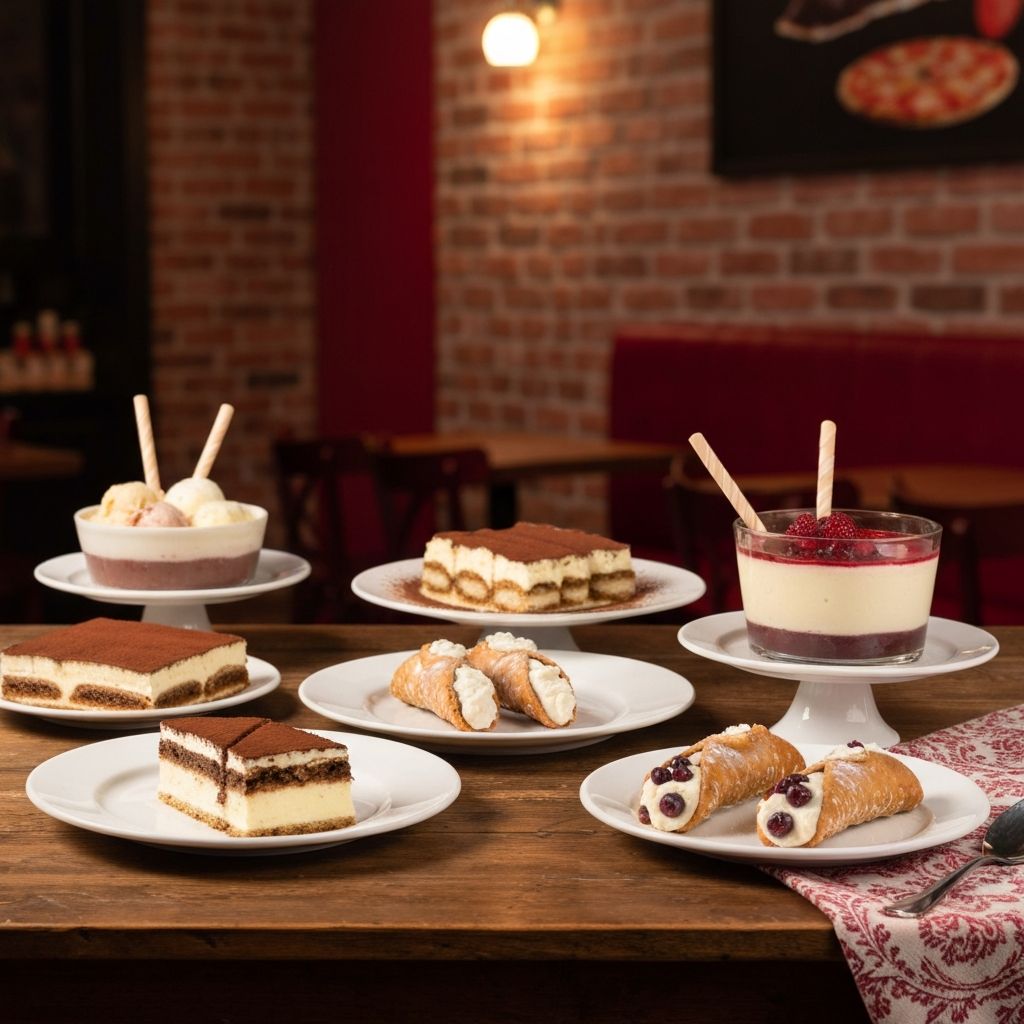
The Perfect Sweet Ending to a Pizza Meal
A great pizza restaurant experience isn't complete without a satisfying dessert to cap off the meal. While pizza is undeniably the star of the show, the dessert menu plays an important role in the overall dining experience, providing a sweet counterpoint to the savory, cheesy, and sometimes spicy flavors of the main course. The best pizza restaurants understand this and curate dessert menus that complement their Italian-inspired cuisine while offering enough variety to satisfy every sweet tooth at the table.
The desserts you'll find at a pizza restaurant typically fall into two categories: traditional Italian desserts that honor the cuisine's heritage, and creative, pizza-inspired sweets that playfully extend the restaurant's theme. Both approaches have their merits, and many successful pizza restaurants offer a combination of both. Whether you're a fan of rich, creamy classics or adventurous enough to try a dessert pizza topped with Nutella and fresh berries, there's something on the dessert menu at a pizza restaurant for everyone.
Tiramisu: The King of Italian Desserts
No Italian restaurant dessert menu would be complete without tiramisu, and pizza restaurants are no exception. This beloved Italian dessert, whose name literally translates to "pick me up" or "lift me up," is a perfect end to a pizza dinner. Traditional tiramisu consists of layers of espresso-soaked ladyfinger biscuits (savoiardi) alternated with a rich, creamy mixture of mascarpone cheese, eggs, and sugar, all dusted with a generous coating of unsweetened cocoa powder.
The beauty of tiramisu as a pizza restaurant dessert lies in its contrast with the meal that precedes it. After the bold, savory flavors of pizza—tomato sauce, mozzarella, cured meats, and roasted vegetables—the delicate coffee and cream flavors of tiramisu provide a sophisticated and refreshing change of pace. The dessert's creamy texture also provides a pleasant contrast to the chewy, crispy textures of pizza crust. Many pizza restaurants prepare their tiramisu in-house, and some put their own spin on the classic recipe by adding flavors like chocolate, berry, or even limoncello.
Cannoli: A Sicilian Treasure
Cannoli are another quintessential Italian dessert that you'll commonly find at pizza restaurants. Originating from Sicily, these iconic pastries consist of tube-shaped shells of fried pastry dough filled with a sweet, creamy filling traditionally made from ricotta cheese, powdered sugar, and sometimes chocolate chips, candied fruit, or pistachios. The contrast between the crispy, shattering shell and the smooth, sweet filling makes cannoli one of the most texturally satisfying desserts in the Italian repertoire.
The best cannoli are filled to order, ensuring that the shell remains perfectly crispy and hasn't become soggy from prolonged contact with the filling. Quality pizza restaurants take pride in their cannoli, using fresh ricotta that is properly drained to achieve the right consistency and flavor. Some restaurants offer variations on the classic cannoli, including mini cannoli that serve as a lighter dessert option, chocolate-dipped cannoli shells, or flavored fillings such as pistachio cream, chocolate mousse, or vanilla custard. The portability and individual serving size of cannoli also make them popular takeaway desserts.
Gelato and Italian Ice
Gelato, Italy's answer to ice cream, is a natural fit for pizza restaurant dessert menus. Denser, smoother, and more intensely flavored than American-style ice cream, gelato is churned at a slower speed with less air incorporation, resulting in a richer texture and more concentrated flavor experience. Popular gelato flavors at pizza restaurants include stracciatella (vanilla with chocolate shards), pistachio, hazelnut, chocolate, and a variety of fruit sorbets for those who prefer a dairy-free option.
Italian ice, known as granita in its more refined form, is another popular frozen dessert at pizza restaurants. This refreshing treat consists of flavored ice crystals with a texture somewhere between a snow cone and a sorbet. Traditional Italian ice flavors include lemon, cherry, and blue raspberry, though many restaurants also offer more sophisticated options like blood orange, mango, or coffee. Italian ice is particularly popular during warmer months and serves as a lighter dessert alternative for diners who want something sweet without the richness of cream-based desserts.
Dessert Pizza: A Creative Crowd-Pleaser
Perhaps no dessert is more fitting at a pizza restaurant than a dessert pizza. This creative offering takes the restaurant's core product—pizza dough—and transforms it into a sweet treat by topping it with dessert ingredients. The most popular version is the Nutella pizza, which features warm pizza dough brushed with the famous chocolate-hazelnut spread and topped with sliced strawberries, bananas, or other fresh fruits. The combination of the warm, pillowy dough with the rich, sweet Nutella is irresistible.
Other popular dessert pizza variations include cinnamon sugar pizza, which features butter, cinnamon, and sugar on a crispy crust, often drizzled with icing; s'mores pizza topped with chocolate, marshmallows, and graham cracker crumbles; and fruit pizza featuring a sweet cream cheese base topped with an assortment of fresh seasonal fruits. Some restaurants get even more creative, offering dessert calzones filled with sweet ricotta and chocolate chips, or dessert breadsticks served with dipping sauces like caramel, chocolate, or vanilla icing. These pizza-inspired desserts are particularly popular with families and groups, as they're designed to be shared.
Panna Cotta: Elegant Simplicity
Panna cotta, which translates to "cooked cream," is an elegant Italian dessert that has become increasingly popular on pizza restaurant menus. This simple yet refined dessert consists of sweetened cream that is thickened with gelatin and set into a silky, jiggly custard. Unlike many Italian desserts that feature rich, complex flavors, panna cotta celebrates the pure, clean taste of cream, making it a refreshing and not overly heavy conclusion to a pizza meal.
The versatility of panna cotta is one of its greatest strengths as a restaurant dessert. While the classic version is flavored with vanilla and served with a berry coulis or caramel sauce, creative chefs can adapt the recipe to feature seasonal flavors such as pumpkin spice in autumn, peppermint in winter, or fresh citrus in spring and summer. The dessert's make-ahead nature also makes it practical for restaurants, as it can be prepared in advance and held in the refrigerator until needed, requiring only a sauce or garnish at serving time.
Zeppole and Fried Dough
Zeppole are Italian fried dough balls that have become a beloved dessert at many pizza restaurants. These light, airy pastries are made from a simple dough that is deep-fried until golden brown, then tossed in powdered sugar, cinnamon sugar, or drizzled with honey or chocolate sauce. The exterior is crispy and slightly crunchy, while the interior is soft and pillow-like, creating a delightful textural contrast that makes them nearly impossible to stop eating.
Fried dough in various forms has a long tradition in Italian cuisine, and pizza restaurants are particularly well-suited to offer these desserts because they already have pizza dough on hand. Some restaurants use their regular pizza dough to make zeppole or fried dough strips, adding a touch of sugar to the dough for sweetness. Others prepare a separate, enriched dough specifically for dessert applications. Regardless of the preparation method, fried dough desserts are consistently among the most popular items on pizza restaurant dessert menus, appealing to both children and adults with their simple, satisfying sweetness.
Chocolate Lava Cake and Brownies
While not exclusively Italian, chocolate lava cake (also known as molten chocolate cake) has become a staple dessert at many pizza restaurants. This indulgent dessert features a rich chocolate cake exterior that, when broken open, reveals a warm, flowing center of molten chocolate. Served with a scoop of vanilla gelato or a dollop of whipped cream, chocolate lava cake provides the kind of decadent, shareable dessert experience that complements the communal nature of pizza dining.
Warm brownies served with ice cream or gelato are another popular chocolate option at pizza restaurants. These dense, fudgy squares of chocolate goodness can be prepared in advance and warmed to order, making them a practical choice for restaurants. Some pizza restaurants elevate their brownie offerings by using high-quality chocolate, adding ingredients like espresso or sea salt to enhance the flavor, or presenting them as a "brownie sundae" with multiple toppings. The rich chocolate flavor provides a satisfying contrast to the savory flavors of pizza, making chocolate desserts perennial favorites.
Seasonal and Regional Specialties
Many pizza restaurants round out their dessert menus with seasonal offerings and regional specialties that keep the menu fresh and interesting for regular customers. During the holiday season, Italian Christmas cookies like biscotti, pizzelle, and amaretti might make appearances on the dessert menu. In summer, fresh fruit desserts and lighter options like fruit tarts and sorbets take center stage. Some restaurants also feature regional Italian specialties that reflect the owner's or chef's heritage, such as Neapolitan sfogliatelle, Roman maritozzi, or Calabrian fig cookies.
The trend toward locally sourced and artisanal ingredients has also influenced pizza restaurant dessert menus. Restaurants that pride themselves on using fresh, high-quality ingredients for their pizzas often extend this philosophy to their desserts, sourcing local fruits for their gelato, partnering with nearby bakeries for their pastries, or making their desserts entirely from scratch in-house. This commitment to quality elevates the entire dining experience and gives customers additional reasons to choose one pizza restaurant over another, demonstrating that a thoughtful dessert menu is not just an afterthought but an integral part of the restaurant's identity.
