
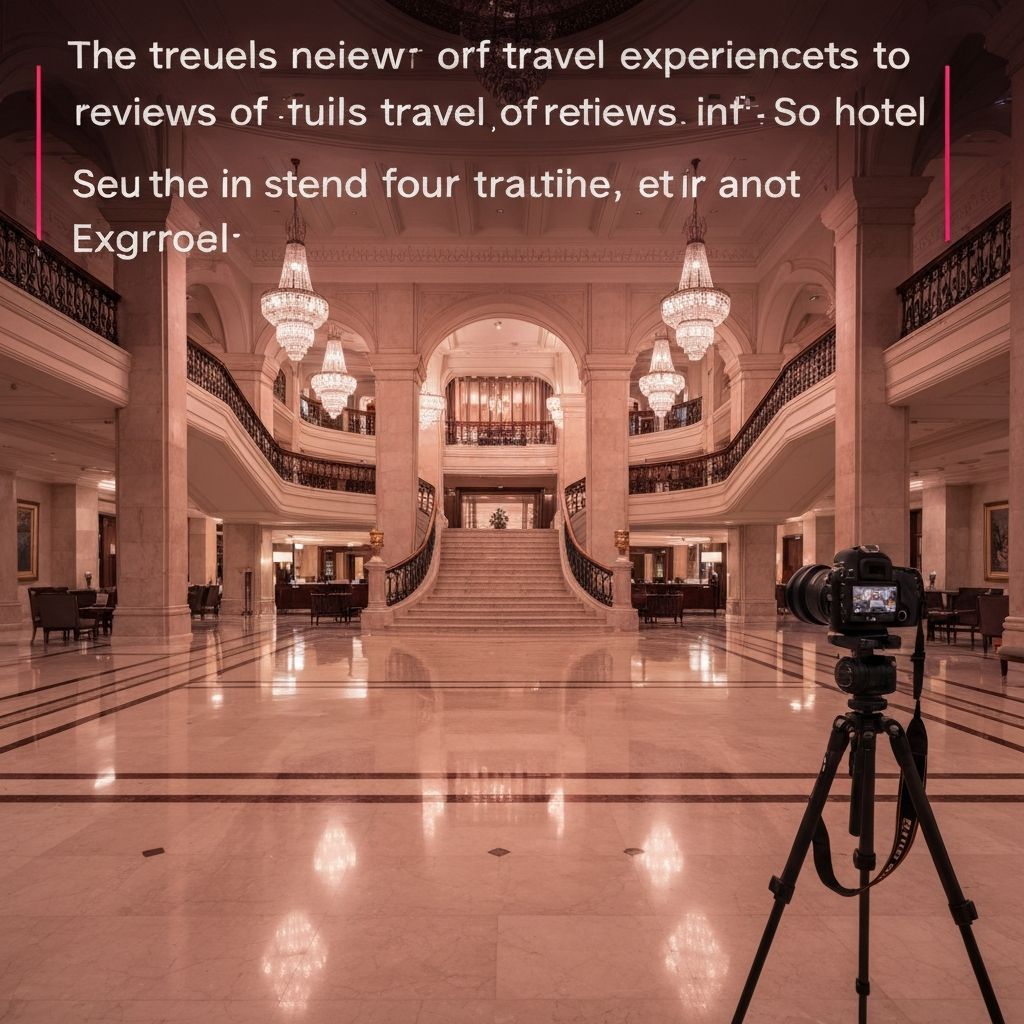
Understanding Hotel Filming Policies
Hotels are privately owned properties, and as such, the management has the right to establish and enforce policies regarding photography and videography on their premises. Whether you are a casual traveler documenting your vacation, a social media influencer creating content, or a professional filmmaker scouting locations, understanding the rules around filming inside a hotel is essential to avoid legal issues and uncomfortable confrontations.
Most hotels have specific policies about filming that may not be immediately obvious to guests. While many hotels allow casual photography in guest rooms and common areas, commercial filming and professional photography typically require advance permission and may involve additional fees. The distinction between personal and commercial filming is a critical factor that determines what is and is not permitted.
Personal vs. Commercial Filming
The rules around filming inside a hotel differ significantly depending on whether the filming is for personal or commercial purposes. Personal filming, such as recording memories of a family vacation or snapping photos of your hotel room, is generally permitted in most hotels. Guests have a reasonable expectation that they can document their stay, and hotels typically do not restrict this type of casual recording.
Commercial filming, on the other hand, is a different matter entirely. This includes filming for movies, television shows, advertisements, YouTube videos, social media content that promotes products or services, and any other recording intended for commercial use. Hotels often require advance permission for commercial filming, and they may charge location fees, require proof of insurance, and impose specific conditions on when and where filming can take place.
The rise of social media and influencer culture has blurred the line between personal and commercial filming. A traveler posting hotel room tour videos on their personal YouTube channel may technically be engaging in commercial activity if they monetize their content. Hotels are increasingly aware of this gray area and may have policies that specifically address social media content creation.
Privacy Laws and Legal Considerations
Privacy laws play a significant role in determining what you can and cannot film inside a hotel. In the United States, privacy laws vary by state, but there are some general principles that apply universally. Recording in areas where individuals have a reasonable expectation of privacy, such as restrooms, changing areas, and other guests' rooms, is illegal and can result in criminal charges.
In common areas like lobbies, hallways, restaurants, and pools, the legal landscape is more nuanced. While hotels are private property and can restrict filming, individuals in these areas generally have a lower expectation of privacy than they would in their rooms. However, filming other guests without their consent can still create legal issues, particularly if the footage is used commercially or in a way that could be considered defamatory or invasive.
Many jurisdictions have specific laws about recording conversations. In "two-party consent" states, all parties to a conversation must consent to being recorded. This means that filming a conversation with hotel staff or other guests without their knowledge and consent could be illegal in certain states, even if the visual recording itself is permitted.
Hotel-Specific Policies and Chains
Major hotel chains often have established policies regarding filming on their properties. Marriott, Hilton, Hyatt, and other large chains typically have corporate guidelines that individual properties follow, though specific rules may vary by location. It is always advisable to contact the hotel's management or marketing department in advance if you plan to film during your stay.
Boutique hotels and independent properties may be more flexible or more restrictive than chain hotels, depending on the owner's preferences. Some boutique hotels actively encourage social media coverage as a marketing strategy and may offer special accommodations for influencers and content creators. Others may have strict no-filming policies to protect the privacy of their guests.
Luxury hotels and resorts often have the most stringent filming policies due to the high-profile nature of their clientele. Celebrity guests and high-net-worth individuals expect a certain level of privacy and discretion, and these hotels take steps to ensure that their guests' privacy is protected.
Tips for Content Creators Filming in Hotels
If you are a content creator who wants to film inside a hotel, there are several best practices you should follow to ensure a smooth experience. First and foremost, always contact the hotel in advance to discuss your plans. Explain the nature of your project, the areas you would like to film in, and how the content will be used. Many hotels are open to collaborating with content creators, especially if the content will portray the property in a positive light.
When negotiating with a hotel, consider offering to tag the property in your social media posts or provide them with copies of the content for their own marketing use. This mutually beneficial arrangement can make the hotel more amenable to allowing filming and may even result in complimentary accommodations or amenities.
Always be respectful of other guests' privacy. Avoid filming in areas where other guests are present unless you have their explicit consent. Use techniques like framing your shots to exclude other people, filming during off-peak hours, or using private spaces that are not accessible to other guests.
Filming for Professional Productions
Professional film and television productions that want to use a hotel as a filming location must typically go through a more formal process. This usually involves contacting the hotel's management or a location scout who specializes in securing filming permits. Professional productions are generally required to carry liability insurance, often with the hotel named as an additional insured party.
Location fees for professional productions can vary widely, from a few hundred dollars for a small independent film to tens of thousands of dollars for a major Hollywood production. The fees depend on factors such as the size of the crew, the duration of filming, the areas of the hotel being used, and the potential impact on normal hotel operations.
Hotels that frequently host film productions may have dedicated staff or departments that handle location requests. These properties are experienced in managing the logistics of filming, including coordinating with the hotel's operations team to minimize disruption to other guests.
What Happens If You Film Without Permission
Filming inside a hotel without permission can have several consequences. At the very least, hotel staff may ask you to stop filming, and repeated violations could result in being asked to leave the property. In more serious cases, the hotel could pursue legal action, particularly if the filming results in a violation of other guests' privacy or causes damage to the hotel's reputation.
If you are filming commercially without permission and the hotel's brand, logo, or trademarks are visible in your footage, you could also face trademark infringement claims. Hotels are protective of their brand image and may take legal action against content that uses their branding without authorization, especially if the content portrays the property in a negative light.
Conclusion
Whether it is okay to film inside a hotel depends on a variety of factors, including the purpose of the filming, the hotel's specific policies, and the applicable laws in the jurisdiction. Casual personal filming is generally acceptable, while commercial filming typically requires advance permission. Content creators and professional filmmakers should always communicate with hotel management before filming and respect the privacy of other guests. By following these guidelines, you can capture great content while maintaining positive relationships with the properties you visit.
