
How to Reduce Salt in Food: Practical Tips for a Lower Sodium Diet
Salt is one of the most fundamental seasonings in cooking, enhancing flavors and bringing dishes to life. However, consuming too much sodium, the primary component of table salt, is linked to high blood pressure, heart disease, stroke, and other serious health conditions. The American Heart Association recommends no more than 2,300 milligrams of sodium per day, with an ideal limit of 1,500 milligrams for most adults.
Reducing salt in your food does not mean sacrificing flavor. With the right techniques, ingredients, and cooking strategies, you can create delicious meals that are lower in sodium while still satisfying your taste buds. This guide provides comprehensive, practical advice for cutting salt without compromising on taste.
Understanding Where Sodium Hides
Before you can effectively reduce salt in your diet, it helps to understand where most dietary sodium comes from. Surprisingly, the salt shaker at your dinner table accounts for only a small fraction of most people's sodium intake. The vast majority of sodium in the typical American diet comes from processed and prepared foods.
Restaurant meals, fast food, canned soups, frozen dinners, deli meats, condiments, bread, and snack foods are among the biggest sodium contributors. Even foods that do not taste particularly salty, like bread, cereal, and cottage cheese, can contain significant amounts of sodium. Reading nutrition labels carefully is the first step toward understanding and reducing your sodium intake.
Sauces and condiments are often overlooked sodium sources. Soy sauce, for example, contains about 900 milligrams of sodium per tablespoon. Ketchup, barbecue sauce, salad dressings, and hot sauce all contribute sodium to your meals. Being aware of these hidden sources allows you to make more informed choices.
Cook More Meals at Home
One of the most effective ways to reduce sodium in your diet is to cook more meals at home. When you prepare food yourself, you have complete control over the amount of salt and sodium-containing ingredients that go into your dishes. This is a significant advantage over eating out, where chefs often use generous amounts of salt to enhance flavor.
Home cooking allows you to experiment with alternative seasonings and flavor-building techniques that reduce the need for salt. You can gradually decrease the amount of salt in your recipes over time, allowing your palate to adjust without feeling like your food is bland or unsatisfying.
Start by choosing simple recipes that rely on fresh, whole ingredients rather than processed components. A grilled chicken breast seasoned with herbs, lemon, and garlic contains far less sodium than a pre-marinated or processed chicken product from the store.
Use Herbs and Spices as Salt Alternatives
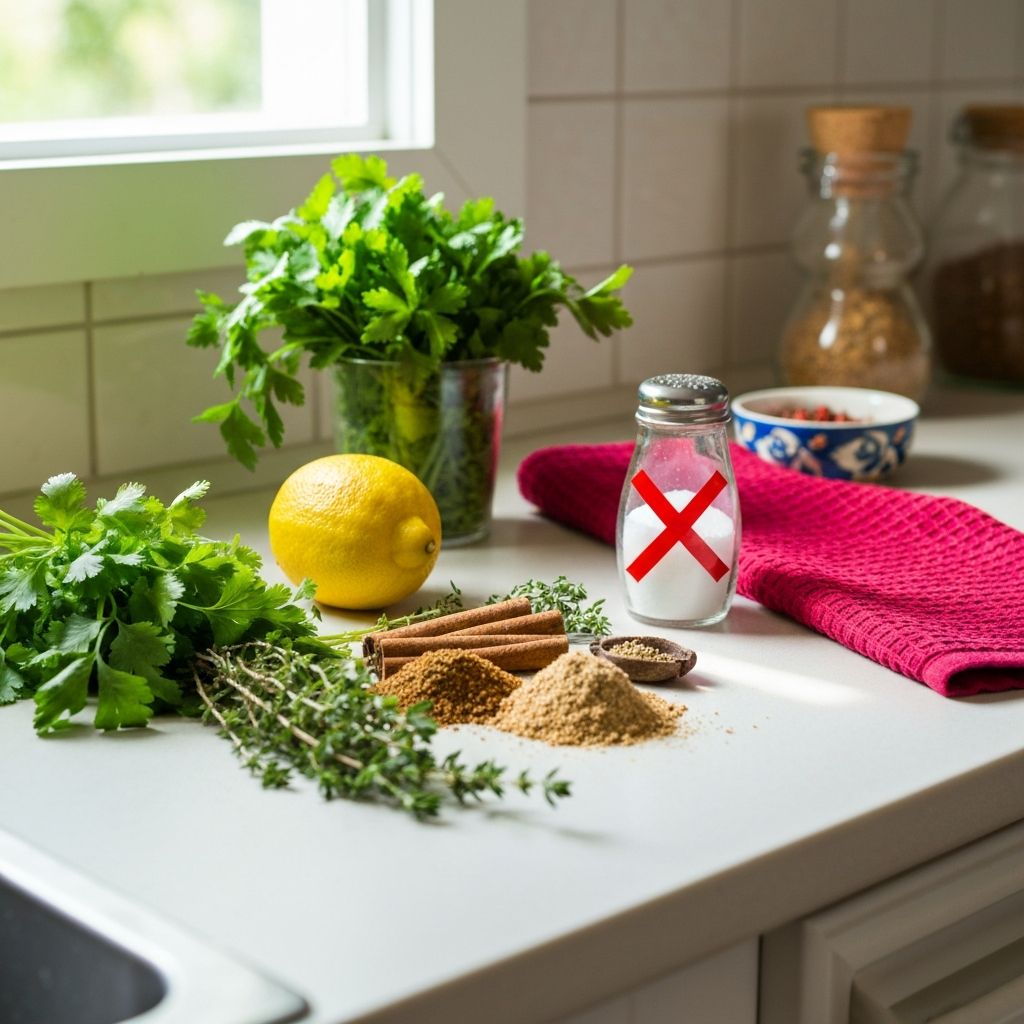
Herbs and spices are the most powerful tools in your arsenal for reducing salt without reducing flavor. Fresh and dried herbs like basil, oregano, thyme, rosemary, cilantro, parsley, dill, and chives add layers of flavor that can make salt unnecessary or allow you to use much less of it.
Spices like cumin, paprika, turmeric, cinnamon, coriander, black pepper, and chili powder provide bold, complex flavors that make dishes exciting and satisfying. Experimenting with different spice combinations can transform simple ingredients into flavorful meals that do not rely on salt for taste.
Garlic and onion, whether fresh, dried, or powdered, are particularly effective at adding depth of flavor to dishes. Their savory, umami-like qualities can compensate for reduced salt in many recipes. However, be careful with garlic salt and onion salt, as these products contain significant amounts of sodium. Opt for pure garlic powder and onion powder instead.
Embrace Acid and Citrus
Adding acid to dishes is one of the most effective ways to brighten flavors and reduce the need for salt. A squeeze of lemon or lime juice, a splash of vinegar, or a dash of wine can make a dish taste more complete and flavorful, even with less salt. Acid activates taste buds and enhances the perception of other flavors, creating a more satisfying eating experience.
Different types of vinegar offer different flavor profiles for sodium-free seasoning. Balsamic vinegar adds sweetness and depth, rice vinegar provides a mild, clean tang, and apple cider vinegar brings a fruity sharpness. Experimenting with various vinegars can add variety and interest to your low-sodium cooking.
Citrus zest is another underutilized flavor booster. The zest of lemons, limes, oranges, and grapefruits contains concentrated essential oils that provide intense flavor without any sodium. Grating a small amount of citrus zest over finished dishes can be transformative.
Choose Low-Sodium Alternatives
Many common pantry staples are now available in low-sodium or no-salt-added versions. Low-sodium soy sauce, for example, contains about 40 percent less sodium than regular soy sauce while still providing the savory umami flavor you expect. Similarly, low-sodium chicken broth, vegetable broth, and beef broth are widely available and can significantly reduce the sodium content of soups, stews, and sauces.
Canned vegetables, beans, and tomatoes are available in no-salt-added varieties at most grocery stores. If you cannot find no-salt-added versions, rinsing canned products under running water can remove up to 40 percent of the added sodium.
Salt-free seasoning blends are another convenient option. Brands like Mrs. Dash offer a wide range of salt-free spice blends designed to add flavor to various types of dishes. These blends can be a helpful starting point for people who are not yet comfortable creating their own spice combinations.
Gradually Reduce Salt Over Time
One of the most important strategies for successfully reducing salt is to do it gradually. Your taste buds adapt to the level of salt you consume regularly, and drastically cutting salt all at once can make food taste bland and unsatisfying, leading to discouragement and abandoning the effort.
Instead, reduce the amount of salt in your cooking by small increments over several weeks or months. Cut back by a quarter teaspoon at a time, giving your palate time to adjust to the new level. Most people find that after a few weeks of eating less salt, their sensitivity to salt increases, and foods that once tasted normal now taste too salty.
This gradual approach is particularly effective for families where not everyone may be equally motivated to reduce sodium. Small, incremental changes are less noticeable and more sustainable than dramatic, immediate reductions.
Read Nutrition Labels Carefully
Becoming a label reader is essential for managing sodium intake. The Nutrition Facts panel on packaged foods lists the sodium content per serving, and comparing products can reveal significant differences between brands and varieties. Aim for products that contain less than 140 milligrams of sodium per serving, which the FDA considers low-sodium.
Pay special attention to serving sizes when reading labels. A product may appear low in sodium per serving, but if the serving size is unrealistically small and you typically eat two or three times that amount, your actual sodium intake will be much higher than the label suggests.
Words on packaging can also guide your choices. Labels that say no salt added, unsalted, or sodium-free indicate products with the lowest sodium levels. Terms like reduced sodium and low sodium also indicate lower levels, though these products may still contain meaningful amounts of sodium.
Conclusion
Reducing salt in your food is a worthwhile goal that can significantly benefit your health without requiring you to give up flavorful, enjoyable meals. By cooking at home, using herbs, spices, and acids as flavor alternatives, choosing low-sodium products, and gradually reducing your salt usage over time, you can successfully lower your sodium intake while discovering new and exciting flavors. The key is patience and experimentation, and your taste buds will adjust and eventually prefer the cleaner, more nuanced flavors of lower-sodium cooking.
