
Understanding RV Towing Weight
Towing a recreational vehicle is one of the most common ways to enjoy the freedom of RV travel, but understanding the weight involved is critical for safety, legality, and vehicle performance. The weight of an RV can vary dramatically depending on the type, size, and how it is loaded. From lightweight teardrop trailers that weigh under 2,000 pounds to massive fifth-wheel campers that can exceed 20,000 pounds, knowing your RV's weight and your tow vehicle's capacity is essential before hitting the road.
Overloading your tow vehicle or exceeding its towing capacity can lead to dangerous situations, including brake failure, tire blowouts, loss of control, and excessive wear on your transmission and engine. Understanding the various weight ratings and how they apply to your specific setup will help you tow safely and confidently.
Types of RVs and Their Typical Weights
RVs come in many different types, each with a different weight range. Pop-up campers and teardrop trailers are among the lightest towable RVs, typically weighing between 1,000 and 3,500 pounds when empty. These compact units can often be towed by smaller vehicles, including SUVs and some sedans, making them popular among first-time RV owners and those with smaller tow vehicles.
Travel trailers are the most common type of towable RV and come in a wide range of sizes. Smaller travel trailers may weigh as little as 3,500 pounds, while larger models can weigh 8,000 to 12,000 pounds or more. The weight depends on the length, construction materials, and amenities included. Lightweight travel trailers made with aluminum frames and composite materials are becoming increasingly popular for their reduced weight.
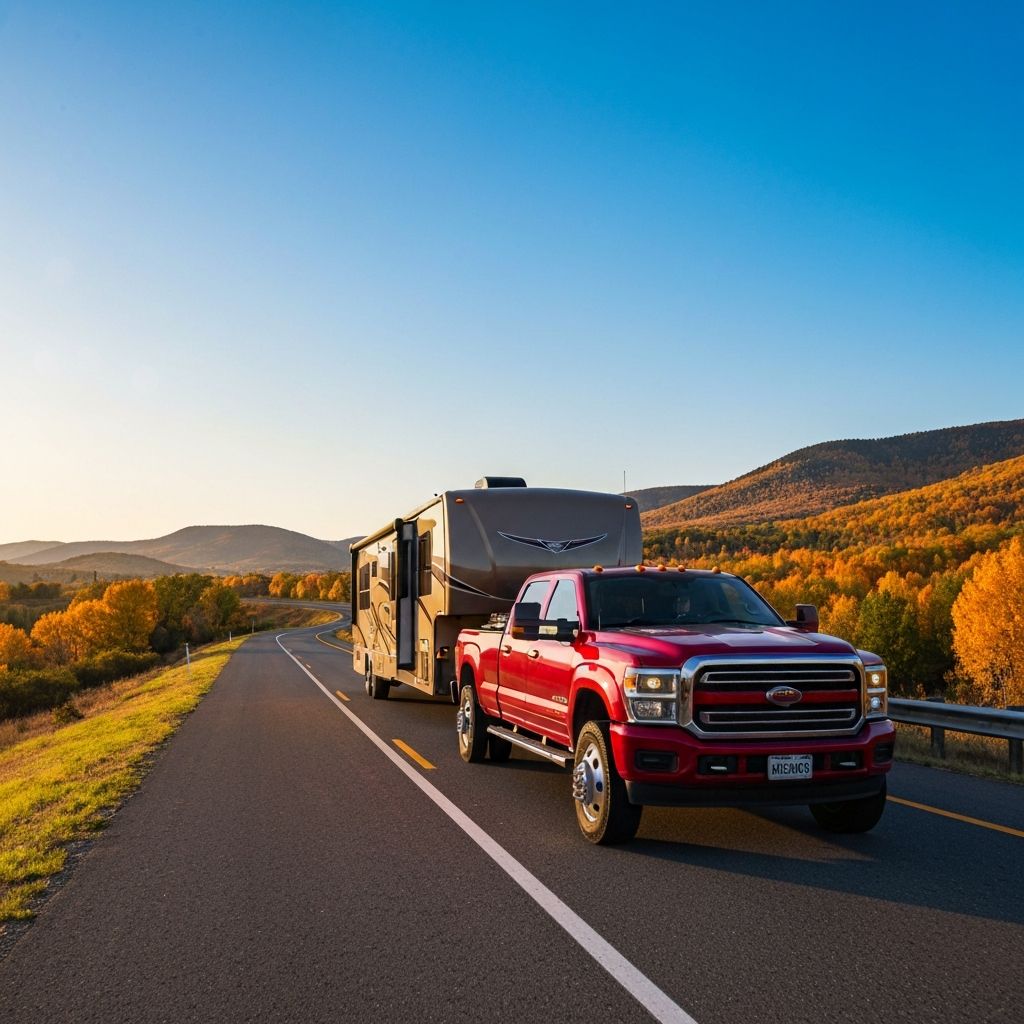
Fifth-wheel trailers are larger and heavier than conventional travel trailers, typically weighing between 7,000 and 20,000 pounds. They connect to the tow vehicle via a specialized hitch mounted in the bed of a pickup truck, which provides a more stable towing experience. Due to their weight, fifth-wheels generally require a heavy-duty pickup truck with a high towing capacity.
Toy haulers are a specialized type of travel trailer or fifth-wheel that includes a garage area for transporting motorcycles, ATVs, or other recreational equipment. These units tend to be heavier than standard models due to the reinforced floor and ramp door, with weights ranging from 5,000 to 16,000 pounds or more depending on the size and type.
Key Weight Ratings You Need to Know
Understanding the various weight ratings associated with RV towing is crucial for safe operation. The Gross Vehicle Weight Rating (GVWR) is the maximum total weight of the RV when fully loaded, including all cargo, water, propane, and passengers. This rating is set by the manufacturer and should never be exceeded.
The Unloaded Vehicle Weight (UVW), also known as the dry weight, is the weight of the RV as it comes from the factory, without any cargo, water, propane, or aftermarket accessories. The actual weight of your RV when loaded for a trip will always be higher than the UVW, so it is important to account for the weight of all items you plan to carry.
The tongue weight, or hitch weight, is the downward force that the trailer exerts on the hitch of the tow vehicle. For conventional travel trailers, the tongue weight should be approximately 10% to 15% of the total loaded trailer weight. For fifth-wheel trailers, the pin weight should be approximately 15% to 25% of the total loaded weight. Proper tongue weight is essential for stable towing; too little can cause the trailer to sway, while too much can overload the rear axle of the tow vehicle.
The Gross Combined Weight Rating (GCWR) is the maximum allowable weight of the tow vehicle, passengers, cargo, and trailer combined. This rating is set by the tow vehicle manufacturer and is a critical factor in determining whether your vehicle is capable of safely towing your RV.
Choosing the Right Tow Vehicle
Selecting the right tow vehicle for your RV is one of the most important decisions you will make as an RV owner. Your tow vehicle must have a towing capacity that exceeds the fully loaded weight of your RV, with a comfortable margin of safety. Most experts recommend that you tow no more than 80% of your vehicle's maximum towing capacity to account for varying conditions and ensure adequate performance.
For lightweight trailers under 3,500 pounds, many midsize SUVs and trucks are suitable tow vehicles. Models like the Toyota 4Runner, Chevrolet Colorado, and Ford Ranger offer towing capacities in the 5,000 to 7,700 pound range, making them capable of handling smaller trailers with ease.
For mid-weight trailers between 3,500 and 8,000 pounds, full-size SUVs and half-ton trucks are typically required. Vehicles like the Ford F-150, Chevrolet Silverado 1500, RAM 1500, and Toyota Tundra offer towing capacities ranging from 9,000 to 14,000 pounds, depending on the engine and configuration.
For heavy fifth-wheels and large travel trailers exceeding 8,000 pounds, three-quarter-ton or one-ton trucks are generally necessary. The Ford F-250 and F-350, Chevrolet Silverado 2500 and 3500, and RAM 2500 and 3500 offer towing capacities ranging from 15,000 to over 35,000 pounds, making them capable of handling the heaviest towable RVs on the market.
How Loading Affects Towing Weight
The way you load your RV has a significant impact on the total towing weight and the handling characteristics of the trailer. Water is one of the heaviest items in an RV, with fresh water weighing approximately 8.3 pounds per gallon. A fully loaded 50-gallon fresh water tank adds over 400 pounds to the trailer weight, and this does not include water in the hot water heater or any water in the gray or black tanks.
Food, clothing, outdoor equipment, tools, and personal belongings can easily add several hundred pounds to the RV's weight. It is important to be mindful of how much you are loading and to weigh your RV at a truck scale or certified weigh station before your trip to ensure you are within safe limits.
Proper weight distribution within the trailer is also important. Heavy items should be placed low and toward the front of the trailer to maintain proper tongue weight. Placing too much weight at the rear of the trailer can reduce tongue weight and cause dangerous trailer sway, especially at highway speeds or in windy conditions.
Safety Tips for Towing an RV
Safe towing requires attention to several factors beyond just staying within weight limits. Always perform a thorough pre-trip inspection of both the tow vehicle and the trailer, checking tire pressure, wheel lug nuts, lights, brakes, hitch connections, safety chains, and breakaway switch.
Use a weight distribution hitch and sway control device when towing a conventional travel trailer. These accessories help distribute the tongue weight across all axles of the tow vehicle and trailer, improving stability and reducing sway. For fifth-wheel trailers, ensure the king pin is properly seated in the hitch and that the jaw is fully locked.
Allow extra stopping distance when towing, as the additional weight significantly increases the distance needed to come to a complete stop. Use your trailer brakes in conjunction with your vehicle brakes, and avoid hard braking whenever possible. When descending steep grades, use engine braking by downshifting to a lower gear to reduce the load on your brakes.
Finally, be aware of the increased height and width of your vehicle and trailer when navigating low bridges, narrow roads, and tight turns. Plan your route in advance to avoid roads that are not suitable for large vehicles, and always take turns slowly to prevent the trailer from cutting corners or running over curbs.
