
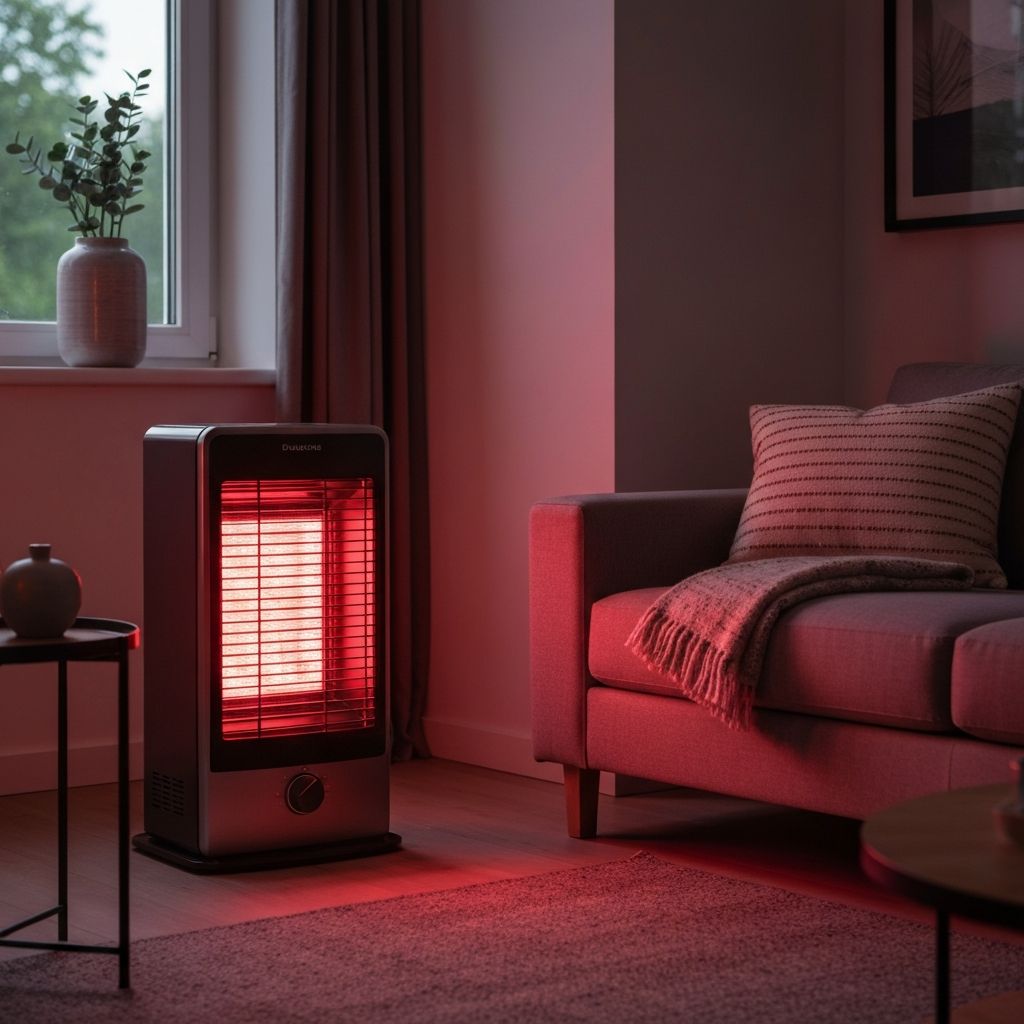
Understanding Space Heater Energy Consumption
Space heaters are popular appliances for supplementing central heating systems, warming specific rooms, or providing heat in spaces without built-in heating. However, many people are surprised to learn how much electricity a space heater consumes. Understanding the energy usage of space heaters can help you manage your electricity costs and use these appliances more efficiently.
The average space heater uses between 750 and 1,500 watts of electricity. Most space heaters have two settings: a low setting of approximately 750 watts and a high setting of approximately 1,500 watts. At the high setting, a space heater running for one hour consumes 1.5 kilowatt-hours (kWh) of electricity. This is a significant amount of energy, roughly equivalent to running 25 standard 60-watt light bulbs simultaneously.
How to Calculate the Cost of Running a Space Heater
Calculating the cost of running a space heater is straightforward once you know the wattage of the heater and your local electricity rate. The formula is: Cost = (Wattage x Hours of Use) / 1,000 x Electricity Rate per kWh.
For example, if you run a 1,500-watt space heater for eight hours per day and your electricity rate is $0.15 per kWh, the daily cost would be: (1,500 x 8) / 1,000 x $0.15 = $1.80 per day. Over a 30-day month, that adds up to $54.00 per month for a single space heater.
If you use the heater on its low setting of 750 watts for the same eight hours per day, the cost drops to $0.90 per day, or $27.00 per month. As you can see, the setting you choose makes a significant difference in your electricity bill.
Electricity rates vary widely across the United States, ranging from about $0.10 per kWh in some states to over $0.30 per kWh in others. Using the formula above with your local rate will give you the most accurate estimate of what your space heater is costing you.
Types of Space Heaters and Their Energy Usage
Not all space heaters are created equal. Different types of space heaters use different technologies to generate heat, and their energy consumption can vary. Ceramic space heaters use a ceramic heating element and a fan to distribute warm air. They typically use 1,000 to 1,500 watts and heat up quickly, making them a popular choice for bedrooms and offices.
Oil-filled radiator heaters use electricity to heat oil sealed inside the unit, which then radiates warmth into the room. These heaters typically use 700 to 1,500 watts and are known for their ability to maintain warmth even after being turned off, as the oil retains heat for a period of time. This makes them more energy-efficient for extended use.
Infrared heaters use infrared radiation to heat objects and people directly rather than heating the air. They typically use 1,000 to 1,500 watts and are highly efficient for targeted heating. Because they heat objects rather than the entire room, they can feel warmer while using the same amount of electricity as other heater types.
Fan-forced heaters use a heating element and a powerful fan to circulate warm air throughout the room. They typically use 1,000 to 1,500 watts and are effective at quickly raising the temperature of a small space. However, they can be noisy and may dry out the air.
Micathermic heaters combine convection and radiant heating and are thin, lightweight, and quiet. They typically use 1,000 to 1,500 watts and provide even, comfortable warmth without the noise of a fan. These heaters are a good choice for bedrooms and living rooms where quiet operation is important.
Space Heater vs. Central Heating: Which Is Cheaper?
One of the most common questions about space heaters is whether they are cheaper to run than a central heating system. The answer depends on how you use them. If you are heating your entire home, central heating is almost always more cost-effective than using multiple space heaters. Central heating systems, particularly modern heat pumps and high-efficiency furnaces, can heat an entire home for less per square foot than electric space heaters.
However, if you only need to heat one or two rooms, a space heater can be more economical than running the central heating system for the entire house. The strategy of turning down the thermostat on your central heating and using a space heater to warm the room you are in can save money, particularly in mild climates or during transitional seasons.
For this strategy to work, you need to lower your thermostat by several degrees and only use the space heater in the room where you spend the most time. If you run the central heating at full blast and also use space heaters, you will increase your energy costs rather than reduce them.
Safety Considerations
Space heaters are responsible for a significant percentage of home heating fires each year. Following safety guidelines is essential for preventing accidents. Always place space heaters on a flat, level surface and keep them at least three feet away from flammable materials such as curtains, bedding, furniture, and clothing.
Never leave a space heater unattended or running while you are asleep. Look for heaters with built-in safety features such as tip-over protection, overheat protection, and a cool-to-the-touch exterior. These features can significantly reduce the risk of fire and burns.
Plug your space heater directly into a wall outlet rather than an extension cord or power strip. Space heaters draw a large amount of current, and extension cords may not be rated to handle the load, increasing the risk of overheating and fire. Make sure the outlet you use is in good condition and does not feel warm to the touch while the heater is operating.
Tips for Using Space Heaters Efficiently
To get the most value from your space heater while minimizing electricity costs, follow these efficiency tips. Use the heater only in the room you are occupying and close the door to keep the warm air contained. This allows the heater to bring the room to a comfortable temperature more quickly and maintain it with less energy.
Use a programmable thermostat or timer to control when the heater runs. Many modern space heaters come with built-in timers and thermostats that automatically turn the heater on and off to maintain a set temperature. This prevents the heater from running continuously and wasting energy.
Choose the right size heater for your space. A general rule of thumb is that you need approximately 10 watts of heating power per square foot of space. For a 150-square-foot bedroom, a 1,500-watt heater is appropriate. Using a heater that is too powerful for the space wastes energy, while one that is too small will struggle to heat the room adequately.
Improve the insulation in the room where you use the heater. Close windows and doors, use weatherstripping to seal drafts, and hang heavy curtains to reduce heat loss. The better insulated the room, the less energy the heater needs to maintain a comfortable temperature, and the lower your electricity bill will be.
Is a Space Heater Worth the Cost?
Whether a space heater is worth the cost depends on your specific heating needs and how you use it. For supplemental heating in a specific room, especially in a well-insulated space, a space heater can be an economical and convenient solution. For whole-home heating, a central heating system is almost always more cost-effective.
Consider your electricity rate, the size of the space you need to heat, and how many hours per day you plan to use the heater. Run the numbers using the formula provided earlier to determine whether a space heater makes financial sense for your situation. With smart usage and proper safety precautions, a space heater can be a valuable addition to your home comfort toolkit.
