
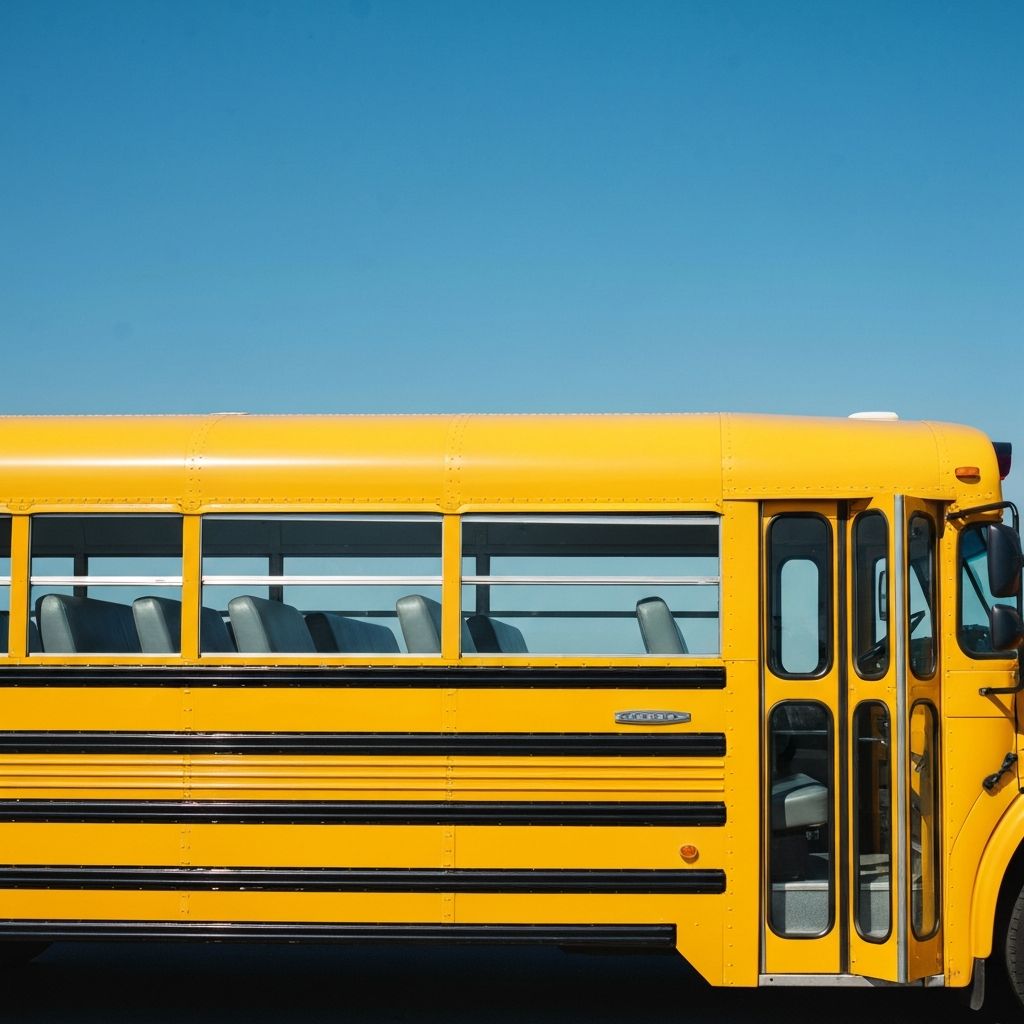
School Bus Seating Capacity Overview
School buses are one of the most recognizable vehicles on American roads, and they play a vital role in transporting millions of students to and from school every day. One of the most common questions about school buses is how many seats they have and how many students they can carry. The answer depends on the type and size of the bus, as school buses come in several different configurations to meet the diverse needs of school districts across the country.
A standard full-size school bus, also known as a Type C or Type D bus, typically has between 23 and 26 rows of seats. Each row is designed as a bench seat that can accommodate two adults or three smaller children. This means that a full-size school bus can hold approximately 72 to 78 elementary school students or 48 to 52 middle and high school students, depending on the size of the passengers.
Types of School Buses and Their Capacities
School buses are classified into four main types by the National Highway Traffic Safety Administration, each with different seating capacities and uses. Understanding these classifications helps explain why the answer to how many seats are on a school bus is not a one-size-fits-all response.
Type A school buses are the smallest classification and are built on a van or truck chassis with a gross vehicle weight rating of 10,000 pounds or more. These buses typically seat between 10 and 36 passengers and are commonly used for special education routes, rural areas with fewer students, or as activity buses for sports teams and field trips. Type A buses are further divided into Type A-1 (GVWR of 14,500 pounds or less) and Type A-2 (GVWR greater than 14,500 pounds).
Type B school buses are built on a truck chassis with the engine in front of the windshield. They are mid-size buses that typically seat between 24 and 36 passengers. The driver sits behind the front axle, and the body is constructed specifically for student transportation. Type B buses are less common than other types but serve as a versatile option for routes that do not require full-size buses.
Type C school buses are the most common type seen on American roads. These are the conventional school buses with the engine mounted in front, creating the distinctive flat-nosed or dog-nosed appearance. Type C buses seat between 54 and 78 passengers and are the workhorse of school transportation fleets across the country. They are built on a commercial truck chassis with a specially designed body for student transport.
Type D school buses are the largest classification, featuring a flat-front or transit-style design with the engine mounted in the front, rear, or underneath the bus. These buses can seat up to 90 passengers and are typically used by large school districts that need to transport the maximum number of students per route. Type D buses offer the most interior space and are known for their smooth ride and excellent visibility for the driver.
How Seating Capacity Is Determined
The seating capacity of a school bus is determined by several factors, including the length of the bus, the spacing between seats, and the size of the passengers. Federal regulations and state laws also play a role in establishing maximum occupancy limits.
School bus seats are typically 39 inches wide, which is designed to accommodate three elementary school students sitting side by side. For older students in middle and high school, the same seat is rated for two passengers, as larger body sizes require more space per person. This is why the passenger capacity of a school bus is often listed as a range rather than a single number.
The distance between seat rows, known as the seat pitch, is typically about 24 inches on a standard school bus. This spacing is designed to provide adequate legroom for students while also allowing for compartmentalization, the passive safety system that protects students in the event of a crash. Compartmentalization uses closely spaced, high-backed, padded seats to create a protective compartment around each passenger.
The overall length of the bus directly affects the number of seat rows that can be installed. Full-size school buses range from 35 to 40 feet in length, with the longest buses accommodating the most rows of seats. Some states have restrictions on the maximum length of school buses, which can limit the seating capacity in those jurisdictions.
Safety Regulations and Seating Standards
School buses are subject to some of the most stringent safety regulations of any vehicle on the road. These regulations are established at both the federal and state levels and cover everything from the structural integrity of the bus to the design of individual seats.
The Federal Motor Vehicle Safety Standards, administered by the National Highway Traffic Safety Administration, set minimum safety requirements for all school buses sold in the United States. These standards include requirements for the strength of the bus body, the performance of the braking system, the visibility of the bus through its distinctive yellow color and flashing lights, and the design of the seating system.
One of the most debated topics in school bus safety is whether school buses should be equipped with seat belts. Currently, only a handful of states require seat belts on school buses, including California, Florida, Louisiana, Nevada, New Jersey, New York, and Texas. The argument in favor of seat belts is that they provide an additional layer of protection for passengers. The argument against them is that the compartmentalization system already provides effective crash protection and that seat belts could slow down emergency evacuations.
The American Academy of Pediatrics recommends that all school buses be equipped with three-point seat belts, similar to those found in passenger cars. However, retrofitting existing school buses with seat belts is expensive, often costing between $7,000 and $10,000 per bus, and the installation reduces the seating capacity by about 10 to 15 percent because each seat must accommodate a belt mechanism.
Special Education and Wheelchair Accessible Buses
School buses designed for special education students have different seating configurations to accommodate wheelchair positions, car seats, and other specialized equipment. These buses are typically Type A or small Type C buses that have been modified to include wheelchair lifts, tie-down systems, and additional safety restraints.
A wheelchair accessible school bus may have as few as 6 to 12 regular passenger seats, with the remaining space dedicated to wheelchair positions. Each wheelchair position requires approximately the same floor space as two to three regular seats, which significantly reduces the overall passenger capacity of the bus.
Car seats and child safety restraints are sometimes required for younger students with special needs. These seats must be properly secured using the bus's built-in restraint systems, and they typically occupy one full bench seat each, further reducing the number of available passenger seats.
Factors That Affect Actual Ridership
While the rated seating capacity of a school bus provides a maximum number of passengers, the actual number of students riding the bus on any given day is typically lower. Several factors influence actual ridership levels and how school districts plan their bus routes.
Student enrollment and route planning are the primary determinants of how many students ride each bus. School districts use sophisticated routing software to plan bus routes that minimize travel time and maximize efficiency. Each route is designed to serve a specific number of students, and the bus assigned to that route is selected based on the expected ridership.
Seasonal variations in ridership are common, with fewer students riding the bus during winter months when inclement weather causes school closures and during the spring when warmer weather encourages students to walk or ride bikes. School districts must plan for peak ridership levels while accepting that buses will not always operate at full capacity.
The age and size of students on a route also affect how many passengers can comfortably fit on a bus. Routes serving elementary schools can accommodate more students per bus because younger children take up less space. Routes serving high schools may require additional buses or larger buses to accommodate the same number of students.
The Future of School Bus Design
School bus design continues to evolve in response to changing technology, safety standards, and environmental concerns. Electric school buses are gaining traction across the country, with several manufacturers now offering fully electric models that produce zero emissions and lower operating costs.
The seating capacity of electric school buses is generally comparable to their diesel-powered counterparts, though the placement of battery packs can sometimes affect floor height and interior layout. As battery technology improves, electric school buses are expected to become increasingly common in school transportation fleets.
Advanced safety features such as automatic emergency braking, lane departure warnings, and 360-degree camera systems are also being integrated into modern school bus designs. These technologies enhance the safety of students both on the bus and in the loading and unloading zones around schools.
Conclusion
The number of seats on a school bus depends on the type and size of the bus, with capacities ranging from 10 passengers on the smallest Type A buses to 90 passengers on the largest Type D models. A standard full-size school bus typically seats 72 to 78 elementary students or 48 to 52 older students. Safety regulations, wheelchair accessibility requirements, and the potential addition of seat belts all influence the final seating configuration. Understanding school bus seating capacity is essential for school districts, parents, and transportation planners who work to ensure that every student has a safe and efficient ride to school each day.
