
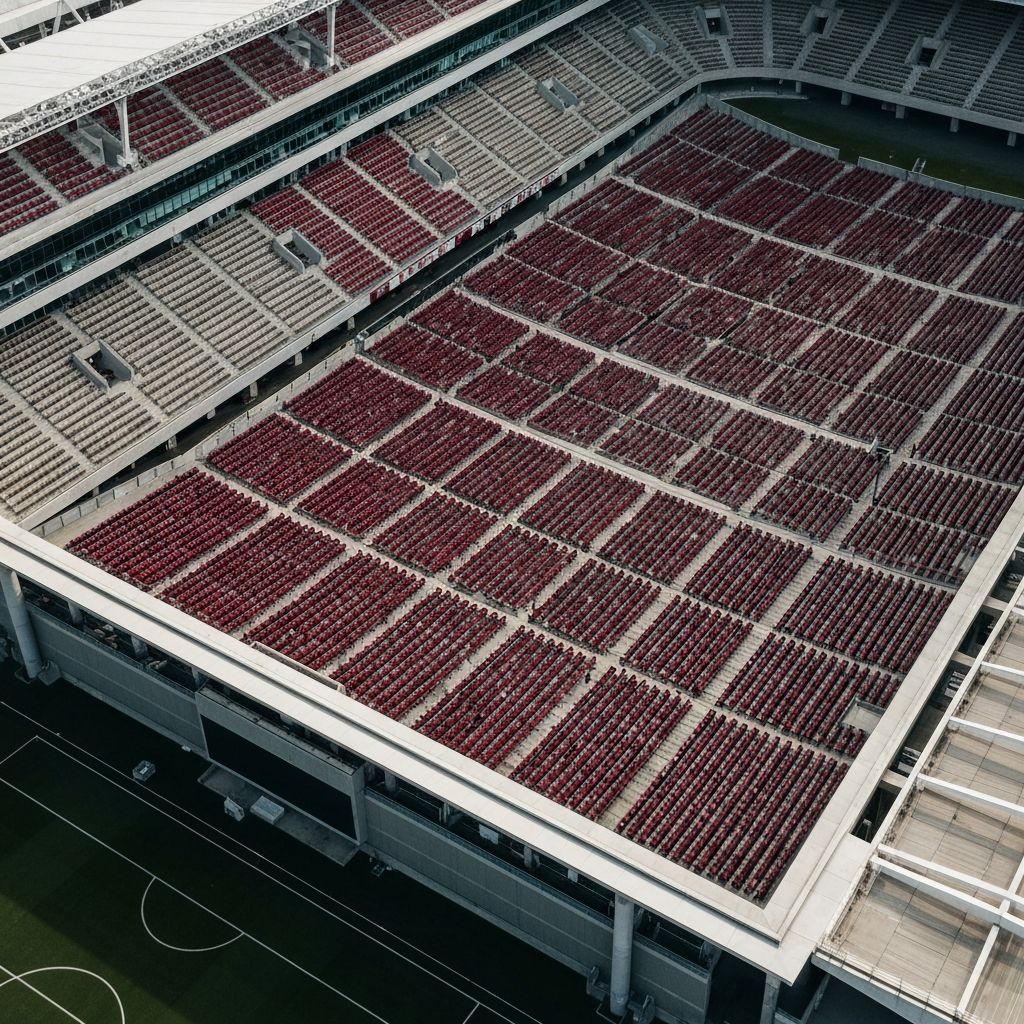
Understanding Stadium Seating and Row Configurations
Stadiums are among the most impressive architectural structures in the world, designed to accommodate thousands — and sometimes hundreds of thousands — of spectators. Whether you are attending a football game, a soccer match, a concert, or a track and field event, the number of rows in a stadium directly impacts your viewing experience, the venue's total capacity, and the overall atmosphere of the event.
The number of rows in a stadium is not a fixed number. It varies dramatically based on the stadium's total capacity, the type of sport or event it is designed for, the architectural style, and the specific section of the stadium you are sitting in. A small college football stadium might have 30 to 40 rows per section, while a massive venue like the Rungrado 1st of May Day Stadium in Pyongyang, North Korea — the largest stadium in the world by capacity — has seating spread across more than 80 rows in its main bowl.
Factors That Determine the Number of Rows
Several key factors influence how many rows a stadium has in any given section.
Total Capacity: The most obvious factor is the stadium's total seating capacity. A stadium designed to hold 20,000 spectators will have far fewer rows than one designed for 100,000. However, the relationship is not perfectly linear because the number of seats per row (i.e., the width of each row) also plays a significant role. A wider bowl with more seats per row can accommodate more spectators with fewer total rows.
Tier Design (Single vs. Multi-Tier): Modern stadiums often feature multiple tiers or decks of seating, stacked vertically. A single-bowl stadium must have more rows at the ground level to achieve its target capacity, while a multi-tier stadium distributes its seating across two, three, or even four decks. For example, a 60,000-seat single-tier stadium might have 80 or more rows in its main bowl, while a 60,000-seat three-tier stadium might have only 25 to 35 rows per tier.
Seat Width and Row Spacing: Building codes and comfort standards dictate minimum seat widths (typically 18 to 22 inches) and row spacing (known as "tread depth," usually 30 to 36 inches from back to back). Wider seats and more generous row spacing improve comfort but reduce the total number of rows that can fit within a given vertical height. Premium and VIP sections often feature wider, more comfortable seats with greater row spacing, resulting in fewer rows in those areas.
Sightlines and Viewing Angles: Stadium architects must carefully calculate sightlines to ensure that every spectator has an unobstructed view of the playing field. This involves determining the optimal rake angle (the steepness of the seating bowl), which directly affects the number of rows. Steeper rake angles allow more rows to be stacked vertically while maintaining good sightlines, but they also increase construction costs and may raise safety concerns.
Type of Sport or Event: Different sports require different field dimensions and viewing configurations, which influence stadium design. A football stadium has a long, rectangular field, so the seating bowl is elongated. A baseball stadium has an asymmetric, diamond-shaped field, leading to irregular seating configurations. A soccer-specific stadium often has a continuous, oval bowl close to the pitch. These design differences affect the number and distribution of rows throughout the venue.
Row Counts in Famous Stadiums Around the World
To give you a concrete understanding of row counts, let's examine some of the world's most famous stadiums.
Michigan Stadium ("The Big House") — Ann Arbor, Michigan, USA: With a capacity of approximately 107,601, Michigan Stadium is the largest stadium in the United States and the third largest in the world. The stadium features a single-bowl design with 72 rows of seating in the main bowl, plus additional rows in the luxury suites and press box areas. The vast majority of seats are bench-style (without individual armrests), which allows for higher density per row.
Camp Nou — Barcelona, Spain: The iconic home of FC Barcelona has a capacity of approximately 99,354 (before its current renovation). Camp Nou features a three-tier design with approximately 25 rows in the first tier, 24 rows in the second tier, and 22 rows in the third tier, for a total of roughly 71 rows of seating. The ongoing renovation is expected to increase capacity and add a covered roof.
Wembley Stadium — London, England: The national stadium of England has a capacity of 90,000 and features a distinctive arch and a two-tier bowl. The lower tier has approximately 42 rows of seating, while the upper tier has approximately 40 rows, for a total of roughly 82 rows. Premium seating areas, including the Club Wembley level between the two tiers, have fewer, wider rows with enhanced comfort.
AT&T Stadium — Arlington, Texas, USA: Home of the Dallas Cowboys, AT&T Stadium has a seating capacity of approximately 80,000 (expandable to over 100,000 for special events). The stadium features three main seating tiers with approximately 50 rows in the lower bowl, 20 rows in the mezzanine level, and 30 rows in the upper deck. The retractable roof and massive center-hung video board are defining features of this venue.
Melbourne Cricket Ground (MCG) — Melbourne, Australia: The MCG is one of the largest stadiums in the Southern Hemisphere, with a capacity of approximately 100,024. The oval-shaped ground features a multi-tier design with row counts varying significantly by stand. The Great Southern Stand, for example, has approximately 50 rows across its three tiers, while the Northern Stand has approximately 45 rows across two tiers.
How Row Numbers Affect the Fan Experience
The row you sit in has a significant impact on your experience at a sporting event or concert. Understanding how row numbers relate to your viewing angle, proximity to the action, and overall comfort can help you make better ticket purchasing decisions.
Lower Rows (Rows 1-15): Sitting in the first 15 rows puts you incredibly close to the action. In a football or soccer stadium, you can see players' expressions, hear their conversations, and feel the intensity of the game. However, lower rows also have the flattest viewing angle, which can make it difficult to see plays on the far side of the field. At concerts, lower rows provide proximity to the stage but may not offer the best overall sound quality.
Middle Rows (Rows 15-40): Many experienced fans consider the middle rows to be the "sweet spot" for watching sports. These seats offer a good balance between proximity and elevation, providing a clear view of the entire field without being too far from the action. The viewing angle is more favorable, and you can follow plays more easily. Row 25 to 35 at the midfield or center line is often considered the ideal location.
Upper Rows (Rows 40+): Upper rows and upper-tier seating provide a bird's-eye view of the action. While you are farther from the players, the elevated perspective makes it easier to see formations, strategies, and the overall flow of the game. Upper rows are typically the most affordable tickets, making them popular with budget-conscious fans. At concerts, upper rows may offer a better overall view of the stage production, including lighting effects and choreography.
Stadium Design Trends and the Future of Seating
Modern stadium architecture is evolving rapidly, with new designs prioritizing fan experience, sustainability, and versatility. Several trends are shaping how rows and seating are configured in new and renovated venues.
Closer seating bowls are becoming increasingly popular, particularly in soccer and football stadiums. New venues like Tottenham Hotspur Stadium in London and SoFi Stadium in Los Angeles feature steep rake angles that bring upper-tier seats closer to the field, improving sightlines and atmosphere. This design trend often results in more rows per tier but with significantly better viewing angles.
Flexible seating configurations are another growing trend. Some modern stadiums feature retractable seating sections that can be adjusted to change capacity and configuration for different types of events. This allows a single venue to accommodate everything from intimate concerts to large-scale sporting events, adjusting the number of active rows accordingly.
Premium seating areas, including luxury suites, club seats, and field-level lounges, are expanding in modern stadium designs. These areas typically feature fewer rows with wider, more comfortable seats, personal screens, food and beverage service, and climate-controlled environments. While these sections reduce the total number of rows available for general admission, they significantly increase revenue per seat for stadium operators.
Conclusion
The number of rows in a stadium depends on numerous factors, including capacity, tier design, seat dimensions, sightlines, and the type of events hosted. While small venues may have as few as 20 to 30 rows, the world's largest stadiums can feature 70 to 100 or more rows across multiple tiers. Understanding these configurations can help you choose the best seats for your next event and appreciate the remarkable engineering that goes into designing these monumental structures.
