
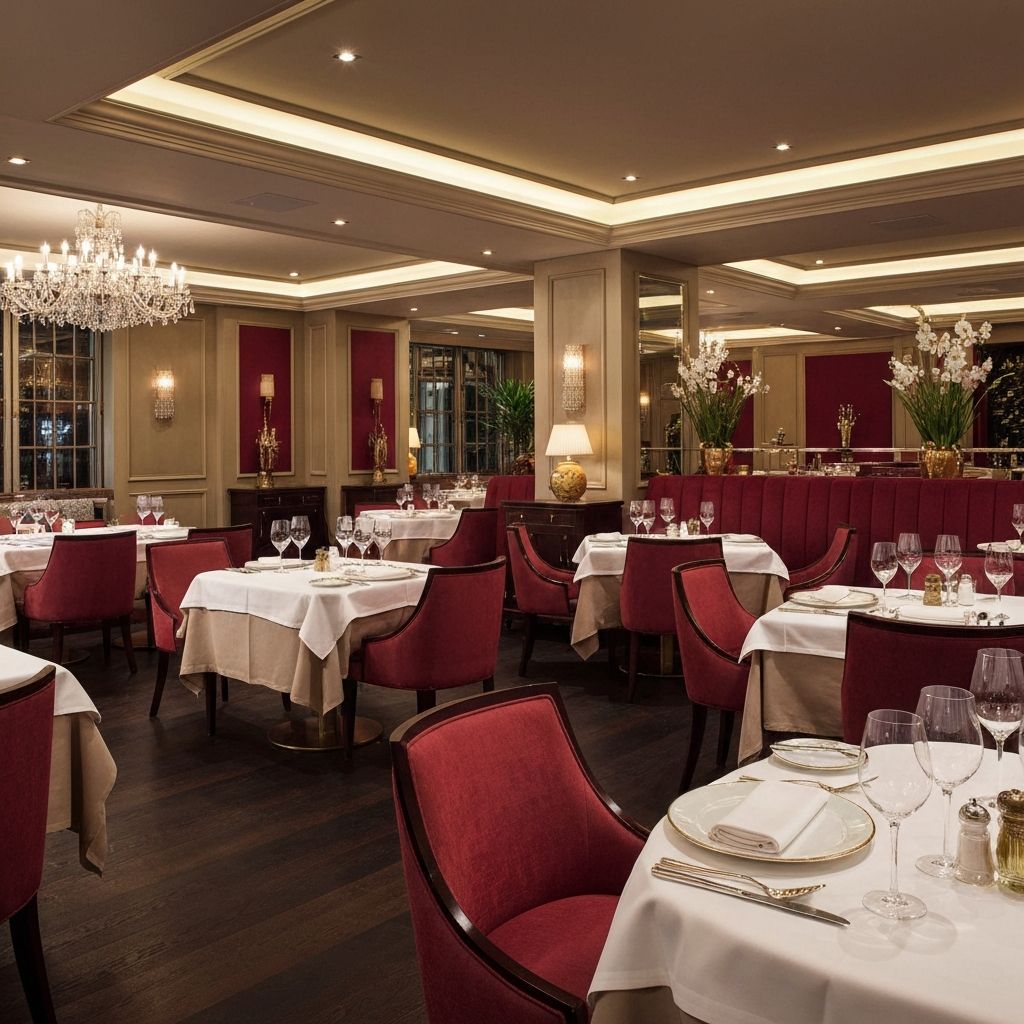
From One Restaurant to a Global Empire
Gordon Ramsay is arguably the most famous chef in the world, known as much for his fiery television personality as for his extraordinary culinary talent. But beyond the dramatic kitchen confrontations and colorful language that have made him a reality television icon, Ramsay has built one of the most impressive and expansive restaurant empires in the history of the culinary world. With over 80 restaurants operating across multiple continents, Gordon Ramsay's dining portfolio represents a remarkable achievement in both gastronomy and business.
The journey from a single London restaurant in 1998 to a sprawling international hospitality empire spanning fine dining, casual dining, gastropubs, and fast-casual concepts is a story of relentless ambition, culinary excellence, and shrewd business strategy. Understanding the scope and diversity of Ramsay's restaurant holdings reveals not just the reach of his brand but also the evolution of the modern celebrity chef from kitchen craftsman to global hospitality mogul.
The Early Years and Fine Dining Foundations
Gordon James Ramsay was born on November 8, 1966, in Johnstone, Scotland, and grew up in Stratford-upon-Avon, England. His path to the culinary world was not direct. As a young man, Ramsay showed promise as a football player and was signed by Rangers FC, but a knee injury ended his athletic career before it truly began. He then turned to cooking, enrolling at North Oxfordshire Technical College to study hotel management before beginning his apprenticeship in professional kitchens.
Ramsay's culinary education continued under some of the most demanding and respected chefs in the world. He worked under Marco Pierre White at Harvey's in London, where he learned the exacting standards and intense pressure of Michelin-starred cooking. He then moved to France to train under Guy Savoy and Joel Robuchon, two of the most legendary figures in French gastronomy. These formative experiences instilled in Ramsay a commitment to technical excellence, rigorous quality standards, and the relentless pursuit of perfection that would define his career.
In 1998, Ramsay opened his first solo restaurant, Restaurant Gordon Ramsay on Royal Hospital Road in Chelsea, London. This elegant fine-dining establishment became the cornerstone of his empire and remains in operation today. The restaurant earned its first Michelin star within its first year, added a second star in 2000, and achieved the coveted three-Michelin-star rating in 2001. It has maintained three stars for over two decades, making it one of the longest-running three-star restaurants in the United Kingdom and a testament to Ramsay's unwavering commitment to culinary excellence at the highest level.
The London Portfolio
London remains the spiritual home and operational headquarters of Gordon Ramsay's restaurant empire. The city hosts the largest concentration of his restaurants, spanning virtually every dining category from ultra-fine dining to casual neighborhood eateries.
Beyond the flagship Restaurant Gordon Ramsay, his London portfolio includes Petrus, an elegant fine-dining restaurant in Belgravia that holds one Michelin star and specializes in modern European cuisine with an exceptional wine program. The Savoy Grill at the iconic Savoy Hotel offers classic British cuisine in one of London's most storied dining rooms. Heddon Street Kitchen provides a more casual, all-day dining experience in the heart of Mayfair. Bread Street Kitchen near St. Paul's Cathedral offers a bustling, contemporary brasserie experience with an open kitchen and an emphasis on seasonal British ingredients.
Ramsay's London restaurants also include his casual and pub-style concepts. The Narrow in Limehouse is a gastropub serving elevated British pub classics alongside the Thames. York and Albany near Regent's Park operates as a restaurant, bar, and hotel offering all-day dining in an elegant Georgian townhouse setting. Lucky Cat, one of his newer London concepts, draws inspiration from the drinking and dining culture of 1930s Asia, offering an eclectic menu of Japanese, Chinese, and Southeast Asian dishes in a vibrant, atmospheric setting.
The Las Vegas Presence
Las Vegas has become one of Gordon Ramsay's most important and profitable markets, and the city represents the most concentrated collection of his restaurants outside of London. Ramsay's Las Vegas portfolio demonstrates his ability to operate successfully across multiple price points and dining styles within a single market.
Gordon Ramsay Steak at Paris Las Vegas was one of his first ventures on the Strip and showcases premium cuts prepared with classical technique in a dramatic dining room designed to resemble the Channel Tunnel between England and France. Gordon Ramsay BurGR at Planet Hollywood offers an upscale burger experience with creative toppings, hand-cut fries, and boozy milkshakes, proving that Ramsay's culinary sensibility can elevate even the most casual of formats.
Gordon Ramsay Pub and Grill at Caesars Palace brings the British gastropub concept to the Las Vegas Strip, serving fish and chips, bangers and mash, shepherd's pie, and other pub classics alongside an impressive selection of craft beers and cocktails. Gordon Ramsay Fish and Chips at The LINQ provides a quick-service version of the classic British takeaway, making Ramsay's cooking accessible to tourists looking for a quality casual meal without a reservation or a formal dining commitment.
Hell's Kitchen at Caesars Palace is perhaps the most famous of his Las Vegas restaurants, directly themed after his hit television show. The restaurant recreates the red-and-blue team kitchen design from the show and serves dishes featured on the series, including the iconic beef Wellington, lobster risotto, and sticky toffee pudding. The Hell's Kitchen restaurant concept has been so successful in Las Vegas that it has expanded to additional locations worldwide.
International Expansion
Gordon Ramsay's restaurant empire extends far beyond London and Las Vegas, with locations operating across Asia, the Middle East, Europe, and the Americas. This global expansion has accelerated dramatically in recent years, with new openings announced regularly.
In the Middle East, Ramsay has established a significant presence, with restaurants in Dubai, Doha, and other major cities. Dubai in particular has become a key market, hosting multiple Ramsay concepts including fine dining, casual dining, and fast-casual formats. The region's booming hospitality industry and appetite for international luxury brands have made it an ideal market for Ramsay's expansion.
In Asia, Ramsay has opened restaurants in Hong Kong, Shanghai, Tokyo, Seoul, and other major cities. These locations often feature menus adapted to local tastes and ingredient availability while maintaining the core standards and signature dishes that define the Gordon Ramsay dining experience.
Across the United States beyond Las Vegas, Ramsay has expanded to cities including Atlantic City, Chicago, Miami, Boston, and others. Each location represents a strategic market selection based on tourism traffic, luxury dining demand, and partnership opportunities with major hotel and casino properties.
The Business Behind the Brand
Operating over 80 restaurants globally requires more than just culinary talent. It demands sophisticated business infrastructure, strategic partnerships, and careful brand management. Gordon Ramsay Restaurants, the holding company that oversees his dining empire, employs thousands of staff worldwide and generates hundreds of millions of dollars in annual revenue.
Ramsay's business model relies heavily on hotel and casino partnerships. Many of his restaurants are located within major hospitality properties, where the hotel provides the physical space and infrastructure while Ramsay provides the brand, culinary concept, menu design, chef training, and quality oversight. This model reduces the capital risk of opening new restaurants while leveraging the foot traffic and marketing power of established hotel brands.
The relationship between Ramsay's television career and his restaurant business is symbiotic. His shows, including Hell's Kitchen, MasterChef, Kitchen Nightmares, and their various international versions, provide massive brand exposure that drives customer interest in his restaurants. In turn, his restaurants provide credibility and content for his television persona. Each new restaurant opening generates media coverage, and each television appearance reminds millions of viewers that they can experience Ramsay's cooking in person.
Ramsay's cumulative Michelin star record is impressive. Over his career, his restaurants have earned a total of 17 Michelin stars, though not all simultaneously. The three-star rating at Restaurant Gordon Ramsay remains the crown jewel of his empire, representing the highest level of culinary achievement recognized by the Michelin Guide. Several of his other restaurants hold one or two stars, contributing to a constellation of recognized excellence across his portfolio.
What Makes Ramsay's Restaurants Stand Out
With over 80 restaurants operating globally, one might expect a dilution of quality, but Ramsay's operation is notable for maintaining remarkably consistent standards across its diverse portfolio. Several factors contribute to this consistency.
Ramsay invests heavily in chef development and training. His executive chefs are typically products of his own kitchen system, having trained under Ramsay or his senior team before being entrusted with leading their own restaurant. This apprenticeship model ensures that the techniques, standards, and culinary philosophy that define the Gordon Ramsay brand are transmitted faithfully to each new location.
The emphasis on quality ingredients is another constant across his restaurants. Whether it is the prime beef at Gordon Ramsay Steak, the fresh seafood at his fish restaurants, or the locally sourced produce at his British gastropubs, the commitment to ingredient quality provides a foundation of excellence that elevates every dish regardless of the format or price point.
Finally, Ramsay's personal involvement, while necessarily limited given the scale of his operation, remains a factor. He regularly visits his restaurants, evaluates dishes, provides feedback to kitchen teams, and maintains a hands-on approach to menu development. His exacting standards and legendary intolerance for mediocrity, which make for entertaining television, also serve as a powerful quality control mechanism across his global restaurant network.
