
Understanding Ready-to-Eat Food and Why It Needs Special Protection
In the food service industry, few topics are more critical to public health than the proper handling of ready-to-eat (RTE) food. Ready-to-eat food is defined as any food that will be consumed without further cooking or processing that would eliminate pathogens. This category includes a vast range of items: washed fruits and vegetables, deli meats and cheeses, bread and baked goods, salads, sushi, sandwiches, garnishes, ice, beverages, and any cooked food that has already been heated to safe temperatures and is being served without additional cooking.
The reason ready-to-eat food requires such strict protection protocols is straightforward: there is no kill step between the food worker's handling and the customer's consumption. When raw chicken is handled in a kitchen, even if bacteria are transferred from the worker's hands to the meat, the subsequent cooking process will destroy those pathogens before the chicken reaches the customer. But when a food worker prepares a salad, assembles a sandwich, or garnishes a plate, whatever pathogens are on their hands can transfer directly to the food and ultimately to the person eating it.
Foodborne illness outbreaks linked to bare-hand contact with ready-to-eat food are alarmingly common. According to the Centers for Disease Control and Prevention, food workers are the identified source of contamination in a significant percentage of foodborne illness outbreaks associated with food service establishments. The bacteria, viruses, and parasites most commonly transmitted through food handler contact include Norovirus, Hepatitis A, Salmonella, Staphylococcus aureus, and Shigella. Understanding and implementing proper barriers to prevent this contact is not just a best practice but a legal requirement in most jurisdictions.
Single-Use Gloves: The Most Common Barrier
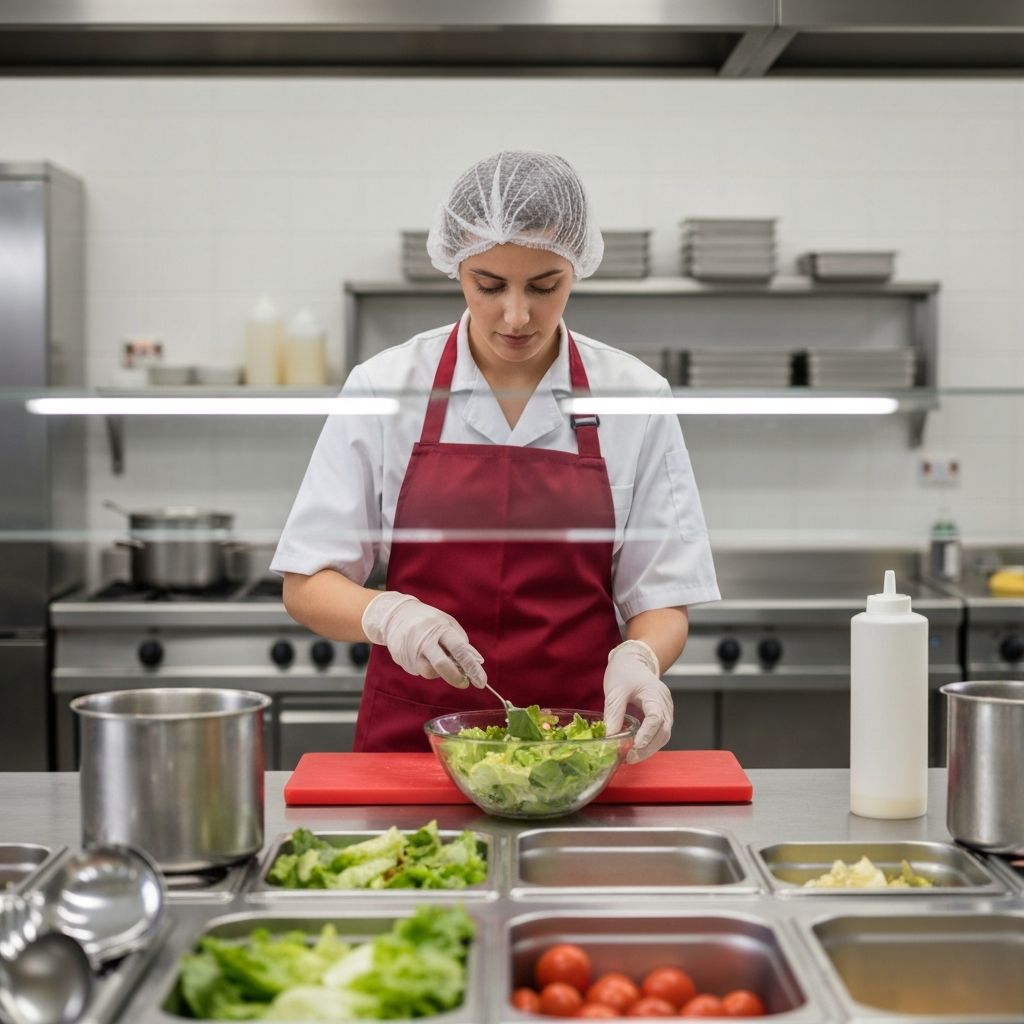
Single-use disposable gloves are the most widely used barrier method for protecting ready-to-eat food from contamination. When used correctly, gloves create a physical barrier between the food worker's skin and the food, preventing the transfer of bacteria, viruses, and other pathogens that may be present on the worker's hands.
However, gloves are only effective when used properly, and improper glove use is one of the most common food safety violations observed in food service establishments. Many food workers mistakenly believe that wearing gloves eliminates the need for handwashing, but the opposite is true. Hands must be thoroughly washed before putting on gloves. Pathogens present on unwashed hands can contaminate the outside of gloves during the process of putting them on, rendering the gloves useless as a barrier.
Gloves must be changed frequently to remain effective. Specific situations that require changing gloves include: switching between handling raw and ready-to-eat foods, after touching any non-food surface such as equipment handles, counters, or your own body, after handling garbage or cleaning chemicals, after coughing, sneezing, or touching your face, after handling money, and at least every four hours during continuous use, as bacteria can build up on glove surfaces over time even without obvious contamination.
The type of glove material matters as well. Food service gloves are typically made from nitrile, vinyl, or polyethylene. Nitrile gloves offer the best combination of durability, dexterity, and chemical resistance, and are the preferred choice in most professional kitchens. Vinyl gloves are less expensive but may contain plasticizers and are less durable, making them prone to tears during extended use. Polyethylene gloves are the least expensive option and are suitable for brief, light-duty tasks like handling bread or garnishes, but they fit loosely and provide less dexterity. Latex gloves should be avoided in food service due to the risk of latex allergies among both workers and customers.
Utensils: The Preferred Alternative
Many food safety experts and regulatory bodies consider utensils to be the preferred method for handling ready-to-eat food because they provide a more reliable barrier than gloves and do not carry the same risks of improper use. Utensils include tongs, spatulas, spoons, forks, scoops, and any other tool that allows food workers to manipulate food without touching it directly.
Utensils offer several advantages over gloves. They are more durable and do not tear or develop microscopic holes during use. They are easier to monitor for cleanliness, as a visibly dirty utensil is more obvious than a contaminated glove. They can be sanitized and reused, reducing waste and cost. And they naturally discourage the unconscious touching of face, hair, and other surfaces that frequently leads to cross-contamination when wearing gloves.
Proper utensil use requires dedicated utensils for different food types to prevent cross-contamination, regular washing and sanitizing of utensils throughout the shift, storing utensils with handles extending over the edge of containers so that the handle portion that is touched does not contact food, and using separate utensils for serving and for food preparation.
Deli Tissue, Bakery Tissue, and Wax Paper
Deli tissue and bakery tissue serve as effective single-use barriers for handling ready-to-eat foods in specific situations, particularly when picking up items like bread rolls, deli meats, bakery items, and garnishes. These thin sheets of food-safe tissue paper allow workers to grasp food items without direct skin contact while maintaining the food's appearance and presentation.
The proper technique for using deli tissue involves pulling a fresh sheet from the dispenser, using it to grasp or handle the food item, and discarding the tissue after a single use. Never reuse deli tissue or set it down and pick it up again, as the protective barrier is compromised once the tissue has contacted any surface.
Wax paper and parchment paper serve similar functions and are commonly used in bakeries, delis, and sandwich shops. These papers provide a barrier between the worker's hands and food items during assembly, wrapping, and serving. They are also used to line trays, separate food items in display cases, and wrap individual portions for service.
Dispensing Equipment and Serving Tools
Another important category of barriers includes dispensing equipment designed to deliver food to customers without human hand contact. These mechanical and structural barriers are particularly important in self-service areas, buffets, and situations where food is served directly to customers.
Automatic dispensers for condiments, beverages, soft-serve ice cream, and other food items eliminate the need for hand contact entirely. These machines are designed so that the food passes from sealed containers through dispensing mechanisms directly to the serving vessel without any human touching the food itself.
Sneeze guards are transparent barriers installed above food display areas, buffet lines, and salad bars that protect food from airborne contamination such as coughs, sneezes, and respiratory droplets. While sneeze guards do not replace the need for proper hand barriers, they provide an additional layer of protection against a different type of contamination.
Scoops with handles used for ice, bulk foods, and portioning ingredients ensure that the worker's hand never enters the container of food. The handle length keeps the hand above the food level, and the scoop portion is the only part that contacts the food. Scoops should be stored outside the food container when not in use, either on a clean surface or in a designated holder.
Proper Handwashing: The Foundation of All Barriers
No discussion of protecting ready-to-eat food from contamination is complete without emphasizing that proper handwashing is the foundation upon which all other barrier methods depend. Gloves, utensils, and tissue are all secondary barriers that supplement, but never replace, thorough hand hygiene.
The FDA Food Code requires food workers to wash their hands at specific times: before beginning food preparation, after touching bare human body parts other than clean hands and arms, after using the restroom, after coughing, sneezing, or using a tissue, after handling raw meat, poultry, or seafood, after handling garbage or dirty equipment, after eating, drinking, or smoking, after handling chemicals, and when switching between food preparation tasks.
Proper handwashing technique involves wetting hands with warm running water at least 100 degrees Fahrenheit, applying soap, vigorously scrubbing all surfaces of the hands, between fingers, under fingernails, and up to the wrists for at least 20 seconds, rinsing thoroughly under running water, and drying with a single-use paper towel or air dryer. Hand sanitizer is not a substitute for handwashing in food service settings. While alcohol-based sanitizers can reduce the number of bacteria on hands, they are not effective against all foodborne pathogens, particularly Norovirus and bacterial spores, and they do not remove physical contaminants.
Additional Personal Hygiene Practices
Beyond the specific barriers used to handle food, food workers must maintain comprehensive personal hygiene practices that collectively minimize the risk of food contamination.
Hair restraints including hairnets, hats, and beard covers prevent hair from falling into food. A single human hair can carry millions of bacteria and is one of the most common foreign objects found in food by consumers.
Clean uniforms and aprons should be worn and changed regularly. Clothing can harbor bacteria from previous shifts, from contact with raw foods, and from the general environment. Aprons should be removed before leaving the food preparation area and especially before using the restroom.
No jewelry policy is standard in most food service establishments. Rings, bracelets, and watches can harbor bacteria in crevices that are impossible to clean during routine handwashing. Most food codes allow only a plain wedding band, though even this should be covered by a glove during food preparation. Earrings, necklaces, and other jewelry can become physical contaminants if they fall into food.
Wound management requires that any cuts, burns, or sores on the hands or arms be properly bandaged with clean, food-grade bandages and covered with a single-use glove. Open wounds can harbor Staphylococcus aureus and other bacteria that produce toxins capable of causing foodborne illness.
By consistently implementing these multiple layers of protection, from proper handwashing through physical barriers like gloves and utensils to comprehensive personal hygiene practices, food workers create a system of defense that dramatically reduces the risk of contaminating ready-to-eat food and causing foodborne illness.
