
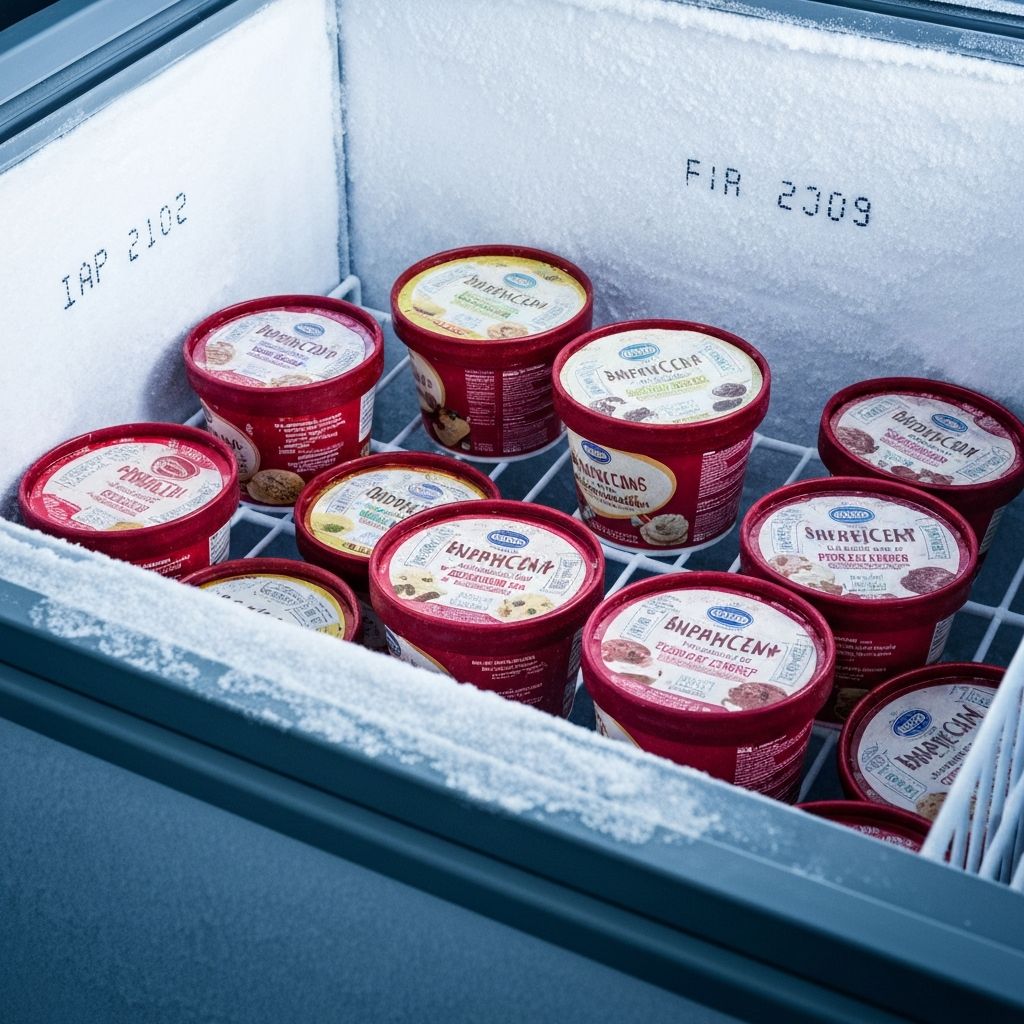
Ice Cream Shelf Life in the Freezer
Ice cream is one of those delightful treats that many people keep stocked in their freezer at all times, ready to serve as a dessert, a comfort snack, or a reward after a long day. But like all food products, ice cream does not last forever, even in the frozen environment of your freezer. Understanding how long ice cream remains safe to eat and at its best quality can help you avoid wasting this beloved treat and ensure that every scoop you enjoy is as delicious as it should be.
The general consensus among food safety experts and ice cream manufacturers is that unopened, commercially produced ice cream will maintain its best quality for about two to three months in a home freezer, though it remains safe to eat for considerably longer. Once opened, ice cream is best consumed within one to two months, as exposure to air each time the container is opened accelerates the deterioration of texture and flavor. These timelines assume proper storage conditions, which play a crucial role in how well ice cream holds up over time.
Opened vs. Unopened Ice Cream
The shelf life of ice cream differs significantly depending on whether the container has been opened. An unopened container of ice cream benefits from its factory seal, which protects the ice cream from exposure to air, odors, and the temperature fluctuations that occur every time the freezer door is opened. This sealed environment helps maintain the ice cream's original texture, flavor, and quality for a longer period.
Unopened commercial ice cream stored at a consistent 0°F (-18°C) or below will typically maintain its best quality for two to three months from the date of purchase. Some manufacturers print "best by" or "best before" dates on their containers, and the ice cream will generally be at its peak quality when consumed before this date. However, these dates are quality indicators, not safety dates. Ice cream consumed after the best-by date may have deteriorated in texture or flavor but is not necessarily unsafe to eat.
Once opened, ice cream is exposed to air and moisture each time you remove the lid to scoop out a serving. This exposure accelerates the formation of ice crystals on the surface of the ice cream, a phenomenon commonly known as freezer burn, and allows the ice cream to absorb odors from other foods in the freezer. For best quality, opened ice cream should be consumed within six weeks, though it often remains acceptable for up to two months if stored properly.
Understanding Freezer Burn
Freezer burn is the most common quality issue that affects ice cream stored in the freezer for extended periods. Despite its name, freezer burn is not actually a burn but rather a form of dehydration that occurs when moisture in the ice cream sublimates (transitions directly from ice to water vapor) and then refreezes on the surface of the ice cream as ice crystals. The result is a dry, grainy, crystalline layer on top of the ice cream that has a stale, papery taste and an unpleasant icy texture.
While freezer burn does not make ice cream unsafe to eat, it significantly degrades the eating experience. The affected areas lose their creamy texture and rich flavor, becoming bland and icy. You can scrape off the freezer-burned layer to access the unaffected ice cream underneath, but if the freezer burn has penetrated deep into the container, the entire product may be compromised.
Several factors contribute to freezer burn, including temperature fluctuations (such as those caused by frequently opening the freezer door), inadequate container sealing, and extended storage time. The air space in a partially empty container is particularly problematic, as the air in contact with the exposed ice cream surface facilitates sublimation and ice crystal formation.
Signs That Ice Cream Has Gone Bad
While ice cream that has simply been in the freezer too long is usually just a quality issue rather than a safety concern, there are certain signs that indicate ice cream should be discarded. If the ice cream has been stored at temperatures above 0°F for extended periods, particularly if it has partially or fully thawed and been refrozen, it may have been exposed to temperatures in the bacterial danger zone long enough for harmful bacteria to multiply. Refrozen ice cream often has a noticeably different texture, with large ice crystals and a grainy, icy consistency that is quite different from its original smooth creaminess.
If ice cream develops an off-putting odor, an unusual color, or visible mold (which is rare but possible if the ice cream was contaminated before freezing or if the container seal was compromised), it should be discarded immediately. A slimy or gummy texture on the surface of the ice cream is another warning sign that bacterial growth may have occurred. When in doubt, it is always better to err on the side of caution and discard ice cream that you suspect may have been compromised.
Optimal Storage Conditions
Proper storage is the single most important factor in maximizing the shelf life and quality of ice cream in your freezer. The ideal storage temperature for ice cream is 0°F (-18°C) or below. Many home freezers are set to slightly warmer temperatures, which can accelerate quality deterioration. Using a freezer thermometer to verify your freezer's temperature and adjusting the thermostat if necessary can significantly extend the life of your frozen foods, including ice cream.
Temperature consistency is just as important as temperature level. Every time you open the freezer door, warm air enters and causes a temporary temperature spike. The items nearest the door experience the most significant temperature fluctuations, so store your ice cream in the back of the freezer, away from the door, where temperatures remain most stable. Avoid placing ice cream in the freezer door compartment, which experiences the most dramatic temperature swings.
The way you store ice cream within its container also matters. After each use, press a piece of plastic wrap or wax paper directly against the surface of the remaining ice cream before replacing the lid. This creates a barrier that prevents air from contacting the ice cream surface, dramatically reducing the formation of ice crystals and freezer burn. Some ice cream enthusiasts even store their containers upside down, which causes any melted ice cream to pool against the lid rather than forming ice crystals on the surface.
Different Types of Ice Cream and Their Shelf Life
Not all frozen desserts have the same shelf life in the freezer. Premium ice cream brands with higher butterfat content (typically 14-16% or more) tend to hold up better in the freezer than economy brands because the higher fat content creates a smoother, more stable emulsion that is more resistant to ice crystal formation. Gelato, which has a lower fat content but is served at a warmer temperature, tends to develop ice crystals more quickly than ice cream when stored at standard freezer temperatures.
Frozen yogurt and light ice cream, which contain less fat than regular ice cream, are generally more susceptible to freezer burn and texture degradation over time. These products are best consumed within four to six weeks of purchase for optimal quality. Dairy-free and plant-based ice cream alternatives vary widely in their freezer stability depending on the base used. Coconut-based frozen desserts tend to hold up well, while those made from nut milks or oat milk may become icy more quickly.
Homemade ice cream, which typically lacks the stabilizers and emulsifiers used in commercial products, has a shorter optimal shelf life than store-bought ice cream. Homemade ice cream is best consumed within two weeks of preparation, after which it tends to develop a hard, icy texture that is difficult to scoop and less pleasant to eat. If you make ice cream at home, consider making smaller batches that can be consumed relatively quickly.
Can You Refreeze Melted Ice Cream?
A common question about ice cream storage is whether it is safe to refreeze ice cream that has melted or partially melted. The answer is generally no, for both safety and quality reasons. When ice cream melts, it warms to temperatures within the bacterial danger zone (40°F to 140°F), where harmful bacteria can begin to multiply. If the ice cream has been in this temperature range for more than two hours, bacterial growth may have reached levels that make the ice cream unsafe to consume, even after refreezing.
Even from a purely quality perspective, refreezing melted ice cream produces an inferior product. The churning process that creates ice cream incorporates air into the mixture and creates small, uniform ice crystals that give ice cream its smooth, creamy texture. When ice cream melts and refreezes without churning, the resulting ice crystals are much larger and more irregular, producing a dense, icy product that lacks the pleasant texture of properly made ice cream. For these reasons, if your ice cream has melted significantly, it is best to either consume it immediately or discard it.
Tips for Keeping Ice Cream Fresh Longer
Beyond proper storage temperature and container management, several additional tips can help extend the quality and enjoyment of your ice cream. First, buy ice cream last during your grocery shopping trip and transport it home in an insulated bag to minimize thawing during transit. Even brief partial melting during transport can affect the ice cream's texture and start the clock on quality deterioration.
Second, avoid leaving the ice cream container on the counter while you scoop. Take the container out, scoop what you need quickly, and return it to the freezer immediately. The less time ice cream spends outside the freezer, the longer it will maintain its quality. If the ice cream is too hard to scoop immediately, run your scoop under hot water or let the container sit out for just two to three minutes, no longer.
Third, choose containers wisely when buying ice cream. Paper containers allow more moisture exchange with the freezer environment than plastic containers, so ice cream in paper cartons may develop freezer burn more quickly. If you find a great sale on paper-carton ice cream, consider transferring it to airtight plastic containers for longer-term storage.
Conclusion
Ice cream stored properly in a freezer set to 0°F or below will remain safe to eat indefinitely, but its quality begins to decline after about two months for opened containers and three months for unopened ones. Freezer burn, ice crystal formation, and flavor absorption are the primary quality issues that affect stored ice cream, and all of these can be minimized through proper storage techniques: keeping the freezer at the right temperature, storing ice cream in the back of the freezer, pressing plastic wrap against the surface after each use, and consuming it within a reasonable timeframe. By following these guidelines, you can ensure that every bowl of ice cream you serve is as fresh, creamy, and delicious as the day you brought it home.
