
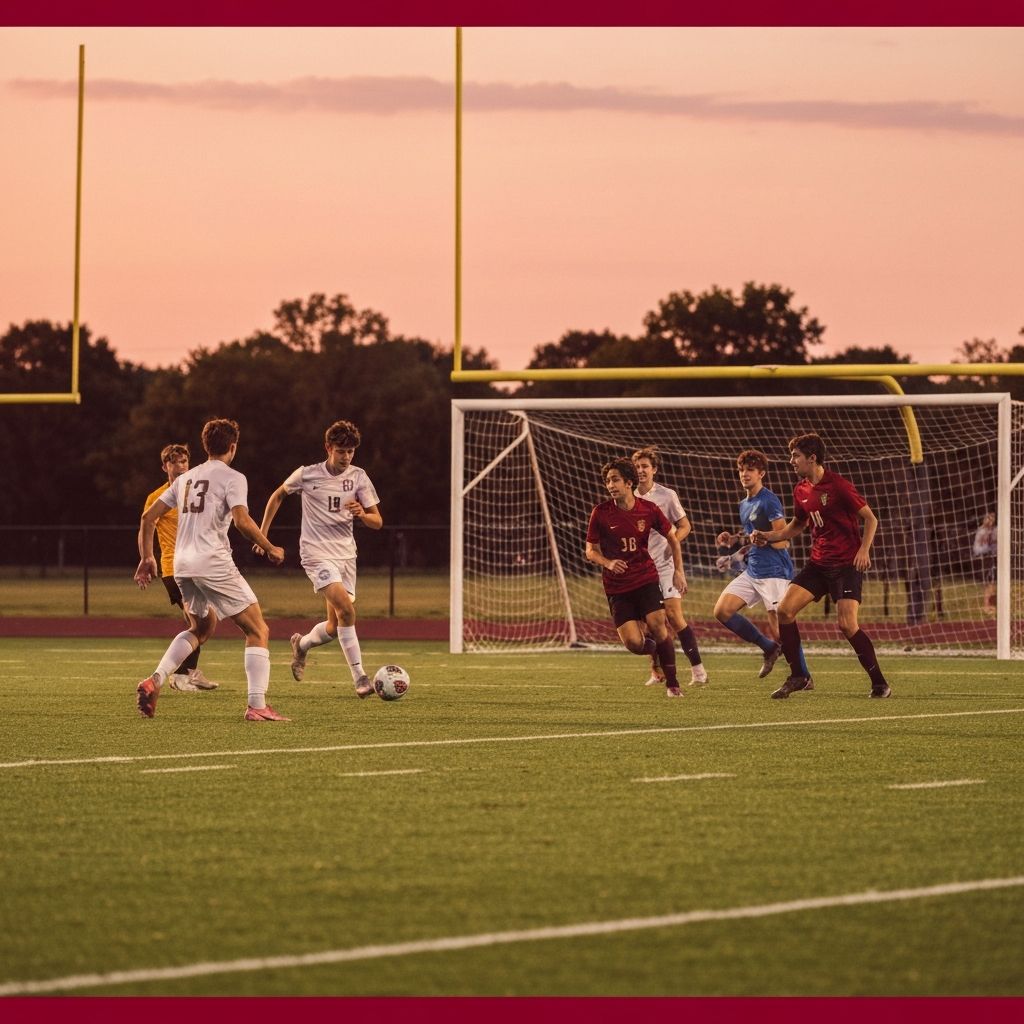
Official Duration of a High School Soccer Game
High school soccer is one of the most popular interscholastic sports in the United States, with millions of students participating each year. Whether you're a player, parent, coach, or fan, understanding the length of a high school soccer game helps you plan your schedule and know what to expect on game day.
A regulation high school soccer game consists of two 40-minute halves, for a total of 80 minutes of playing time. This is governed by the National Federation of State High School Associations (NFHS), which sets the rules for high school athletics across the country. The 80-minute total is shorter than the 90-minute duration used in college, professional, and international soccer, reflecting the age and development level of high school athletes.
However, the total time you'll spend at a high school soccer game is typically longer than 80 minutes when you factor in halftime, stoppages, warm-ups, and potential overtime periods. Most attendees should plan for the game to last approximately one and a half to two hours from the opening whistle to the final buztle, with some games running even longer if overtime is required.
Halftime and Between-Half Details
The halftime interval in high school soccer is typically 10 minutes long, though some state associations may allow a 15-minute halftime by mutual agreement of both teams or by tournament rules. During halftime, teams return to their sidelines or locker rooms for rest, hydration, and tactical adjustments.
Including the halftime break, the standard regulation game time extends to 90 minutes. However, additional time is needed for pre-game warmups, referee inspections, coin tosses, and post-game activities. Teams typically arrive and begin warming up 30 to 45 minutes before the scheduled kickoff time, though this period doesn't affect the actual game duration for spectators arriving closer to game time.
Between the end of the first half and the start of the second half, referees may also take a brief period to confer and address any administrative matters. Teams switch ends of the field at halftime, which is a standard practice in soccer at all levels designed to equalize any advantages created by wind, sun position, or field slope.
Stoppage Time and the Running Clock
One important distinction between high school soccer and higher levels of the sport is how time is kept. In high school soccer, the clock typically runs continuously and is kept by a designated timekeeper at the scorer's table, rather than by the referee on the field as in FIFA-governed matches.
The clock stops in high school soccer only for specific situations mandated by NFHS rules. These include goals, penalty kicks, injury assessments by medical personnel, caution or ejection card administration, and referee timeouts for unusual circumstances. Unlike professional soccer, where the referee adds stoppage time at the end of each half, high school soccer generally does not use added time.
This running clock approach means that high school soccer games tend to finish more predictably in terms of total duration compared to professional matches, where stoppage time can extend each half by several minutes. However, the multiple stoppages throughout the game do add some time beyond the 80 minutes of regulation play.
Some state associations have adopted modified timekeeping rules, so there can be slight variations depending on where the game is played. It's always a good idea to familiarize yourself with your specific state association's rules if you need precise timing information.
Overtime Rules in High School Soccer
When a high school soccer game ends in a tie during regular-season play, the result may simply stand as a draw, depending on the league or conference rules. However, during playoff and championship matches, overtime periods are used to determine a winner.
NFHS overtime rules specify two 10-minute overtime periods. Unlike the sudden-death format used in some other sports, high school soccer overtime periods are played in their entirety, regardless of whether a goal is scored. Both overtime periods are played even if one team scores in the first period.
If the game remains tied after both overtime periods, the result depends on the specific situation. During regular-season games, it may be recorded as a tie. During playoff matches, a penalty kick shootout is typically used to determine the winner. Each team selects five players to take alternating penalty kicks, with additional rounds of single kicks if the shootout remains tied after the initial five rounds.
When overtime is required, the total game time extends significantly. Two 10-minute overtime periods plus a brief intermission between them adds approximately 25 minutes to the game. If a penalty kick shootout follows, an additional 10 to 15 minutes may be needed, bringing the total event time to well over two hours.
Comparison to Other Levels of Soccer
Understanding how high school soccer game length compares to other levels provides useful context for players, families, and fans who follow the sport at multiple levels.
Youth Soccer (Under-14): Youth league games typically feature shorter halves, ranging from 25 to 35 minutes per half depending on the age group. Total game times of 50 to 70 minutes are common, with shorter halftime breaks of five to ten minutes.
High School Soccer: As discussed, two 40-minute halves for a total of 80 minutes of regulation play. This duration is designed to be appropriate for the physical capabilities of teenage athletes while still providing a full competitive experience.
College Soccer (NCAA): College soccer features two 45-minute halves for a total of 90 minutes, the same as professional soccer. The NCAA uses a running clock similar to high school, though some conferences have experimented with different timing formats. Overtime in college soccer uses two 10-minute golden goal periods.
Professional Soccer (MLS/FIFA): Professional matches consist of two 45-minute halves totaling 90 minutes of regulation time, plus stoppage time added by the referee at the end of each half. Stoppage time typically ranges from one to five minutes per half but can be longer in cases of significant delays. Total game time, including halftime, typically runs about two hours.
Factors That Can Extend Game Time
Several situations can cause a high school soccer game to run longer than the standard timeframe, and being aware of these possibilities helps with planning.
Injuries: Significant injuries that require medical attention on the field will stop the clock and extend the overall game time. While minor injuries are typically addressed quickly with play resuming within a minute or two, more serious situations can add several minutes to the total duration.
Weather Delays: Lightning, severe weather, and dangerous conditions can cause temporary suspensions of play. NFHS guidelines require play to be suspended for at least 30 minutes after the last observed lightning strike or thunder, with the clock resetting for each new occurrence. Weather delays can extend the total event time by an hour or more in extreme cases.
Disciplinary Actions: Situations involving multiple cautions (yellow cards) or ejections (red cards) can slow the pace of the game and add time to stoppages. Confrontational situations that require referee intervention and player management can also extend game time.
Ball Retrieval: Games played at facilities without ball shaggers or with limited backup balls may experience brief delays when balls are kicked out of the playing area and need to be retrieved. While each individual delay is minor, cumulative ball retrieval time can add several minutes over the course of a game.
Planning for Game Day
For parents and families attending high school soccer games, planning for a total time commitment of approximately two to two and a half hours is advisable. This allows time for arriving early enough to find parking and seating, watching warm-ups, enjoying the full game, and potential overtime scenarios.
Bringing appropriate gear for the weather conditions is important, as high school soccer is played outdoors in a variety of conditions. Sunscreen, water, blankets, rain gear, and portable seating are all worth considering depending on the forecast and the facility's available seating.
For players, plan to arrive at the field at least 60 to 90 minutes before game time for warm-ups, team meetings, and mental preparation. Post-game activities including team meetings, cool-down stretching, and socializing with family and opponents should also be factored into your schedule.
Conclusion
A high school soccer game officially lasts 80 minutes, divided into two 40-minute halves with a 10-minute halftime. With stoppages, potential overtime, and pre and post-game activities, plan for a total time commitment of approximately one and a half to two and a half hours. Understanding these time parameters helps everyone involved, from players to spectators, make the most of the high school soccer experience.
