
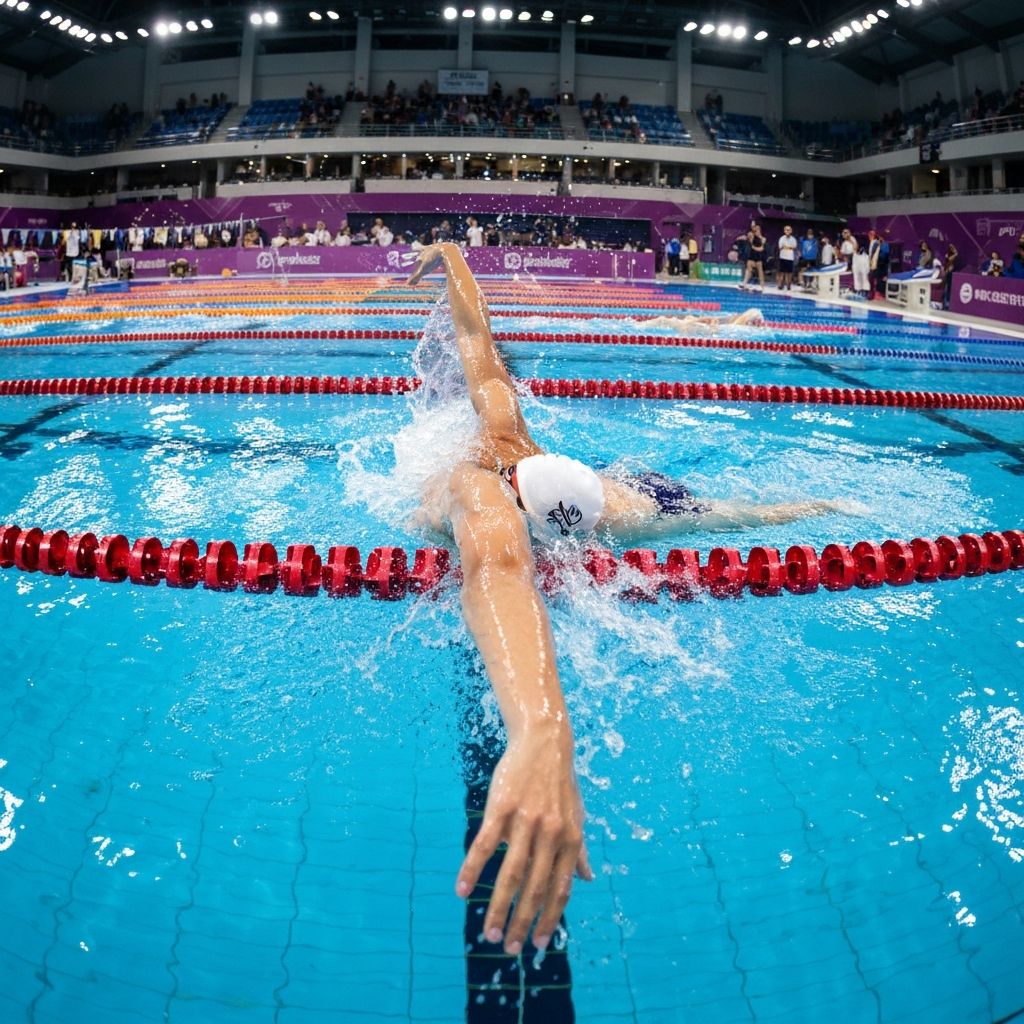
The Mile Swim: A Universal Benchmark
Swimming a mile is one of the most meaningful benchmarks in aquatic fitness. Whether you are a recreational swimmer looking to improve your endurance, a triathlete training for competition, or someone who simply wants to know where they stand, the mile swim provides a clear, measurable goal that challenges both physical fitness and mental determination. But how long should it take, and what factors influence your time?
The answer varies enormously depending on your skill level, fitness, stroke technique, and experience. A competitive swimmer might cover a mile in 15 to 20 minutes, while a beginner could take 40 minutes to over an hour. The average recreational swimmer with reasonable fitness and basic technique typically completes a mile in 25 to 35 minutes. Understanding where you fall on this spectrum, and what influences your position, is the first step toward improving your swimming performance.
Understanding Swimming Distances
Before discussing times, it is important to clarify what constitutes a mile in swimming. A true mile is 1,760 yards or 1,609 meters. However, in competitive swimming, the mile event is actually the 1,650-yard race in yards pools or the 1,500-meter race in meters pools. For practical purposes, most swimmers and coaches consider 1,650 yards, which equals 66 lengths of a standard 25-yard pool, to be the swimming mile.
In open water swimming, a mile is measured as the standard 1,760 yards or 1,609 meters. The distinction matters because pool and open water conditions differ significantly. Pool swimming offers the advantages of controlled conditions, walls for pushing off every 25 or 50 meters, and lane ropes that reduce turbulence. Open water swimming presents challenges including waves, currents, temperature variations, navigation, and the psychological impact of swimming in deep, sometimes murky water.
If you are training in a pool, count your lengths carefully. In a 25-yard pool, 66 lengths equal a mile. In a 25-meter pool, 64 lengths are slightly short of a mile but close enough for practical training purposes. In a 50-meter pool, 32 lengths approximate a mile. Many swimmers use waterproof fitness trackers or simple lap counting devices to keep accurate count during longer swims.
Average Mile Swim Times by Skill Level
Breaking down mile swim times by skill level provides useful benchmarks for assessing your current ability and setting realistic improvement goals. Elite competitive swimmers, those competing at national and international levels, can complete a mile swim in 14 to 18 minutes. These athletes typically train 15 to 25 hours per week, have spent years refining their technique, and possess exceptional cardiovascular fitness and swimming-specific strength.
Competitive club swimmers and experienced age-group swimmers usually finish a mile in 18 to 25 minutes. These swimmers train regularly, typically five to ten hours per week, and have solid technical foundations in at least one competitive stroke. Their times reflect a combination of good technique, strong aerobic fitness, and extensive pool time.
Intermediate recreational swimmers, those who swim regularly for fitness but may not have formal coaching or competitive experience, typically cover a mile in 25 to 35 minutes. These swimmers generally have adequate technique for sustained swimming but may have inefficiencies in their stroke, breathing, or body position that slow them down. This is the category where most fitness-oriented adult swimmers fall.
Beginning swimmers and those returning to swimming after a long break often take 35 to 50 minutes or longer to complete a mile, and many beginners may need to take rest breaks during the swim. There is absolutely no shame in this. Swimming a mile at any speed is a significant physical achievement, and improvement comes quickly with consistent practice.
Factors That Affect Your Mile Swim Time
Numerous factors influence how quickly you can swim a mile. Stroke technique is arguably the most important factor, especially for non-competitive swimmers. Efficient technique reduces drag, maximizes propulsion, and conserves energy, allowing you to swim faster with less effort. Even small improvements in body position, catch mechanics, or kick efficiency can result in significant time reductions over the course of a mile.
Cardiovascular fitness determines your ability to sustain effort over the approximately 20 to 40 minutes required to complete a mile swim. Swimming is a demanding aerobic activity that taxes the heart, lungs, and circulatory system. Regular cardiovascular training, both in and out of the pool, improves your body's ability to deliver oxygen to working muscles and remove metabolic waste products, directly impacting your endurance and speed.
Body composition plays a role, though its effect is more nuanced in swimming than in land-based sports. While excess body fat creates additional drag, it also provides buoyancy, which can actually improve body position in the water for some swimmers. Muscle mass, particularly in the shoulders, back, and core, provides the power needed for sustained propulsion. The ideal body composition for swimming balances power, buoyancy, and streamlining.
Breathing technique is critical for mile swimming performance. Inefficient breathing disrupts body position, increases drag, and can cause premature fatigue. Bilateral breathing, alternating breathing sides every three strokes, promotes balanced technique and consistent body rotation. However, some swimmers perform better with single-side breathing, especially over longer distances. The key is finding a breathing pattern that maintains your oxygen supply without disrupting your stroke rhythm.
Mental factors should not be underestimated. Swimming a mile requires focus, patience, and the ability to manage discomfort. The monotony of staring at the bottom of a pool for 30 or more minutes can be psychologically challenging. Developing mental strategies, such as breaking the swim into smaller segments, focusing on technique cues, or using music and visualization, can help maintain motivation and prevent the mental fatigue that often slows swimmers in the second half of a mile.
Choosing the Best Stroke for Mile Swimming
Freestyle, also known as the front crawl, is the fastest and most efficient stroke for distance swimming. Its combination of continuous propulsion, minimal drag, and efficient breathing mechanics makes it the default choice for most mile swimmers. The vast majority of competitive distance events are swum in freestyle, and most training programs for mile swimming focus primarily on freestyle technique and endurance.
Backstroke is the second fastest stroke and offers the advantage of unrestricted breathing since your face is out of the water throughout the stroke. Some swimmers find backstroke more comfortable for long distances because of this breathing freedom. However, backstroke is typically 10 to 15 percent slower than freestyle and requires careful navigation in a pool to avoid running into walls.
Breaststroke is the slowest of the competitive strokes but is popular among recreational swimmers because many find it the easiest to learn and the most relaxing for sustained swimming. A mile in breaststroke takes significantly longer than in freestyle, often 30 to 50 percent more time. However, for swimmers who are most comfortable with breaststroke, it may be the best choice for completing a mile without exhaustion.
Butterfly, while the second fastest competitive stroke over short distances, is not practical for mile swimming for most people. The energy demands and technical requirements of butterfly make sustained swimming over long distances extremely challenging. Very few swimmers outside of elite circles can maintain butterfly for a full mile.
Training Strategies to Improve Your Mile Time
Improving your mile swim time requires a balanced approach that addresses technique, endurance, speed, and mental fitness. Begin by establishing a consistent swimming schedule. Three to four pool sessions per week, each lasting 45 to 60 minutes, provides a solid foundation for improvement. Consistency is more important than volume, a swimmer who trains three times per week every week will improve faster than one who trains six times one week and skips the next.
Technique work should be a priority in every session. Dedicate the first 10 to 15 minutes of each workout to drills that target specific aspects of your stroke. Catch-up drill improves timing and extension. Fingertip drag drill promotes high elbows during recovery. Kick-on-side drill develops body rotation and streamlining. Even experienced swimmers benefit from regular drill work, as technique tends to degrade during sustained swimming.
Interval training is the most effective method for building speed and endurance simultaneously. Rather than swimming a mile continuously at a steady pace, break the distance into shorter intervals with brief rest periods. A typical interval set might be ten 100-yard swims with 15 seconds rest between each, or five 200-yard swims with 20 seconds rest. As your fitness improves, reduce the rest periods and increase the interval distance.
Incorporate threshold training, also known as critical speed or T-pace training, to improve your sustainable speed. Threshold sets involve swimming at the fastest pace you can maintain for extended periods, typically 70 to 80 percent of your maximum effort. This type of training improves your lactate threshold, allowing you to swim faster before fatigue sets in.
Long steady-state swims build the aerobic base that supports all other types of training. Once per week, include a continuous swim of 1,500 to 2,000 yards at a comfortable, sustainable pace. These swims improve your body's ability to use fat for fuel, enhance mitochondrial density in your muscles, and build the mental toughness needed for mile swimming.
Open Water Mile Swimming Considerations
Swimming a mile in open water is a fundamentally different experience from pool swimming and requires additional preparation. Water temperature is a primary concern. Without the controlled environment of a pool, open water temperatures can range from the low 50s to the upper 80s Fahrenheit depending on location and season. A wetsuit may be necessary or required for colder waters, and acclimatization to cold water should be done gradually.
Navigation in open water requires a technique called sighting, where swimmers lift their head periodically to spot landmarks or buoys that keep them on course. Sighting disrupts the stroke rhythm and increases drag, so practicing this skill is essential. Most experienced open water swimmers sight every six to ten strokes, using a quick forward glance that minimizes disruption to their body position.
Safety is paramount in open water swimming. Never swim alone in open water. Use a brightly colored swim buoy that floats behind you to increase visibility to boaters and other watercraft. Familiarize yourself with the swimming location, including water depth, currents, tides, and potential hazards. Start with shorter open water swims and gradually build up to the mile distance as your comfort and confidence grow.
Setting and Achieving Your Mile Swim Goals
Whether your goal is to swim your first mile, break 30 minutes, or qualify for a competitive event, the path to improvement follows the same principles: consistent practice, focused technique work, progressive training intensity, and patience. Swimming improvement tends to come in bursts followed by plateaus, and maintaining motivation during plateau periods is one of the biggest challenges swimmers face.
Track your progress by timing your mile swim periodically, perhaps once per month, and recording the results. Use these benchmark swims to assess your improvement and identify areas that need more attention. Celebrate milestones along the way, whether it is completing your first nonstop mile, dropping below a personal time goal, or mastering a technical skill that has eluded you.
Consider joining a Masters swimming program or an adult swim group. These organized programs provide coaching, structured workouts, social support, and the motivational boost of training alongside other swimmers with similar goals. The swimming community is remarkably welcoming to swimmers of all abilities, and the friendships formed in the pool often extend far beyond the water.
