
Planning Your Greenhouse Project
Building a greenhouse is one of the most rewarding projects for gardeners, hobbyists, and anyone who wants to extend their growing season and cultivate plants year-round. A greenhouse creates a controlled environment that protects your plants from harsh weather, pests, and temperature extremes while providing the warmth and light they need to thrive. Whether you are dreaming of growing tomatoes in January or starting seedlings weeks before the last frost, a greenhouse makes it all possible.
Before you start building, careful planning is essential. Consider the purpose of your greenhouse, as this will influence its size, design, and features. A small hobby greenhouse for starting seedlings and growing herbs requires less space and investment than a large production greenhouse designed for year-round vegetable cultivation. Think about what you want to grow, how much space you need, and what your budget allows.
Location is another critical planning factor. Your greenhouse should be positioned to receive maximum sunlight, ideally with the long side facing south to capture the most light during the shorter days of winter. Avoid placing the greenhouse under large trees or near tall buildings that could cast shade. The site should also have good drainage, protection from strong winds, and easy access to water and electricity.
Choosing the Right Size and Design
Greenhouses come in a variety of sizes and designs, from small lean-to structures attached to an existing building to large freestanding hoop houses and traditional gable-roof designs.
Lean-To Greenhouses: These attach to the side of an existing structure, such as your house, garage, or shed. They are space-efficient and benefit from the thermal mass of the adjacent building, which helps regulate temperature. Lean-to greenhouses are ideal for small gardens and urban settings where space is limited.
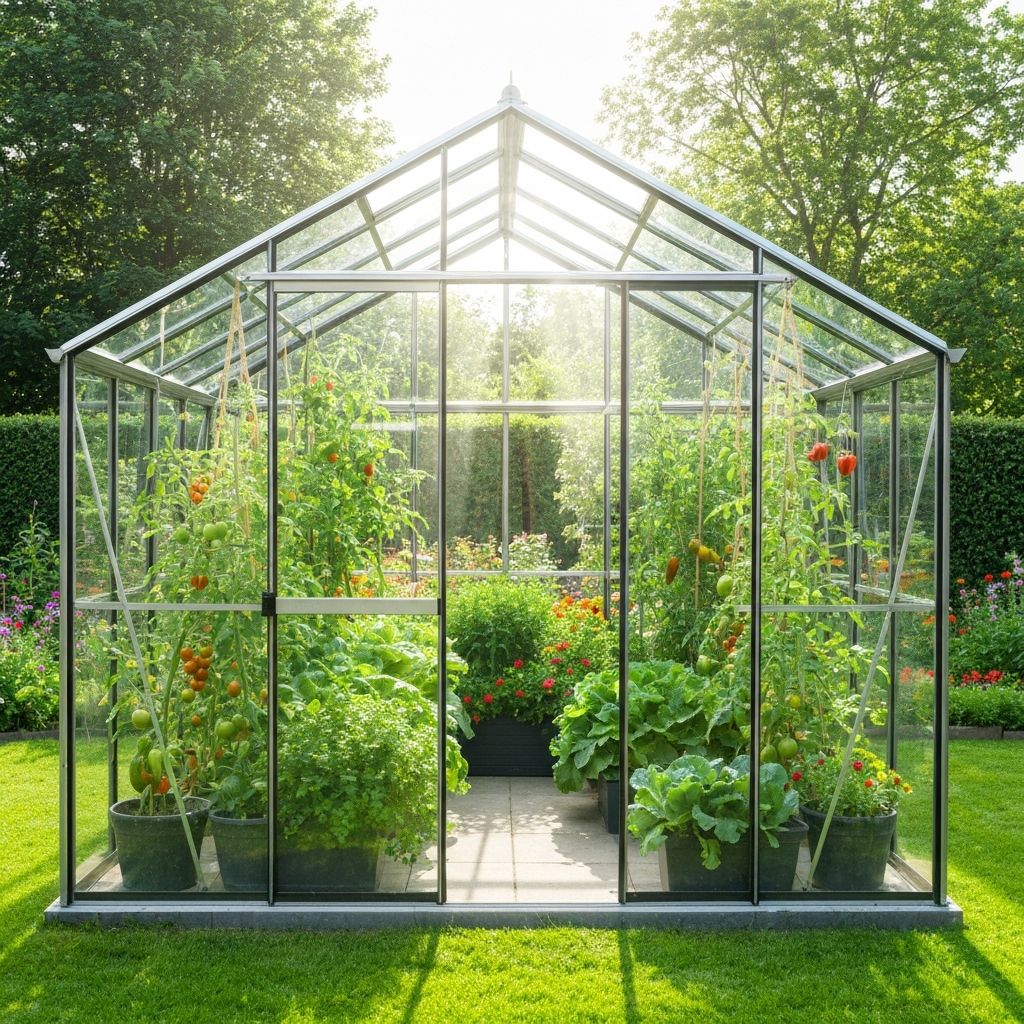
Freestanding Gable Greenhouses: The classic greenhouse design features a peaked, gable-shaped roof that allows snow and rain to shed easily. Freestanding gable greenhouses offer maximum interior space and can be built in any size. They provide good air circulation and even light distribution, making them suitable for a wide range of plants.
Hoop Houses (Quonset Style): Hoop houses feature a curved, tunnel-like frame covered with polyethylene film. They are the most affordable type of greenhouse to build and are commonly used by commercial growers and serious hobbyists. The curved shape is structurally strong and sheds snow well, though the interior headroom can be limited along the sides.
Gothic Arch Greenhouses: Similar to hoop houses but with a pointed arch peak, gothic arch greenhouses offer better snow shedding and more interior headroom. The elegant shape also provides a more aesthetically pleasing appearance than standard hoop houses.
For most home gardeners, a greenhouse measuring 8 by 12 feet or 10 by 12 feet provides ample growing space without overwhelming the backyard. Larger projects, such as 12 by 24 feet or 20 by 48 feet, are better suited for serious production growing.
Foundation Options
Every greenhouse needs a solid foundation to anchor the structure and prevent it from shifting or blowing away in strong winds. The type of foundation you choose depends on the size of the greenhouse, your budget, and whether you want a permanent or semi-permanent installation.
Concrete Slab: A poured concrete slab provides the most solid and permanent foundation. It is level, durable, and can support heavy structures. However, it is also the most expensive option and requires significant preparation work including excavation, forming, and curing time. Concrete slabs are best for large, permanent greenhouses.
Concrete Block or Stem Wall: A stem wall foundation consists of concrete blocks laid on a concrete footer around the perimeter of the greenhouse. The blocks are filled with mortar and rebar for strength. This option provides a raised base that improves drainage and keeps the greenhouse frame off the ground, reducing rot and corrosion.
Treated Lumber Frame: A simple and affordable option, a treated lumber frame is made from pressure-treated 4x4 or 4x6 timbers arranged in a rectangle on leveled ground. The timbers are secured together at the corners and anchored to the ground with rebar stakes driven through the wood into the soil. This foundation is suitable for small to medium greenhouses and is easy to build.
Ground Anchors: For lightweight greenhouses and hoop houses, ground anchors or auger-style stakes can be driven into the soil to secure the frame. This option requires no permanent construction and allows the greenhouse to be relocated if needed.
Framing Materials
The frame is the skeleton of your greenhouse, and the material you choose affects the structure's strength, longevity, and cost.
Wood: Wood is a traditional and readily available framing material that is easy to work with using basic tools. Cedar and redwood are naturally rot-resistant and are the preferred choices for greenhouse framing. Pressure-treated pine is a more affordable alternative but should be used with caution around food crops, as some treatments contain chemicals that may leach into the soil. Wood frames have a classic, attractive appearance but require periodic maintenance to prevent rot and decay.
Aluminum: Aluminum is lightweight, corrosion-resistant, and strong. Most commercial greenhouse kits use aluminum framing because it is durable and virtually maintenance-free. Aluminum frames are typically designed with channels and clips that make glazing installation straightforward. The main drawback is that aluminum conducts heat readily, which can contribute to heat loss in cold climates.
Galvanized Steel: Steel offers the greatest structural strength and is the preferred choice for large greenhouses and hoop houses. Galvanized steel pipe and tubing resist rust and corrosion, though they are heavier and more difficult to work with than aluminum. Steel frames are essential for greenhouses in areas that experience heavy snow loads or high winds.
PVC Pipe: PVC pipe is the most affordable framing option and is commonly used for small hoop houses and temporary greenhouses. It is lightweight, easy to cut and assemble, and resistant to moisture. However, PVC is not as strong as metal and can degrade in direct sunlight over time unless UV-stabilized versions are used.
Glazing Options
Glazing is the transparent or translucent covering material that allows light into the greenhouse while trapping heat. The choice of glazing significantly affects light transmission, insulation, durability, and cost.
Glass: Traditional glass glazing provides excellent light transmission and a beautiful, classic appearance. However, glass is heavy, fragile, expensive, and has poor insulation properties unless double-paned. Glass greenhouses are best suited for permanent structures with strong frames.
Polycarbonate Panels: Twin-wall or multi-wall polycarbonate panels are the most popular glazing choice for modern greenhouses. They are lightweight, virtually unbreakable, and provide excellent insulation due to the trapped air between the panel walls. Polycarbonate panels diffuse light evenly, reducing the risk of plant scorching, and they block harmful UV rays. They are available in various thicknesses, with thicker panels providing better insulation.
Polyethylene Film: Polyethylene greenhouse film is the most affordable glazing option and is commonly used on hoop houses. It is available in various thicknesses and can last one to four years depending on the quality and UV stabilization. While inexpensive and easy to install, polyethylene film provides minimal insulation and must be replaced periodically.
Ventilation and Climate Control
Proper ventilation is essential for maintaining healthy growing conditions inside your greenhouse. Without adequate air circulation, temperatures can soar to dangerous levels on sunny days, humidity can promote disease, and carbon dioxide levels can become depleted.
Roof vents and sidewall vents are the primary means of passive ventilation. Hot air rises and exits through roof vents while cooler air enters through lower sidewall vents, creating natural convection. Automatic vent openers that respond to temperature changes are available and eliminate the need to manually adjust vents throughout the day.
Exhaust fans provide active ventilation for larger greenhouses or locations where passive ventilation is insufficient. A properly sized exhaust fan should be capable of exchanging the entire volume of air in the greenhouse once per minute. Intake shutters on the opposite wall from the fan allow fresh air to enter as the fan draws stale air out.
Heating may be necessary during cold months, depending on your climate and the types of plants you are growing. Options include electric heaters, propane heaters, and hot water radiant heating systems. For small greenhouses, a simple electric space heater with a thermostat is often sufficient.
Building Your Greenhouse Step by Step
With your plans finalized and materials gathered, the construction process follows these general steps: prepare and level the site, install the foundation, erect the frame, install the glazing, add ventilation components, and set up interior features such as benches, shelving, and irrigation. Take your time with each step, ensuring everything is level, plumb, and securely fastened. A well-built greenhouse will serve you for many years of productive growing.
Conclusion
Building a greenhouse is a satisfying project that opens up a world of gardening possibilities. By carefully planning your design, selecting appropriate materials, and following proper construction techniques, you can create a growing space that extends your season, protects your plants, and brings you closer to the joy of year-round gardening.
