
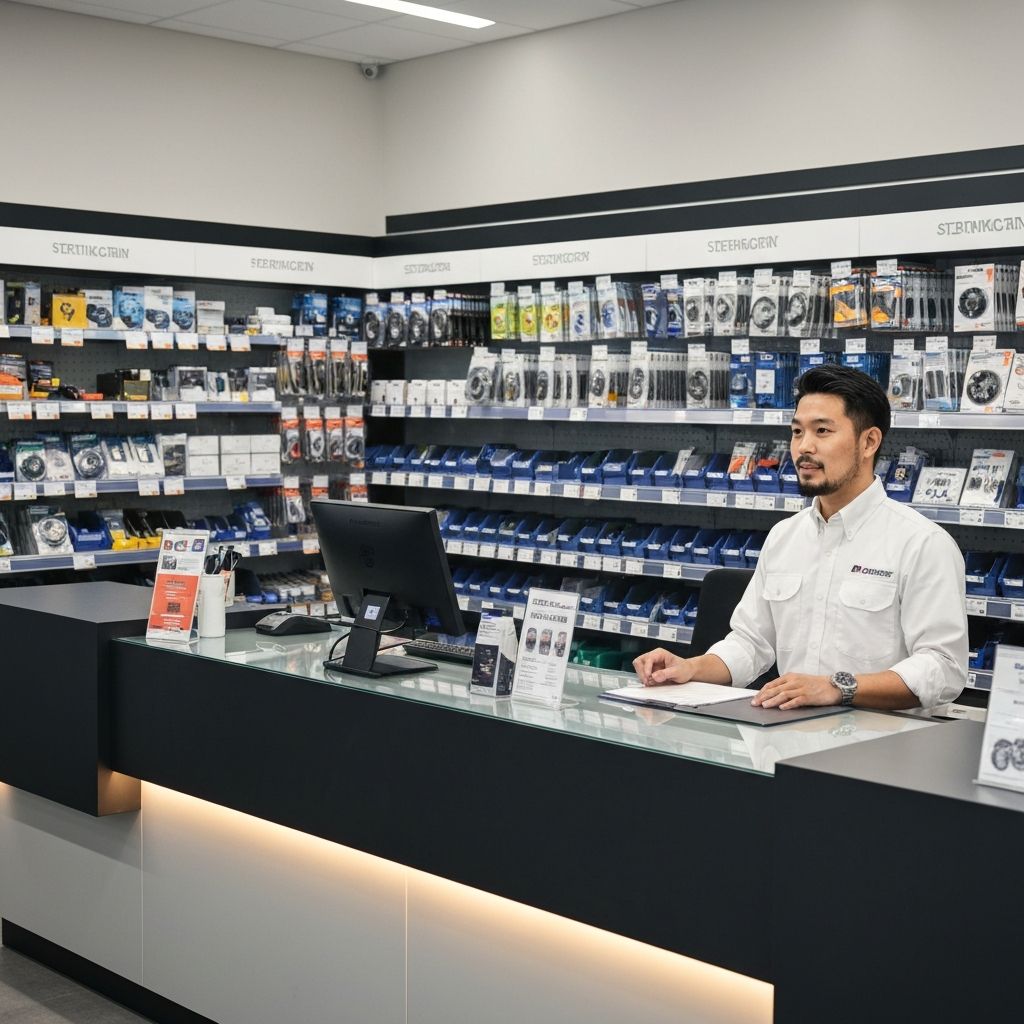
Understanding CRM in the Automotive Retail Industry
Customer Relationship Management (CRM) systems have become essential tools for businesses across virtually every industry, and the automotive parts retail sector is no exception. A CRM system helps companies manage their interactions with current and potential customers by organizing customer data, tracking communications, managing sales pipelines, and providing insights that drive better business decisions. For a major automotive parts retailer like Advance Auto Parts, which operates thousands of stores across the United States, an effective CRM strategy is critical for maintaining customer loyalty, optimizing operations, and staying competitive in a rapidly evolving market.
The automotive aftermarket industry is a massive and competitive sector, with major players including Advance Auto Parts, AutoZone, O'Reilly Auto Parts, and NAPA Auto Parts all vying for market share among both do-it-yourself (DIY) consumers and professional mechanics (DIFM, or do-it-for-me). In this competitive landscape, the ability to understand customer preferences, predict buying behavior, and deliver personalized experiences can make the difference between gaining and losing market share.
Advance Auto Parts: Company Overview
Advance Auto Parts, Inc. is one of the largest automotive aftermarket parts retailers in the United States. Founded in 1932 in Roanoke, Virginia, the company has grown to operate over 4,700 stores and branches across the United States, Puerto Rico, the U.S. Virgin Islands, and Canada. The company serves both professional installers and DIY customers, offering a comprehensive selection of automotive replacement parts, accessories, batteries, and maintenance items.
The company's business model is built on two primary customer segments: professional customers, who are mechanics and auto repair shops that purchase parts regularly for their businesses, and retail customers, who are individual consumers performing their own vehicle maintenance and repairs. Each of these segments has distinct needs, purchasing patterns, and service expectations, making a robust CRM system essential for managing these diverse relationships effectively.
In recent years, Advance Auto Parts has invested heavily in technology and digital transformation to improve its operations and customer experience. This includes enhancements to its e-commerce platform, supply chain optimization, inventory management systems, and customer engagement tools. A CRM system plays a central role in these technological investments, serving as the backbone for customer data management and relationship-building activities.
CRM Technology at Advance Auto Parts
While Advance Auto Parts does not publicly disclose the specific CRM software platforms it uses internally, the company's public filings, job postings, and industry reports provide strong evidence that it employs sophisticated CRM technology across its operations. Like most Fortune 500 retailers, Advance Auto Parts utilizes enterprise-grade technology solutions to manage its vast customer database and drive its sales and marketing efforts.
The company's professional customer segment, known as Advance Professional, relies heavily on relationship management tools to maintain and grow its business with auto repair shops and professional mechanics. Account managers and sales representatives use CRM systems to track customer interactions, manage accounts, monitor purchasing patterns, and identify opportunities for upselling and cross-selling. This professional side of the business is particularly CRM-intensive, as maintaining strong relationships with professional customers is essential for recurring revenue.
On the retail consumer side, Advance Auto Parts uses customer data platforms and CRM-adjacent technologies to manage its loyalty program, Speed Perks, which tracks customer purchases and provides personalized rewards and offers. The Speed Perks program collects valuable customer data that feeds into the company's broader CRM ecosystem, enabling targeted marketing campaigns, personalized recommendations, and improved customer engagement.
How CRM Supports Advance Auto Parts Operations
A CRM system at a company the size of Advance Auto Parts serves multiple critical functions across the organization. In sales management, the CRM helps sales teams track their interactions with professional accounts, manage their territories, and forecast revenue. Account managers can see a complete history of each customer's purchases, service interactions, and communications, allowing them to provide more informed and personalized service.
In marketing, the CRM system enables the company to segment its customer base and deliver targeted campaigns based on purchasing history, vehicle information, geographic location, and other data points. For example, a customer who recently purchased brake pads might receive a follow-up email about brake fluid or other related products. A professional customer whose purchasing volume has declined might be flagged for a retention outreach campaign.
Customer service is another area where CRM technology plays a vital role. When a customer contacts Advance Auto Parts with a question or issue, service representatives can access the customer's profile to see their purchase history, previous interactions, and any outstanding issues. This context allows for more efficient and effective service, reducing resolution times and improving customer satisfaction.
Inventory management and demand forecasting also benefit from CRM data. By analyzing purchasing patterns across different customer segments and geographic regions, Advance Auto Parts can better predict demand for specific products and ensure that the right parts are stocked at the right locations. This data-driven approach to inventory management reduces stockouts, minimizes excess inventory, and improves the overall customer experience.
The Role of Data and Analytics
Modern CRM systems are not just databases for storing customer information. They are powerful analytics platforms that can transform raw data into actionable insights. For Advance Auto Parts, the data collected through its CRM and related systems provides valuable intelligence about customer behavior, market trends, and business performance.
Predictive analytics, powered by machine learning algorithms, can identify customers who are at risk of defecting to competitors and trigger proactive retention efforts. They can also predict which products a customer is likely to need based on their vehicle type, mileage, and previous purchase history. These predictions enable Advance Auto Parts to provide more relevant recommendations and proactive service, enhancing the customer experience and driving additional sales.
Customer lifetime value (CLV) analysis is another important application of CRM analytics. By understanding the long-term value of different customer segments, Advance Auto Parts can allocate its marketing and service resources more effectively, focusing greater investment on high-value customers and developing strategies to increase the value of lower-tier customers. This data-driven approach to resource allocation maximizes the return on investment for customer acquisition and retention activities.
Digital Transformation and Omnichannel CRM
Advance Auto Parts has been undergoing a significant digital transformation that extends its CRM capabilities across multiple channels. The company's e-commerce platform, mobile app, and in-store systems are increasingly integrated, creating an omnichannel experience where customer data flows seamlessly between touchpoints. A customer who searches for a part online, purchases it through the app, and picks it up in-store has their entire journey tracked and connected within the CRM ecosystem.
This omnichannel approach is essential in today's retail environment, where customers expect a consistent and personalized experience regardless of how they interact with a brand. The integration of online and offline customer data provides a more complete picture of each customer's needs and preferences, enabling more effective personalization and service delivery.
The company has also invested in its digital platform for professional customers, TechNet, which provides tools for managing shop operations, accessing technical information, and ordering parts. The data generated through this platform feeds into the CRM system, providing additional insights into professional customer needs and behavior.
Industry Comparison: CRM in Automotive Parts Retail
Advance Auto Parts is not alone in its use of CRM technology. All major automotive parts retailers invest heavily in customer data management and relationship-building tools. AutoZone, the largest player in the market by store count, uses its own proprietary systems along with third-party CRM platforms to manage its retail and commercial customer relationships. O'Reilly Auto Parts similarly employs CRM technology to support its professional sales organization and retail loyalty programs.
The competitive intensity of the automotive aftermarket industry drives continuous innovation in CRM and customer engagement technology. Companies that can better understand their customers, predict their needs, and deliver superior experiences are better positioned to capture and retain market share. As a result, CRM investment is likely to remain a priority for Advance Auto Parts and its competitors for the foreseeable future.
Looking Ahead: The Future of CRM at Advance Auto Parts
As technology continues to evolve, the CRM landscape at companies like Advance Auto Parts will likely become even more sophisticated. Artificial intelligence and machine learning will play increasingly important roles in customer engagement, enabling real-time personalization, automated service interactions through chatbots and virtual assistants, and more accurate demand forecasting. The integration of connected vehicle data, where vehicles communicate their maintenance needs directly to parts retailers, could revolutionize how CRM systems predict and respond to customer needs.
The growing importance of e-commerce in the automotive parts industry will also drive CRM evolution. As more customers research and purchase parts online, the data generated through digital interactions will enrich CRM profiles and enable even more targeted and effective customer engagement strategies. For Advance Auto Parts, continuing to invest in and evolve its CRM capabilities will be essential for maintaining its competitive position and delivering the customer experiences that drive loyalty and growth.
